0:05
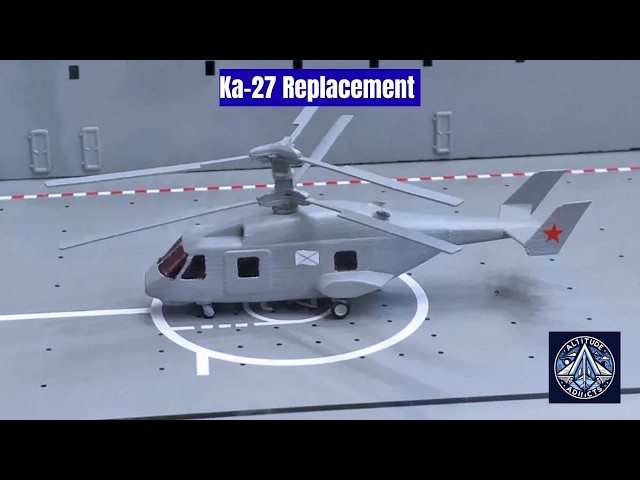
In late March 2026, reports regarding
0:08
major advances in the development of
0:10
Russia's next generation naval
0:12
helicopter, the Kamov Ka 65, also known
0:16
as Minoa, began to circulate on Russian
0:18
language blogs and defense focused
0:22
However, these reports have yet to be
0:25
officially confirmed.
0:27
The first flight ready prototype of the
0:29
aircraft which is intended to replace
0:31
the KMOV K27, KA29 and KA 31 helicopter
0:36
families could be finalized by the
0:38
transition period between 2026 and 2027.
0:42
According to these reports, this would
0:45
represent an important milestone in
0:47
Russia's efforts to further develop its
0:49
naval aviation capabilities, provided
0:51
that the information is accurate.
0:55
For years, the K65 program has been the
0:58
subject of infrequent discussion.
1:00
However, concrete information has
1:02
remained limited. Now, as new claims of
1:05
progress begin to surface, Altitude
1:07
Addicts takes a closer look at the
1:09
origins of this project, its
1:11
technological foundations, and its
1:13
expected role within the Russian Navy.
1:17
As we trace the origins of the KA65
1:19
program, it becomes clear that Russia's
1:22
requirement for a new multi-roll naval
1:24
helicopter has been evident for more
1:28
Originally developed in the 1970s, the
1:31
current fleet is centered around the
1:33
KMAV K27 and its derivatives.
1:37
Despite modernization efforts, their
1:39
core design reflects technological
1:41
standards from a different era. Around
1:44
2018 to 2019, the concept of a successor
1:48
began to gain clarity. The first images
1:51
of a fullscale mockup of the K65 emerged
1:55
from the assembly facilities of the
1:57
National Helicopter Engineering Center.
2:00
This marked the transition from
2:02
theoretical planning to tangible
2:06
The KS65, internally referred to as
2:09
product 450, is being developed under
2:11
Russian helicopters, which oversees the
2:14
country's primary rotocraft design
2:15
bureaus, including KOMAV.
2:18
The project continues KOMA's legacy of
2:21
specializing in naval helicopters,
2:23
particularly those using coaxial rotor
2:27
Moving into performance expectations,
2:30
the power plant configuration stands out
2:32
as one of the K65's defining
2:34
technological features. The helicopter
2:37
is expected to use TV7100VK
2:40
engines, an advanced derivative of the
2:43
family. These engines incorporate a full
2:46
authority digital engine control system,
2:49
improving efficiency, reliability, and
2:54
In terms of output, the engines generate
2:56
approximately 2,800 horsepower during
2:59
takeoff and up to 3,750
3:03
horsepower in emergency mode. This level
3:07
of power places the K65 firmly in the
3:10
high performance category, enabling
3:12
operations in demanding maritime
3:14
conditions while carrying significant
3:18
The same engine family is already used
3:20
on the MILM38 which is being produced in
3:23
limited numbers at the Kazen helicopter
3:26
plant. By leveraging an existing
3:28
certified engine platform, the K65
3:31
program reduces development risks while
3:33
ensuring compatibility with established
3:38
As we shift toward design philosophy, an
3:41
important question emerges. Why develop
3:43
a dedicated naval helicopter instead of
3:46
adapting a land-based platform like the
3:50
While adaptation may seem efficient, the
3:52
realities of naval aviation make it far
3:57
Naval helicopters must operate under
3:59
entirely different conditions. They need
4:02
to take off and land on moving decks,
4:04
endure constant exposure to salt water
4:06
and humidity, and function reliably in
4:09
highly unstable environments.
4:12
These requirements demand specialized
4:14
systems, corrosion resistant materials,
4:17
and fundamentally different engineering
4:21
Additionally, compact storage within
4:23
ship hangers and deck constraints
4:25
significantly influence design choices.
4:29
As a result, converting a land-based
4:31
helicopter would effectively require
4:33
building a new aircraft from scratch.
4:36
This makes a purpose-built platform like
4:38
the K65 the more logical solution.
4:42
This naturally leads us to one of
4:44
Camov's signature features, the coaxial
4:47
rotor system. Unlike traditional
4:50
helicopters that use a tail rotor,
4:52
coaxial helicopters employ two
4:54
counterrotating main rotors on the same
4:58
This configuration offers key advantages
5:00
for naval use. It reduces the aircraft's
5:03
footprint, enhances stability, and
5:06
improves maneuverability in turbulent
5:08
sea conditions. The absence of a
5:10
tailrotor also makes operations on
5:12
crowded ship decks safer and more
5:15
efficient. The KR27 family has
5:18
demonstrated these benefits for decades,
5:21
and Altitude Addicts highlights how the
5:23
K65 is expected to refine and expand on
5:26
these strengths even further.
5:29
As we examine size and mission
5:31
versatility, the K65 is expected to be
5:34
significantly larger than its
5:36
predecessors with capabilities
5:38
comparable to the MY38.
5:40
This increase in size allows for greater
5:43
payload capacity and expanded mission
5:47
Rather than replacing all K27
5:49
helicopters outright, the K65 will
5:52
likely complement existing platforms and
5:54
gradually assume more demanding tasks.
5:57
Its design supports multiple
5:59
configurations including anti-ubmarine
6:01
warfare, troop transport, maritime
6:04
patrol, and search and rescue
6:07
This modular approach reflects modern
6:09
military aviation trends where a single
6:12
platform is adapted for multiple roles,
6:14
reducing logistical complexity while
6:17
enhancing operational flexibility.
6:20
Looking ahead to naval integration, the
6:22
K65 is expected to to play a vital role
6:25
aboard next generation vessels,
6:28
particularly the project 23,900
6:31
amphibious assault ships such as Ivan
6:35
These ships are designed for amphibious
6:37
operations, humanitarian missions, and
6:40
strategic deployment.
6:42
With its enhanced range, payload, and
6:44
versatility, the K65 is well suited to
6:47
operate from such platforms.
6:49
significantly expanding their
6:51
operational capabilities.
6:53
Turning to the development timeline,
6:56
earlier projections suggested a first
7:01
However, more recent reports indicate a
7:03
shift toward late 2026 or early 2027.
7:08
Delays of this nature are common in
7:10
advanced aerospace programs.
7:13
Factors such as engine integration,
7:15
avionics development, and testing
7:18
requirements often influence timelines.
7:21
Despite these challenges, the program
7:23
appears to be approaching its final
7:27
As we consider the broader implications,
7:30
the KA65 represents a significant step
7:33
in modernizing Russia's naval aviation
7:37
Aging fleets require replacement and
7:40
this platform is designed to meet the
7:41
demands of modern maritime operations.
7:45
It is not merely a replacement aircraft
7:47
but a comprehensive solution for
7:49
evolving challenges including
7:51
anti-ubmarine warfare, maritime security
7:54
and rapid deployment.
7:56
Altitude Addicts notes that the
7:58
consistency of emerging reports suggests
8:01
steady progress even in the absence of
8:04
official confirmation.
8:06
In conclusion, the K65 Minogga stands as
8:09
one of the most anticipated developments
8:11
in Russia's defense aviation sector. By
8:15
combining modern technology with a
8:17
proven design philosophy, it aims to
8:19
deliver a versatile and high-performance
8:23
From powerful engines to its coaxial
8:26
rotor system and multi-roll
8:27
adaptability, the K65 represents a
8:30
forward-looking approach to military
8:34
As it moves closer to its first flight,
8:36
global observers will be watching
8:38
closely to see whether it fulfills its
8:41
considerable promise.
8:45
If you like the video, please subscribe,
8:48
share, and like. Also, please take the
8:50
membership of the channel to encourage