Up next in 10


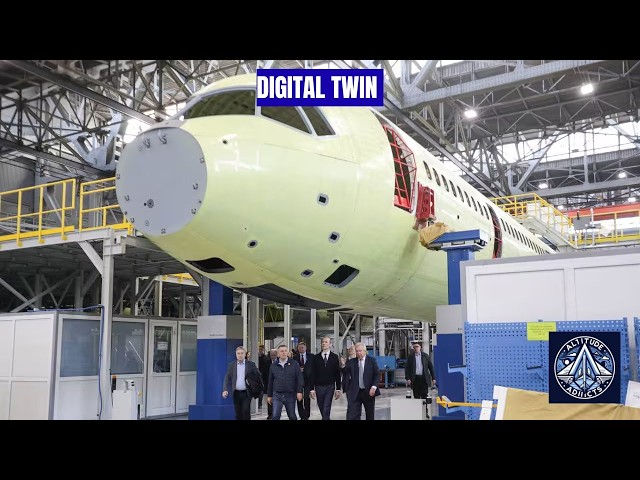
Russia has taken a major step in aviation technology by deploying a digital model of the MC-21-310 aircraft at the Irkutsk Aviation Plant. This is not just a production upgrade — it represents a complete transformation of how aircraft are designed, built, and maintained.
In this video, we break down how Russia is integrating artificial intelligence, predictive maintenance, and unified digital systems to create a smart aviation manufacturing ecosystem. From real-time equipment monitoring to AI-optimized logistics inside the factory, the MC-21 program is becoming a testbed for next-generation industrial technologies.
But there’s more. This transformation comes amid sanctions and growing pressure to replace foreign systems with domestic solutions. Is this truly a “digital twin,” or just a stepping stone toward one? And can digitalization help Russia overcome delays and scale production?
This is the story of how data, AI, and necessity are reshaping the future of aviation.
#MC21 #RussiaAviation #AviationNews #AircraftProduction #DigitalTwin #ArtificialIntelligence #SmartFactory #Aerospace #Geopolitics #AviationTechnology #FutureOfAviation #IndustrialAI #Sanctions #TechWar #AltitudeAddicts
Be a Member for exclusive privileges - https://www.youtube.com/channel/UCviEFTf1xIPKsjmyF_zvFug/join
Twitter : https://x.com/AltitudeAddicts
Website: https://www.altitudeaddicts.com
Show More Show Less View Video Transcript
0:08
The Yutsk aviation plant made a
0:10
significant contribution to the aviation
0:12
industry of Russia in March 2026 by
0:15
introducing a digital model of the
0:17
MC21-310
0:19
aircraft.
0:21
This development is not just a
0:23
technological upgrade. It is indicative
0:25
of a broader transformation of the
0:27
entire sector which is rapidly
0:30
transitioning to wholly digital
0:32
production management. As Altitude
0:35
Addicts explores, this shift signals a
0:37
deeper change in how modern aircraft are
0:39
conceived, built, and managed.
0:42
Russia's independence in the medium hall
0:45
aviation segment was strengthened by the
0:47
development of the MC21,
0:50
a next generation narrowbody aircraft
0:52
that was intended to replace foreign
0:54
competitors.
0:56
Nevertheless, the initiative has become
0:58
even more significant in the face of
1:01
external pressures and sanctions.
1:04
It has effectively become a symbol of
1:06
technological sovereignty. In this
1:09
context, the implementation of a digital
1:11
model is not simply a production
1:13
improvement. It is a strategic
1:15
instrument that expedites development,
1:18
enhances manufacturing precision, and
1:20
mitigates operational risks.
1:23
This transformation becomes clearer when
1:25
we look at how the entire aircraft life
1:27
cycle is now being unified into a single
1:30
digital environment. One of the most
1:33
noteworthy achievements is the
1:35
establishment of a system that covers
1:37
all phases of the aircraft's life cycle.
1:41
Design documentation, manufacturing
1:43
processes, material data, and pilot
1:46
training modules are all integrated into
1:48
a single framework within this system.
1:51
This method eliminates conventional
1:53
inconsistencies between design,
1:55
production, and operation.
1:58
In the past, even minor design
2:00
modifications necessitated extensive
2:02
coordination among departments.
2:05
Currently, the complete system is
2:06
immediately updated.
2:09
Therefore, the probability of errors
2:11
decreases and production cycles are
2:13
substantially shortened.
2:16
Simultaneously, manufacturers acquire
2:18
the capacity to oversee product quality
2:20
at each stage, a process that is
2:23
frequently referred to as end-to-end
2:25
quality control. In essence, this
2:28
signifies a transition from fragmented
2:30
production processes to a unified
2:32
digital ecosystem in which data serves
2:35
as the primary resource.
2:37
At this point, an important question
2:39
emerges. Is this truly a digital twin or
2:42
something less advanced? Industry
2:45
specialists provide a more careful
2:47
interpretation of the term digital twin
2:49
despite its frequent use. There are
2:52
those who contend that the existing
2:54
system is more accurately described as a
2:57
digital prototype.
3:00
The difference lies in the degree of
3:02
integration with the physical object.
3:05
In order to be considered a genuine
3:07
digital twin, the physical aircraft must
3:09
be in constant realtime synchronization
3:12
with its digital counterpart throughout
3:14
its entire life cycle, which includes
3:16
operational service. The MC21 is a
3:20
highly advanced model that is still
3:22
primarily focused on the design and
3:24
production phases rather than full life
3:27
cycle integration.
3:29
To fully understand the significance of
3:31
this, it helps to look at how long
3:33
Western aerospace manufacturers have
3:36
been working on similar technologies.
3:39
Companies like Boeing and Airbus began
3:41
integrating digital engineering concepts
3:43
into aircraft development as early as
3:46
the late 2000s.
3:48
Programs such as the Boeing 787
3:51
Dreamliner relied heavily on digital
3:53
design environments, simulation, and
3:56
integrated life cycle data. In the same
3:59
way, the Airbus A350 incorporated
4:02
advanced digital modeling and predictive
4:04
maintenance systems.
4:06
By the mid2010s, these manufacturers had
4:09
moved closer to what could be described
4:12
as early digital twin ecosystems.
4:15
In these systems, real-time operational
4:17
data feeds back into design,
4:20
maintenance, and performance
4:21
optimization.
4:23
This effectively gave Western aerospace
4:25
companies nearly a decadel long head
4:27
start in refining datadriven production
4:30
and life cycle management. As Altitude
4:33
Addicts notes, even with that head
4:35
start, the journey toward fully
4:37
synchronized digital twins is still
4:39
ongoing.
4:41
Nevertheless, it is equally important to
4:43
recognize that even in the west, a fully
4:46
realized digital twin remains a work in
4:49
progress. In that sense, Russia is not
4:52
entering a finished race, but rather
4:54
joining an evolving technological
4:56
landscape.
4:58
Another critical dimension of this
5:00
transformation lies in the shift toward
5:02
domestic technology.
5:04
The transition to domestic software
5:06
solutions has been a significant factor
5:09
in the digital transformation.
5:11
The cuts aviation plant is currently
5:14
replacing foreign systems with IT
5:17
platforms that have been developed
5:18
within Russia.
5:20
At the core of this transformation is an
5:23
integrated digital infrastructure
5:25
developed within the national aviation
5:27
ecosystem.
5:29
It facilitates the comprehensive
5:31
administration of aircraft development
5:33
throughout all stages from the initial
5:36
design phase to maintenance.
5:38
Industry competence centers which unite
5:41
software developers and major industrial
5:43
corporations play a critical role in
5:46
this process.
5:47
This collaborative approach ensures that
5:50
solutions address the needs of the
5:52
entire industry rather than a single
5:54
organization.
5:56
The outcome is not simply a collection
5:58
of tools but a cohesive digital
6:00
infrastructure capable of sustaining
6:03
complex industrial processes.
6:06
At the same time, artificial
6:08
intelligence is becoming a central force
6:10
in optimizing production. Neural
6:13
networks are being used to analyze
6:15
workflows and identify optimal
6:17
solutions.
6:18
One of the most critical areas is the
6:21
movement of components between workshops
6:23
where even small delays can create major
6:26
inefficiencies.
6:28
AI systems determine the most efficient
6:30
routes by considering machine workload
6:33
distances and task priorities.
6:36
This reduces production time and
6:38
improves overall efficiency. As a
6:41
result, manufacturing is gradually
6:43
shifting from conventional management
6:45
approaches to intelligent systems driven
6:47
by real-time data analysis.
6:50
This is where Altitude Addicts
6:52
highlights a key shift. Factories are no
6:54
longer just physical spaces. They are
6:56
becoming datadriven ecosystems.
7:00
Alongside AI, equipment monitoring has
7:03
emerged as another crucial pillar of
7:05
digitalization.
7:06
The facility now gathers real-time
7:08
telemetry from machinery across the
7:11
production line. This data is used to
7:14
evaluate equipment condition and predict
7:16
potential failures before they occur.
7:20
As a result, the plant is transitioning
7:22
from scheduled maintenance to predictive
7:24
maintenance.
7:26
Repairs are carried out based on actual
7:29
equipment condition rather than fixed
7:31
schedules.
7:32
This approach minimizes downtime,
7:34
prevents unexpected failures, and
7:36
enhances overall efficiency.
7:39
Additionally, workloads can be
7:41
dynamically redistributed across
7:43
machines, improving production
7:45
stability.
7:47
Despite these advancements, the MC21
7:49
program continues to face realworld
7:52
challenges. The timeline for mass
7:54
production has been repeatedly postponed
7:57
due to technical complexities and the
7:59
need to replace foreign components.
8:03
However, aircraft assembly is actively
8:05
underway and production capacity is
8:07
gradually increasing.
8:10
Digitalization plays a crucial role in
8:12
overcoming these obstacles.
8:14
By improving coordination and
8:16
efficiency, it helps offset some of the
8:19
limitations imposed by external
8:21
constraints.
8:23
Still challenges remain including
8:25
integrating new IT systems with existing
8:27
infrastructure and training personnel
8:30
for digital workflows.
8:32
Government support has also played a
8:35
significant role in accelerating this
8:37
transformation.
8:39
Officials have emphasized the importance
8:41
of developing domestic IT systems for
8:43
critical industries such as aviation.
8:47
These initiatives are not only responses
8:49
to current challenges but also
8:51
foundations for long-term industrial
8:53
growth.
8:55
In this broader context, the MC21
8:58
becomes more than just an aircraft.
9:00
It serves as a platform for deploying
9:03
next generation industrial technologies
9:05
and shaping the future of aviation
9:07
manufacturing.
9:09
Ultimately, the deployment of the
9:11
MC21-310
9:13
digital model reflects a deeper shift
9:15
within Russia's aviation industry.
9:19
Data integration and intelligent systems
9:21
are now at the core of production.
9:24
Manufacturing is becoming more flexible,
9:27
precise, and resilient to external
9:29
pressures.
9:30
Despite ongoing challenges, the
9:32
direction is clear. Digitalization is no
9:36
longer optional. It is essential for
9:38
competitiveness.
9:40
The MC21 is not just a new aircraft. It
9:43
represents a broader transformation in
9:45
how modern industry operates and it may
9:48
ultimately shape the future of aviation
9:50
in the decades ahead.
9:54
If you like the video, please subscribe,
9:57
share and like. Also, please take the
10:00
membership of the channel to encourage
10:01
us.