

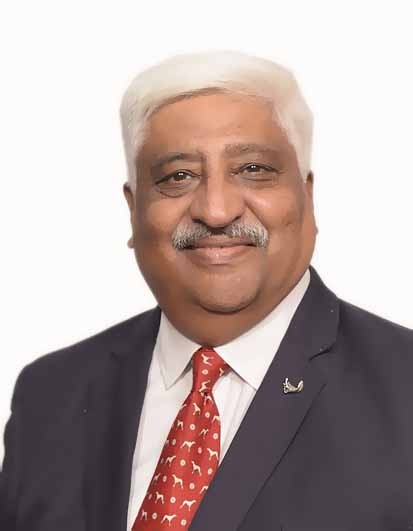
The Delhi Forum for Strategic Studies (DFSS), under the leadership of Lt Gen Kamal Davar, held its annual January conclave on January 17, 2026, in New Delhi. The theme, “India’s Neighbourhood and the Evolving Security Paradigm,” was highly relevant given the current flux, friction, and foreign intrusion shaping India’s regional environment, making the discussions timely and impactful.
During a concise 2.5-hour session, the forum critically assessed whether India’s Neighbourhood First policy has adapted to changing geopolitical realities.
The consensus was clear: goodwill alone no longer guarantees influence in India’s immediate strategic periphery, underscoring the need for strategic recalibration.
The conclave assembled a diverse group of strategic thinkers, including former ministers, diplomats, senior military commanders, and regional experts. The forum enabled candid discussions, with notable attendees including Mr Montek Singh Ahluwalia, Ambassador KC Singh, Air Vice Marshal Kapil Kak (Retd), retired Generals, Ambassadors and senior Bureaucrats with extensive regional experience, thereby enhancing the forum’s credibility.
Gen Kamal Davar’s Opening Frame: Intent vs Outcome
In his opening remarks, Lt. Gen. Davar offered a balanced assessment of India’s Neighbourhood First policy. He acknowledged its original intent: fostering regional goodwill through connectivity projects, humanitarian assistance, disaster relief, and economic cooperation. For years, India’s rapid response as a first responder in crises from earthquakes to floods had reinforced its leadership image.
That advantage, he warned, is eroding.
China’s systematic use of debt-trap diplomacy, Pakistan’s sustained proxy warfare, and the growing footprint of extra-regional powers, most notably the United States, in countries such as Bangladesh and Nepal, have narrowed India’s strategic room for manoeuvre. Gen Davar observed that India’s “heft has waned,” partly because assistance is now viewed transactionally rather than emotionally.
He argued for recalibrating neighbourhood engagement, blending hard power with economic leverage, technological outreach, and youth-centric diplomacy. Influence, he stressed, must be earned continuously, not assumed.
Terrorism’s Persistent Shadow: Ajay Sahni’s Assessment
Mr Ajay Sahni, one of India’s foremost counter-terrorism analysts, set the tone for the substantive discussions. His presentation underscored a sobering reality: despite shifts in global attention, South Asia remains fertile ground for terrorism and unrest.
Sahni traced how neighbourhood instability directly feeds terror ecosystems. Bangladesh, once viewed as having decisively rolled back extremist networks under Sheikh Hasina, is now showing signs of renewed radicalisation along its fringes. Porous borders, weak institutions, and political churn magnify these vulnerabilities.
More worrying, Sahni argued, is the rise of hybrid threats. Digital radicalisation, often amplified through encrypted platforms and foreign-hosted infrastructure, demands urgent technological innovation to empower counter-terrorism efforts and instil confidence in security agencies.
India’s response, Sahni insisted, must move beyond reactive policing. He advocated for technology-driven border hardening, including AI-enabled fencing, predictive analytics, and real-time intelligence fusion.
Future Warfare: UAVs, AI, and the Cost of Lagging R&D
Lt Gen RS Pannu (Retd), former GOC of 14 Corps, shifted the conversation to the future of warfare. His presentation, “Employment of UAVs, AI, and Quantum Computing in Future Wars,” traced the transformation of conflict over the past seven decades—from manpower-heavy engagements to data-dominated battlefields.
Modern warfare, Gen Pannu argued, is no longer about linear engagements but about “web kill chains,” where adversaries are drawn into layered sensor and shooter networks. In such environments, unmanned aerial vehicles, artificial intelligence, and quantum-enabled systems offer decisive advantages.
China’s dominance in this domain was presented in stark terms. With roughly 26 per cent of global R&D output, Beijing enjoys an overwhelming edge in drone swarms, electronic warfare, and quantum decryption. India’s contribution, Gen Pannu noted bluntly, remains negligible by comparison. This disparity forces India into import dependence, often leading it to acquire platforms already nearing obsolescence. “We inherit others’ discards,” he remarked.
Using the example of SpaceX’s 8,000 satellites within an orbital environment of 12,000 to 15,000 objects, he illustrated how space has become a contested operational domain.
Yet, Gen Pannu cautioned against technological determinism. Human judgment, he said, remains critical. AI can process volumes of data, but the human mind retains the agility to detect anomalies and intent.
For India, the path forward lies in a dramatic expansion of indigenous R&D, driven by public-private partnerships, that fosters a sense of national pride and confidence in developing cutting-edge defence technologies like Israel’s Iron Dome, especially in high-altitude regions like Ladakh.
Nepal at the Crossroads: Youth, China, and US Soft Power
Maj Gen Ashok Mehta (Retd), drawing on recent fieldwork and extended engagement with Nepal, examined the country’s internal churn through the lens of youth politics and foreign influence. His presentation focused on how Nepal’s Gen Z is increasingly alienated from traditional political elites and dynastic structures.
Economic stagnation, unemployment, and growing disillusionment with governance have created fertile ground for protest. China’s infrastructure-led engagement, often underwritten by opaque BRI loans, has deepened Nepal’s debt exposure while expanding Beijing’s political leverage.
At the same time, Gen Mehta highlighted the expanding role of US soft power. Initiatives such as leadership programs, educational exchanges, and funding for civil society are shaping narratives and aspirations among Nepal’s youth. He drew parallels with earlier generational engagements, noting how early exposure can have long-term political impact.
India, he warned, risks being perceived as complacent or transactional. Cultural affinity and historical ties are no longer enough. New Delhi must invest in targeted development assistance, digital engagement, and people-to-people programs that speak directly to younger audiences. Failure to do so could see Nepal’s Gen Z drift decisively toward external poles of influence.
Nuclear Doctrine Under Question: Bharat Karnad’s Provocation
One of the most contentious analyses was delivered by Mr Bharat Karnad, who called for a fundamental re-examination of India’s nuclear doctrine. He argued that India’s continued reliance on a singular No First Use posture ignores the asymmetry between its two principal adversaries.
Against China, with an arsenal exceeding 500 warheads, India’s deterrence posture risks being perceived as weak or symbolic. Against Pakistan, whose tactical nuclear weapons are designed to offset conventional inferiority, NFU may offer little restraint.
Bharat Karnad proposed dual doctrines: one centred on massive retaliation against China, the other tailored to deter Pakistan’s battlefield nuclear use.
He also criticised constraints arising from the Indo-US nuclear deal, particularly the prohibition on further testing. India’s six nuclear tests, he argued, were pale against China’s 43 nuclear tests.
Without renewed testing and modernisation, India’s deterrent credibility could erode. Karnad urged accelerated development of the nuclear triad, including MIRV-capable systems such as the Agni-VI, to restore strategic balance.
Salman Khurshid’s Closing Perspective: Diplomacy in the Age of Disruption
Former External Affairs Minister Salman Khurshid closed the conclave with a broader diplomatic lens. He framed the upheavals in Bangladesh and Nepal as symptoms of generational transitions rather than isolated crises. Elections, he noted, will serve as crucial tests of institutional resilience and leadership legitimacy.
Khurshid cautioned against the corrosive role of social media in bilateral relations. Misinformation and performative outrage often outpace diplomacy, constraining governments even when national interests align. Mature statecraft, he argued, requires resisting public pressure when necessary and communicating intent clearly.
Pathways Forward: Reclaiming Strategic Heft
The DFSS 2026 conclave converged on a clear conclusion: India’s Neighbourhood First policy requires renewal, not abandonment. Gen Davar’s opening framework set the tone, calling for a blend of economic statecraft, security preparedness, and youth engagement.
Sahni’s emphasis on counter-terrorism highlighted the need for technological vigilance. Gen Pannu’s focus on future warfare underscored the cost of R&D neglect. Gen Mehta’s neighbourhood analysis revealed the stakes of youth diplomacy. Karnad’s nuclear critique challenged long-held assumptions. Khurshid’s closing remarks reminded participants that diplomacy is as much about restraint as it is about resolve.
The forum’s consolidated report, to be shared with policymakers, carries both warning and opportunity. As Gen Davar’s stewardship of DFSS once again demonstrated, strategic clarity begins with honest diagnosis. Whether India acts on these insights will determine the future credibility of its neighbourhood leadership.