

About the author
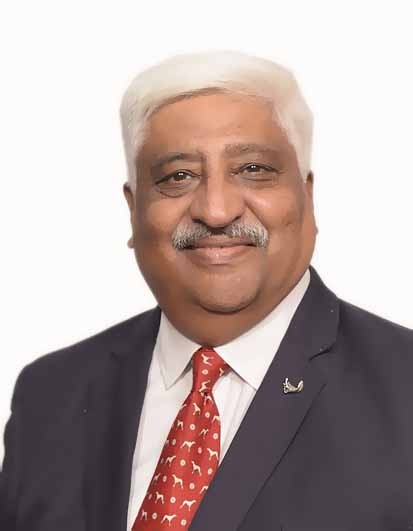
Lt Col Manoj K Channan (Retd) served in the Indian Army, Armoured Corps, 65 Armoured Regiment, 27 August 83- 07 April 2007. Operational experience in the Indian Army includes Sri Lanka – OP PAWAN, Nagaland and Manipur – OP HIFAZAT, and Bhalra - Bhaderwah, District Doda Jammu and Kashmir, including setting up of a counter-insurgency school – OP RAKSHAK. He regularly contributes to Defence and Security issues in the Financial Express online, Defence and Strategy, Fauji India Magazine and Salute Magazine.
*Views are personal.
Pieter Elbers’s connections to global aviation, European business lobbies, and WEF-linked initiatives highlight how transnational networks influence policy and markets, often resembling a ‘deep state.’
However, IndiGo’s recent crisis exemplifies how fragile these transnational networks can be, revealing vulnerabilities that can impact national interests and market stability.
Elbers is part of a small, mobile group of executives who move effortlessly between national carriers, global industry organisations, and elite policy forums, demonstrating how transnational networks shape aviation policy and markets.
Elbers belongs to a small, mobile group of executives who move smoothly between national carriers, global industry organisations, and elite policy forums. Starting his career loading aircraft at KLM in 1992, he advanced to become its President and CEO, served on the Air France–KLM executive committee, and then moved to India to run its largest airline, IndiGo, in 2022. At IndiGo, he now manages more than 400 aircraft, over 2,200 daily flights, and more than 100 million passengers annually, positioning the airline as both an Indian champion and a global connector.
His portfolio extends beyond a single airline. Elbers has chaired the Board of Governors of the International Air Transport Association (IATA), the organisation of global airlines that effectively influences safety standards, slot allocation debates, environmental targets, and lobbying positions vis-à-vis governments.
He has also held roles in Dutch and European business circles, including on the board of VNO-NCW (Confederation of Netherlands Industry and Employers), the Netherlands’ primary industry and employers’ confederation, which routinely engages with the Dutch government and EU institutions on taxation, labour, and regulatory policy. These positions place him firmly within the transnational corporate–policy ecosystem often called the “global elite”.
VNO-NCW is the leading national federation representing Dutch employers and industry interests. It is formally known as the Confederation of Netherlands Industry and Employers. It acts as the largest employers’ organisation in the Netherlands, grouping around 160 branch associations and well over 100,000 companies across almost all sectors of the economy.
Role and activities
VNO-NCW’s core function is business lobbying, shaping Dutch and EU policies on taxation, labour, and environment, thus influencing governance at multiple levels.
Why it matters politically
Because VNO-NCW aggregates the interests of both major multinationals and medium‑sized firms, its positions carry significant weight in socio‑economic decision‑making. It is often described as “the voice of Dutch business”. It has been a visible actor in debates on climate regulation, corporate accountability and energy policy, sometimes pushing to slow down or dilute stricter rules that could raise costs for its member companies. Being on its board thus situates an executive within a powerful corporate–policy interface that routinely engages with national and EU‑level governance.
WEF Platforms and The New “Clean Skies”
Where the “deep state” narrative gains traction is not in secret spy stories but in the public face of seemingly harmless projects like “Clean Skies for Tomorrow.” This is a coalition linked to the World Economic Forum that unites airlines, fuel producers, investors, and regulators to promote sustainable aviation fuels (SAF) and net-zero targets by the middle of the century.
On paper, it is a climate action platform; in reality, it functions as a norm-setting group where a small circle of actors establishes “science-based” targets, timelines, and financial mechanisms that governments are then pressured to follow.
Such platforms embody what critics refer to as “governance by the unelected.” The WEF’s Clean Skies documents openly discuss designing SAF policy toolkits, shaping regulatory frameworks, and orchestrating demand signals for new fuels.
When airline CEOs, oil majors, banks, and select NGOs co-sign these pathways, they are effectively shaping policy options for governments, from carbon pricing to subsidies and blending mandates. The concern is not that they meet, but that public interest, democratic debate, and the specific needs of developing countries are often secondary to private consensus reached in Davos-style venues.
Deep states operate through norms and standards set by organisations like IATA, ISO, and EU agencies, which may seem transparent but are part of a complex network shaping global influence.
In the twenty-first century, ‘deep state’ networks are interconnected groups of corporate executives, regulators, and technocrats that set standards, regulate finance, and maintain continuity beyond elected governments.
- Set standards and rules through organisations like IATA, ISO, the WEF coalitions, and EU agencies.
- Regulate access to finance, technology, and critical infrastructure via banks, export-control regimes, Big Tech platforms, and sanctions authorities.
- Maintain continuity that surpasses elected governments, enabling them to uphold long-term priorities in trade, energy, security, and data flows.
In aviation, this appears as a close network of manufacturers, lessors, global financiers, rating agencies, and regulators who can collectively influence a carrier. Aircraft financing terms, safety directives, emissions rules, and crew-duty regulations are all negotiable areas where global industry groups lobby national regulators. The “deep state” is thus less a conspiracy and more an established structure of power and influence that is difficult to see in everyday operations but becomes apparent when crises occur, and states rush to protect strategic interests.
Elbers, IndiGo and the WEF nexus
Seen through this lens, Elbers’ career profile fits a familiar template: a European national leading a flagship airline, serving on global bodies, contributing to WEF-aligned sustainability initiatives, and then assuming command of a dominant airline in a primary emerging market. His association with Clean Skies for Tomorrow aligns IndiGo with a decarbonisation agenda whose timelines and cost structures are heavily influenced by Western and corporate priorities. SAF mandates, carbon accounting, and fleet renewal pressures can all shift the economics of flying in ways that Indian passengers never voted for, but Indian airlines must implement.
Elbers’ earlier board role in VNO-NCW connected him to Brussels-focused lobbying on energy, environment, and competition policy, the very areas where European institutions are trying to regulate airlines through emissions trading, state aid rules, and climate conditions. His chairmanship of IATA’s Board of Governors adds another dimension, as IATA serves as both the technical expert and the political representative of global airlines in negotiations with governments on taxes, slot allocation, consumer rights, and environmental charges.
This is not to suggest secret plots but to emphasise that his decision-making perspective is global, networked, and highly responsive to elite consensus rather than solely to national policy in India.
The Indigo Crisis and Putin’s Visit
The timing of IndiGo’s meltdown, coinciding with Vladimir Putin’s high-stakes visit to India, naturally fuels speculation. During the first week of December, IndiGo cancelled or severely disrupted hundreds of flights, with some reports citing more than 1,000 cancellations over several days, leaving passengers stranded across major Indian airports.
Reports point to a common trigger: IndiGo’s failure to adequately prepare for new Flight Duty Time Limitation (FDTL) norms that require more extended rest periods and stricter night-duty limits for pilots, leading to roster chaos and mass grounding when the rules took effect.
As the crisis worsened, the regulator partially loosened specific night-duty rules for IndiGo until February 2026, a move critics claimed was proof that the airline had successfully “arm-twisted” the government after allowing operations to collapse.
The fact that this happened while Putin was in India, combined with viral commentary contrasting the chaos with a 2009 clip of Putin publicly disciplining a Russian oligarch, has understandably fueled the narrative that unnamed Western or globalist interests might have sought to embarrass the visit and signal that big business could still hold the Indian state hostage.
Could The Crisis Have Been Manufactured?
For a deliberate, externally orchestrated disruption targeting a specific diplomatic event, several elements would need to align: covert coordination between airline management and foreign interests, manipulation of rosters and staffing to trigger maximum chaos at the right moment, and some assurance that domestic regulators and political actors would not preemptively intervene. None of this is supported by public evidence so far. Investigative and media accounts attribute the collapse to poor manpower planning, delayed pilot hiring, aggressive scheduling, and overreliance on regulatory flexibility, rather than to a conspiracy timed to Putin’s arrival.
However, systemic negligence can behave like intent. When an airline with over 60 per cent market share runs its network so close to the edge that a known regulatory change can bring the system down, it creates leverage points for all kinds of actors—domestic and external—to shape outcomes through pressure and narrative. Once the crisis began, different players—corporate lobbies, political factions, foreign embassies, and media platforms—could instrumentalise the chaos to push their preferred interpretations: corporate vulnerability, state weakness, or the need for tighter control over foreign-led carriers. That is how deep‑state dynamics typically operate: not by pulling a single hidden lever, but by exploiting structural fragility.
Deep States and India’s Strategic Autonomy
Where the IndiGo episode intersects geopolitics is in perception management around India’s strategic autonomy. Putin’s 2025 visit was about deepening energy, defence and logistics ties, including nuclear fuel supply and cooperation on new reactors, even as Western sanctions on Russia intensify. From the vantage point of transatlantic elites, an India–Russia compact that strengthens long-term nuclear, defence and media linkages—exemplified by discussions on reactors and the launch of RT India—directly challenges the narrative that Russia is isolated and that the West monopolises the language of “rules-based order”.
In that broader contest, civil aviation is not a sideshow. Air connectivity shapes trade flows, tourism, business linkages and public perceptions of reliability. If a flagship Indian carrier run by a European CEO appears unstable just as India showcases a major non-Western partnership, it symbolically reinforces the view that global supply chains, travel and infrastructure remain vulnerable to external norms, financing conditions and technical architectures dominated by Western-centric networks. Even without conspiracy, the episode underscores how much of India’s economic and mobility infrastructure still depends on globalised management cultures and regulatory models ultimately shaped elsewhere.
How Deep States Actually Act
Instead of a single “smoking gun” around IndiGo, the more instructive lens is to observe recurring patterns in how deep‑state-like structures behave:
- Pre-setting acceptable policy space. Through WEF coalitions, industry lobbies, and technical standards, they define the range of “reasonable” options before parliaments and publics even debate them, whether on SAF mandates, emissions levies, or pilot-rest norms.
- Using crises to consolidate norms. Operational meltdowns, accidents, or environmental scares are used to argue that only more centralised, expert-driven governance, often designed by the same networks, can prevent recurrence, locking in their authority.
- Rotating elites across institutions. Executives like Elbers move between airlines, industry associations, lobbying bodies, and WEF platforms, carrying a shared worldview that prioritises market integration, climate-linked finance, and “stakeholder capitalism” over traditional notions of sovereignty and public accountability.
- Marginalising alternative pathways. Developing-country concerns about affordable fares, balanced regional connectivity, and strategic autonomy are sidelined as “political” or “populist” when they clash with pre-agreed global roadmaps on climate, competition, or capital flows.
In this sense, “deep state” is not only about clandestine operations but about structural power; who sets the agenda, who drafts the templates, and who pays the price when systems fail. IndiGo’s crisis, framed against Putin’s visit, serves as a case study of how fragile national capacity appears when embedded in a dense web of transnational dependence.
Responsibility and Accountability of the Board of Directors of IndiGo
Beyond misjudgment by management, attention must now shift to IndiGo’s Board of Directors and their fiduciary duty to foresee and address potential risks. As a listed entity with systemic significance in India’s aviation sector, InterGlobe Aviation’s board, led by Vikram Singh Mehta and including promoter‑director Rahul Bhatia, independent director Air Chief Marshal (Retd) B.S. Dhanoa, former NITI Aayog CEO Amitabh Kant, ex-SEBI chair M. Damodaran, aviation experts Gregg Saretsky and Mike Whitaker, legal professional Pallavi Shardul Shroff, and non‑executive director Anil Parashar, cannot reasonably claim surprise at DGCA’s 18‑month transition period or the increasing operational pressures.
Their fiduciary obligation is not limited to approving glossy expansion plans; it also includes ensuring that crew‑duty regulations, human resources planning, and risk controls are sufficiently strong to prevent the kind of cascading collapse that stranded passengers nationwide, damaged India’s aviation reputation, and raised questions about regulatory capture.
The Ministry of Civil Aviation and the Ministry of Corporate Affairs should therefore initiate a time‑bound inquiry into board‑level oversight failures, fix accountability where lapses are established, and, if necessary, pursue legal recourse under company law and securities‑market regulations to signal that systemic negligence at this scale will not be written off as an unfortunate “operational issue”.
India’s choices in a networked world
For India, the strategic task is not to indulge in unprovable conspiracy claims but to harden systems against both negligence and manipulation. That means:
- Re‑asserting regulatory sovereignty so that crew‑duty rules, safety standards and consumer protections are driven by Indian conditions, not just global industry lobbying.
- Diversifying managerial pipelines so that foreign expertise is used, but ultimate accountability remains rooted in domestic strategic objectives.
- Scrutinising how WEF-style coalitions, SAF roadmaps and climate finance conditionalities intersect with India’s development priorities, ensuring that decarbonisation does not become a vehicle for new dependency.
Deep states operate through continuity, networks, and norms. The IndiGo–Elbers–WEF triangle illustrates how these forces converge within a single airline’s cockpit. Whether India permits these networks to influence its strategic decision-making or chooses to chart its own course will determine how future crises, whether engineered or accidental, unfold in the shadow of great-power diplomacy.