

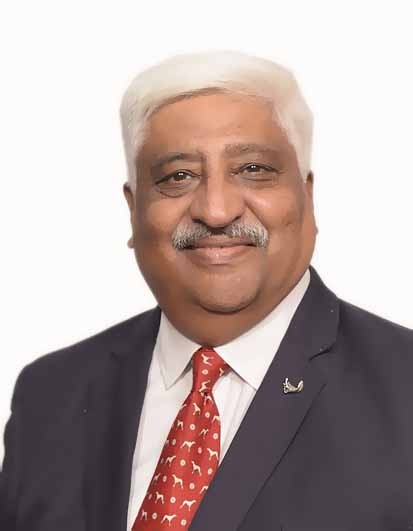
About the author

Lt Col Manoj K Channan (Retd) served in the Indian Army, Armoured Corps, 65 Armoured Regiment, 27 August 83- 07 April 2007. Operational experience in the Indian Army includes Sri Lanka – OP PAWAN, Nagaland and Manipur – OP HIFAZAT, and Bhalra - Bhaderwah, District Doda Jammu and Kashmir, including setting up of a counter-insurgency school – OP RAKSHAK. He regularly contributes to Defence and Security issues in the Financial Express online, Defence and Strategy, Fauji India Magazine and Salute Magazine.
*Views are personal.
India’s aviation sector is once again in turmoil, but this time the crisis at IndiGo has revealed something more insidious than mere poor planning or technical errors. The meltdown has exposed a political and corporate nexus in which regulatory impunity is crafted, accountability is delayed, and the national interest takes a back seat to coalition politics. Pieter Elbers, the global technocrat brought in to lead India’s largest airline, may be the public face of the disaster, but the real deep state influencing outcomes resides not in Amsterdam, Singapore, or Davos. It is in New Delhi, where the Telugu Desam Party (TDP) and its political influence over the airline have fostered an ecosystem of unchecked power.
The Elbers Façade: Global Polish, Indian Realities
Pieter Elbers joined IndiGo in September 2022, bringing a seasoned aviation expert’s perspective. With nearly three decades at KLM, chairmanship of IATA’s Board of Governors, and board membership at VNO-NCW, the Netherlands’ leading employers’ association, Elbers exemplifies the global corporate elite. His connections to the World Economic Forum’s “Clean Skies for Tomorrow” initiative further link him to transnational policymaking networks that influence global aviation, sustainability, and crew standards.
Yet, the reality he entered is distinctly Indian. IndiGo is not just a private airline operating in a competitive market; it is a quasi-political entity whose fortunes depend on the political environment in New Delhi. Recognising this should inspire stakeholders to advocate for fairness and justice in governance.
TDP’s Shadow Grip: Ownership Without Accountability
IndiGo’s roots trace back to the entrepreneurial vision of Rahul Bhatia and Rakesh Gangwal, who founded an airline known for scale, reliability, and global ambitions. However, today, its operational independence is closely tied to political support—the TDP, under N. Chandrababu Naidu has long held strategic interests in the aviation sector aligned with Andhra Pradesh’s economic goals. The current Civil Aviation Minister, Ram Mohan Naidu Kinjarapu Naidu, effectively serves as the guardian of IndiGo’s regulatory environment.
This is not just fringe speculation; it arises from serious political calculations. After the 2024 elections, the Bharatiya Janata Party (BJP) returned to power without a clear majority. With only 240 seats, the government’s stability relies on the TDP’s 16 Lok Sabha seats. This influence gives them sway over ministries beyond Andhra’s borders. Because of its visibility and economic importance, aviation naturally became a portfolio of interest.
Industry insiders often point to TDP-linked investors, regional logistics partners, and business networks operating within IndiGo’s sphere. The result is a form of indirect ownership that doesn’t appear on shareholder registers but significantly influences regulator behaviour, ministry interventions, and crisis management.
IndiGo’s Meltdown: Negligence Camouflaged as Circumstance
The airline’s operational collapse, with 200 to 300 daily cancellations, thousands stranded, and airports turned into holding camps, underscores the severity of systemic governance failures. This should prompt industry professionals and policymakers to prioritise reforms to prevent future crises.
In effect, IndiGo treated safety norms as negotiable, assuming political protection would ease regulatory hurdles. When the crisis peaked, its instinctive response was to blame pilots and quietly pressure DGCA for deferments. That DGCA ultimately granted a temporary extension confirms the airline’s gamble: power protects non-compliance.
Boardroom Complicity: A Fiduciary Collapse
IndiGo’s board, chaired by Vikram Singh Mehta and including Rahul Bhatia, Air Chief Marshal (Retd) B.S. Dhanoa, Amitabh Kant, M. Damodaran, Gregg Saretsky, Mike Whitaker, Pallavi Shardul Shroff, and Anil Parashar, failed in its most basic responsibility. It approved an aggressive expansion model without securing staffing buffers, despite knowing that pilot rest rules were imminent and non-negotiable.
This is not a board caught unaware; it is a board that misjudged the extent of political protection and overlooked operational realities. In a mature corporate ecosystem, such oversight would lead to resignations and shareholder revolt. But no such reckoning took place. No resignations. No public accountability. The silence itself underscores where real power resides—and how political influence shields corporate missteps.
Modi’s Coalition Bind: Political Arithmetic vs Public Interest
Prime Minister Narendra Modi’s third term is shaped less by the decisive mandates of 2014 and 2019 and more by reliance on coalitions. TDP and JD(U) are essential pillars of the government. Naidu, an adept political negotiator, has used this opportunity to influence policy decisions across sectors, including aviation.
During the IndiGo crisis, speculation circulated about sabotage timed with President Putin’s visit. However, the actual cause is much simpler: a promoter–politician nexus, supported by coalition fragility, allowed an airline to operate freely. Regulatory agencies, instead of asserting authority, bowed to political pressure. The government, hesitant to offend a key ally, chose to handle the crisis superficially rather than through systemic change.
India’s Deep State: Not Davos, but Delhi
India’s real deep state isn’t a global elite living in Zurich or Brussels. It’s the entrenched politico-corporate ecosystem in New Delhi that decides when rules apply, when they don’t, and to whom they apply. IndiGo’s crisis exemplifies how this system functions.
- Control the airline informally.
- Control the ministry formally.
- Neutralise the regulator institutionally.
- Protect the board politically.
- Allow the carrier to defy norms economically.
Elbers may be fluent in global governance, but Delhi’s deep state has shown him a different lesson; power in India comes from political guardianship, not corporate titles.
The most damaging part of the meltdown was not just operational chaos but also the human toll. Passengers slept on airport floors, elderly travellers were stranded, and families missed vital events. This should motivate informed citizens and policymakers to push for urgent systemic reforms.
The most devastating part of the meltdown was not the operational chaos but the human suffering. Passengers slept on airport floors as flights disappeared from departure boards. Elderly travellers were stranded without assistance. Families missed essential events. Hotels near airports charged high rates, while transportation networks collapsed in panic.
This is not just a one-time failure; it reveals systemic governance flaws in India. The human toll of passengers sleeping on airport floors, the elderly stranded, and families missing events highlights a more profound crisis. A country striving for Viksit Bharat cannot tolerate such operational failures in its largest airline, which stem from systemic governance issues requiring urgent reform.
International Optics: A Fragile Image Amid Strategic Signalling
The timing was detrimental to India’s global reputation. As New Delhi hosted President Putin to discuss nuclear collaboration, defence upgrades, and long-term energy cooperation, its domestic aviation system struggled. Although sabotage theories were unfounded, the symbolism was unavoidable: India’s geopolitical ambitions remain susceptible to internal mismanagement.
The Road Ahead: Reckoning or Repeat?
IndiGo will recover—its brand resilience, market share, and access to capital almost guarantee it. But recovery is not reform. Unless the core issues are addressed, this crisis will occur again in new forms.
India must take decisive steps: –
- The Aviation Minister must recuse himself from overseeing IndiGo to avoid conflicts of interest.
- DGCA must be structurally protected from political interference.
- Board-level accountability measures, including clawback provisions, must be implemented.
- SEBI and the Ministry of Corporate Affairs must examine insider trading, disclosures, and crisiscommunications.
Without these reforms, India will continue to produce airline failures rather than aviation leaders.
A Curious Anomaly: Domestic Chaos, International Calm
One detail stands out sharply amidst IndiGo’s operational collapse: only domestic flights were affected, while the airline’s international operations continued nearly flawlessly. This selective disruption challenges any narrative of a system-wide failure. If weather, technical issues, or crew shortages were truly overwhelming, the international network, which depends on longer duties, more complex crew coordination, and stricter international regulations, should have been the first to suffer.
Instead, it was protected. This imbalance prompts difficult questions. Was the domestic sector permitted to absorb the shock because political and regulatory leniency was expected domestically? Meanwhile, international routes, examined by foreign regulators and crucial for IndiGo’s global ambitions, were protected at all costs.
The dichotomy highlights a strategic decision: protect the global reputation while domestic passengers face the consequences. It emphasises once more where IndiGo sees accountability and where it does not.
Conclusion: Power Bows to No One
IndiGo’s crisis was not just an operational failure; it was a governance failure driven by political protectionism and corporate complacency. The actual deep state isn’t the WEF or Elbers’ global network; it is the Delhi durbar where political allies are shielded, and regulators are subordinate.
Until India confronts this reality decisively and officially, its skies will remain a playground for the connected and a graveyard for the ordinary passenger. The nation deserves better than an aviation system hostage to political calculations.