The Tupolev Tu-214 is a long-range version of the Tu-204-200 series, developed in the late twentieth century by the Russian aerospace design bureau Tupolev. Conceptually, it was designed to be a modern, effective, and competitive medium-range airliner capable of operating on both domestic and international routes. During its tenure, the aircraft exhibited commendable performance, structural integrity, and operational flexibility. Nevertheless, notwithstanding its technical advantages, the Tu-214 did not attain widespread commercial success.
Economic instability resulting from the dissolution of the Soviet Union, restricted access to financing, and intense competition from Western manufacturers such as Airbus and Boeing limited the scale of serial production. Western narrow-body aircraft swiftly established themselves as the global standard, owing to ongoing modernization, high production volumes, and robust airline backing. As a consequence, the Tu-214 persisted as a niche aircraft, manufactured in limited quantities and predominantly utilized by government operators and specific commercial organizations.
In recent years, the circumstances have undergone a significant transformation. Structural changes in the international aviation sector and limitations on the importation of foreign aircraft and components have compelled Russia to reevaluate its civil aviation strategy. Domestic research institutions, comprising prominent aerospace universities and aerodynamic research institutes, have determined that the competitiveness of the national aircraft industry necessitates prompt and decisive action. One of the proposed solutions involves the comprehensive modernization of current aircraft platforms, with the Tu-214 identified as a leading candidate.
In 2024, this renewed emphasis was realized through the creation of a specialized design center in Moscow dedicated to the modernization of the Tu-214, operated under the guidance and support of JSC Tupolev. This decision indicated that the aircraft is no longer regarded only as a legacy design but as a potential cornerstone of immediate domestic aviation capacity.
Simultaneously, the development of the MC-21 program prompts valid concerns. Should constrained financial and engineering resources be allocated to refurbishing an antiquated airframe, or should they be focused on expediting the deployment of a newer aircraft engineered to compete on a global scale from the beginning? Responding to this inquiry necessitates a thorough analysis of economic benefits, technological viability, and long-term strategic goals.
Economic Rationale Underpinning Modernization
The main reason for modernizing the Tu-214 is to enhance economic efficacy. Creating a new aircraft from the ground up is an intricate and expensive undertaking that can span more than a decade and necessitate substantial financial investment. In contrast, enhancing an existing platform enables manufacturers to leverage established structures, certification expertise, and manufacturing infrastructure.
Research carried out by aviation experts suggests that, although a thorough modernization of the Tu-214 would entail significant expenditure, the long-term economic benefits may justify the investment. The main sources of return comprise decreased fuel consumption, diminished operational costs, extended service life, and an enhanced market value for the upgraded aircraft.
Fuel efficiency is a critical factor in the economics of airlines. Even slight decreases in fuel consumption result in substantial savings throughout the aircraft’s operational lifespan. Furthermore, a modernized Tu-214 could command a higher market value and maintain operational relevance for many years, whereas postponing modernization risks premature obsolescence.
Importantly, modernization further facilitates the continuity of industrial operations. Ensuring the maintenance of production lines, engineering teams, and supplier networks safeguards essential capabilities during the development of newer aircraft programs.
Key Performance Requirements for a Competitive Upgrade
To meet the performance standards of contemporary narrow-body aircraft, any modernization of the Tu-214 has to include several essential aspects.
Initially, economic efficiency should be increased by decreasing fuel consumption and optimizing engine performance. Second, adherence to environmental regulations is crucial, necessitating reduced emissions of carbon dioxide and nitrogen oxides, along with compliance with international decibel standards. Third, aviation safety must be improved through the implementation of advanced navigation, communication, and flight-control systems. Ultimately, passenger convenience must be enhanced to align with current standards for cabin noise levels, climate regulation, and interior aesthetics.
Research continually demonstrates that accomplishing these objectives is unfeasible without the integration of innovative technologies and materials. Incremental enhancements alone are insufficient to bridge the disparity with contemporary aircraft designs.
Engine Upgrade Alternatives
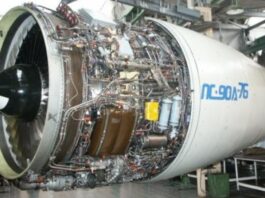
One of the most vital components of any modernization initiative is the powerplant. The Tu-214 has traditionally been equipped with PS-90 series engines, which were competitive at the time of their introduction but are now considered to be technologically outdated.
Development of the PS-90 Family
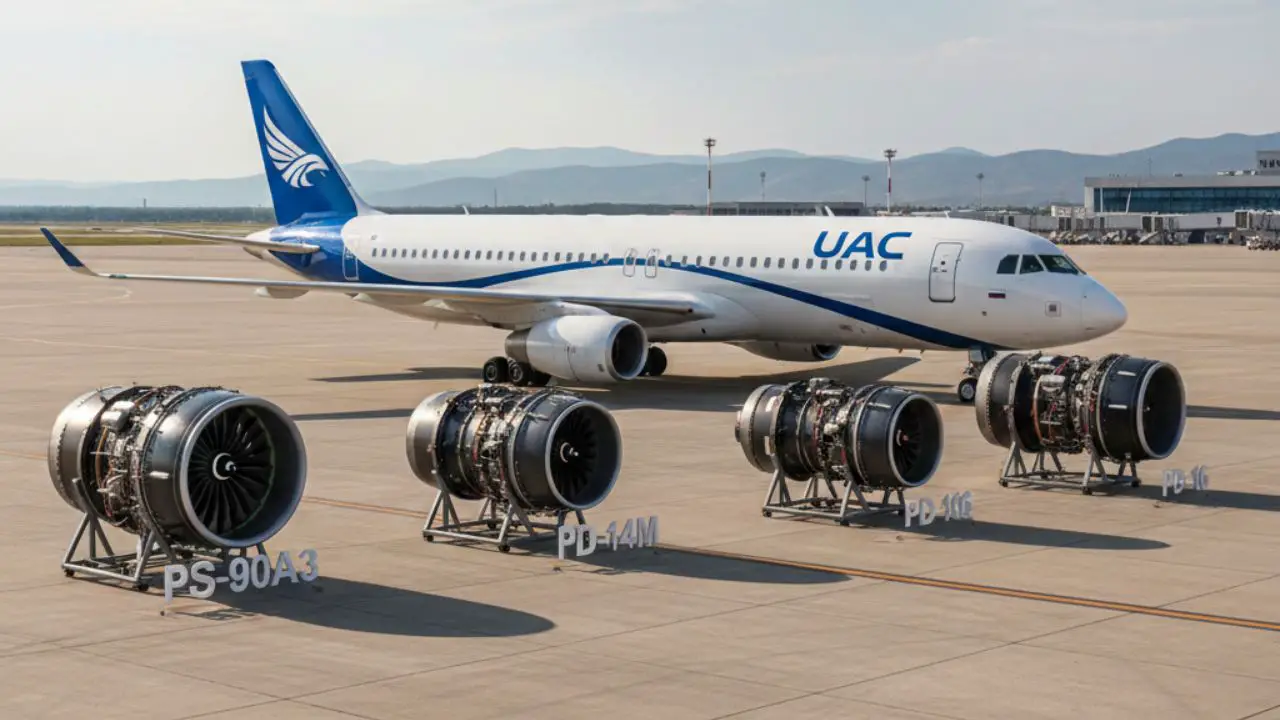
Enhanced versions such as the PS-90A3 provide improvements in fuel efficiency, dependability, and environmental sustainability. These engines demonstrate an evolutionary approach, enabling operators to decrease operational costs without fundamentally modifying the aircraft’s structure. This approach reduces technical risk and accelerates implementation schedules.
Nevertheless, despite these enhancements, aircraft equipped with enhanced PS-90 engines would continue to fall short of the most recent Western narrow-body aircraft in terms of fuel efficiency and emissions. Consequently, this solution should be regarded as a temporary or transitional measure rather than a permanent resolution.
The Potential of the PD-18R
A more ambitious alternative involves the PD-18R, a geared turbofan engine currently under development, derived from the PD-14 core. Its planetary gearbox enables the fan and turbine to operate at optimal velocities independently, thereby substantially enhancing overall efficiency. Projected fuel savings range from 15 to 20 percent in comparison to conventional direct-drive engines.
The PD-18R also offers decreased noise emissions, lower environmental impact, and enhanced lifespan resulting from reduced mechanical stress on rotating parts. These attributes would significantly enhance the Tu-214’s competitiveness.
However, the PD-18R is still in development and is not anticipated to be operational until the latter portion of the upcoming decade. Dependence on it would postpone the Tu-214 modernization and compromise the aircraft’s immediate relevance.
Modifying the PD-14 Engine
The PD-14, designed for the MS-21, constitutes the most viable modernization alternative. Research indicates that modifying this engine for the Tu-214 is technically achievable and economically viable. Using a standardized engine across various aircraft models diminishes logistical complexity, decreases maintenance expenses, and enhances the robustness of the domestic aerospace industry.
Simultaneously, re-engining the Tu-214 with PD-14 engines would necessitate structural modifications to the wing, landing gear, and control systems. Comprehensive engineering analysis, testing, and complete certification would be required, thereby augmenting both the cost and the duration of development. A PD-14M with a 15.5 to 15.7 thrust or a derated PD-16 core would likely be required.
Aerodynamics, Materials, and Systems
Beyond propulsion, major modernization necessitates enhancements to the aircraft’s aerodynamics and structural integrity. Enhancing wing geometry, minimizing drag, and optimizing lift properties can lead to substantial fuel efficiency improvements. Modern wing profiles and optimized aerodynamic surfaces would augment performance throughout the entire flight envelope.
Weight reduction remains a vital consideration. The incorporation of composite materials into the fuselage, wings, and control surfaces can substantially reduce structural weight. Decreased weight directly results in reduced fuel consumption and enhanced payload capacity.
Recent integrated systems are of equivalent significance. Integrated digital avionics, sophisticated flight management systems, and real-time engine monitoring enhance safety, decrease pilot duty, and reduce maintenance expenses. These systems also facilitate the alignment of the aircraft with current certification and operational standards.
Strategic Rivalry involving the MC-21
The modernization of the Tu-214 should be viewed in conjunction with the continuous development of the MC-21. The MC-21 was conceived from the beginning as a next-generation aircraft, integrating advanced aerodynamics, extensive utilization of composite materials, and contemporary engines.
Critics contend that even a highly modernized Tu-214 is unable to entirely rival the performance, efficiency, and long-term prospects of the MC-21. From this standpoint, allocating resources to an aging platform jeopardizes the progress toward the development of genuinely competitive aircraft.
Supporters of modernization argue that the Tu-214 can function as an interim solution, addressing urgent domestic requirements while maintaining industrial capacity. In this perspective, modernization and new development are not mutually exclusive but serve as complementary components within a comprehensive strategy.
Final Remarks
The modernization of the Tu-214 exemplifies a broader challenge confronting the Russian civil aviation sector: reconciling imminent operational requirements with long-term strategic objectives. A fully modernized Tu-214 has the potential to deliver significant economic and industrial advantages, enhance domestic manufacturing capabilities, and maintain fleet readiness in the short to medium term.
Simultaneously, structural and technological constraints prevent the Tu-214 from entirely substituting next-generation aircraft in the long term. Its function, therefore, is most accurately characterized as transitional—a foundational platform that sustains the industry during the development of more sophisticated designs.
Ultimately, the choice to undertake comprehensive or partial modernization should be informed by thorough economic analysis, pragmatic timelines, and alignment with the national aviation strategy. If implemented judiciously, modernization can strengthen industrial resilience without compromising the pursuit of future competitiveness.