

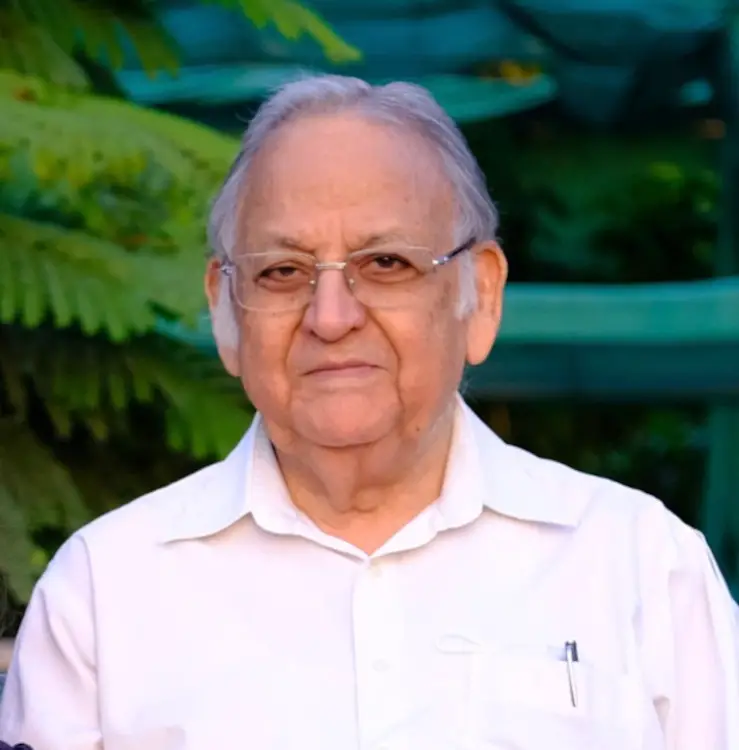
My joining the army was not a planned career choice, nor something I would have visualised in those days. Career planning, as such, was never a subject of discussion then. We simply continued with our studies in whichever stream we were in, arts or science, and carried on as far as we could go. The only real motivation for joining the army came from my uncle, who was a doctor and had joined the army during the Second World War. Within six months of his service, he was taken prisoner of war. During his captivity, he came into contact with Subhash Chandra Bose, who was renowned for his powerful oratory. Deeply impressed by Bose’s speeches, my uncle went on to join the Indian National Army (INA).
When the war ended and the rest of the world was celebrating, he was arrested for treason for having been part of the INA and spent six months in a dungeon in Rangoon. That, however, is another story for another time. (Here is the story.)
It was almost by chance that I applied to join the army. At the time, I was in Bombay, training to be a marine engineer at the Indian Naval Dockyard. One of my colleagues was filling out forms for the army’s written examination. He was my competitor, as there were three of us who were in the top three of our class. He used to be very secretive and would hide whatever he was doing, especially on the eve of an exam. But one day, when I went to his room, I saw him sitting at his desk, working. Seeing me, he continued with his work. I asked him what he was doing. His answer was, “I am applying for a commission in the army.” That did not make much sense to me. He then explained the whole process.
I gathered that the examination fee was Rs 37.50, which was a substantial sum for me at that time. So I immediately backed out, as I did not have that kind of money to spare. He then told me that Rs 30 of that amount would be reimbursed if I cleared the written exam. That caught my attention. I further learn’t from him that after the written test, there was an interview at the selection centre in Bangalore. An added incentive for a young man like me was the prospect of a free trip to Bangalore, which was known as the Garden City of India in those days. We both cleared the entrance exam but went for the interview in different batches. I qualified in the interview and went on for the medical, and the rest, as they say, is history.
On 15 January 1956, I arrived at Dehradun railway station to join the Indian Military Academy, the premier officer training institution of the Indian Army. From the station, we were picked up in an army truck and driven to Prem Nagar, where the IMA is located, which is about fifteen kilometers from the town.
Once we reported with our joining letters, we were informed of the companies to which we had been assigned and directed to the Quartermaster’s store to draw our kit and uniforms, along with a rifle, which was our personal weapon and remained with us until we passed out.
Since the uniforms had to be stitched to individual measurements, we were sent to Phelps, the tailor, where our measurements were taken. There was no such problem with the PT dress. It consisted of white sando-cut vests and shorts, along with PT canvas shoes, which everyone wore. None of the modern, fancy and pricey footwear we see now was available in those days. Since it was winter, we were issued a woollen jersey to wear over it. That was the uniform. If you shivered in spite of it, you were on your own. The only way to keep warm was to do vigorous exercises to beat off the cold, and January, as we soon discovered, was the coldest month of the year.
For nearly a month, until our uniforms were ready, we continued to wear civilian clothes. I had come straight from Bombay, where the weather remains constant throughout the year and woollens are not needed. In Dehradun, I quickly realised my mistake and had to buy myself a long, warm coat.
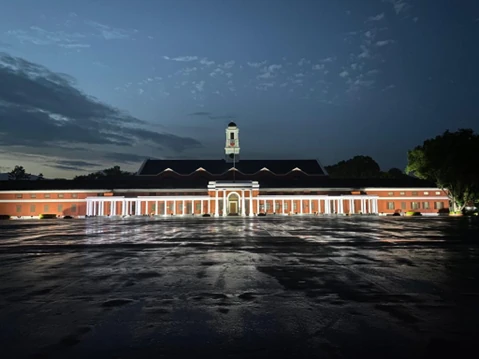
Not being very clear about army life or what to expect, I arrived at the IMA with mixed feelings. At that time, the main campus of the Indian Military Academy comprised only two residential blocks, Collins and Kingsley, perhaps sufficient for the limited number of officers being trained then. As the requirement increased, several hutments were added outside the main campus, about two kilometres away towards the Forest Research Institute, both inside and outside the campus.
In all, there were six companies that formed part of the IMA: Sangro, Cassino, Meiktila, Kohima, Naushera, and Zojila, named after famous battles in which the Indian Army participated. These were divided into two battalions, A and B. Sangro, to which I was assigned, belonged to B Battalion. Since Sangro had been the champions of the previous term, we were allotted the Collins Block, where all rooms were of double occupancy. Cassino, by contrast, had single rooms for each cadet.
The Collins Block was located directly opposite the main Chetwode Building, where most of our academic classes were held. This gave us a small but significant advantage, as it involved minimal travelling time. Those stationed farther away had to allow an extra fifteen to twenty minutes to reach their classes on time. Time, in any case, was always a precious commodity at the Academy. The time from Reveille to Retreat just flew by; before you knew it, the day was gone.
Our day began with Reveille, the bugle call that served as a wake-up call for us to get ready for the day. That, however, was only the beginning.
Then our orderly would bring us a cup of tea in a thermos. We were each assigned an enamel mug for all purposes, including having tea. The orderlies were civilians, and the number of orderlies per block was assigned depending upon the size of the block. A dhobi would take our clothes to be washed and ironed and hand them over to the orderly, who would put them in our cupboards. The upkeep of the room, preparing our uniforms, and making our beds were our orderly’s tasks. However, we had to be very vigilant; not being literate, he would occasionally put the shoulder badge on the uniform upside down, for which nothing happened to him, but we were pulled up and suffered punishments by the seniors. Early morning, we were gathered for a shave parade where our uniforms were checked. And if anyone had a poor shave, he would be reprimanded, saying, “Next time you shave, stand closer to the blade.” The quality of the shave mattered on what brand of blade one used; 7 O’clock was the top brand then and still is.
Then we had about thirty minutes of PT, returned to our rooms, changed into uniform, and went for breakfast.
After breakfast, we attended academic classes at the Chetwode Building. The subjects ranged from science to military history and military geography, all closely connected to army training. Then, from about 1.00 to 2.30 pm, was lunch, which you could have at your own time. After that, we returned to our rooms at 2.00 pm for a short rest, which never happened, as invariably some senior would barge in and send us on some personal errand or other. Also, we were required to do a compulsory cleaning of our weapons and show it to the arms inspector. Only when he was satisfied could we breathe a sigh of relief; otherwise, it was back to cleaning. There went the whole afternoon, when we were supposed to be resting.
At about 4.00 pm, the orderly brought a cup of tea for everyone and two biscuits, shortbread, which were baked at IMA. Then we went out for games, which lasted for an hour and a half. The timing changed depending upon the season. One could choose between football, hockey, or cricket. There were many activities available, but time was always limited. Those not participating in games were sent for road walks or runs. In summer, swimming became a major activity; it was a compulsory subject and had to be learn’t. Horse riding was also compulsory and was conducted twice a week.
Then we had about an hour and a half to ourselves until we got ready for dinner. Four nights a week were compulsory mess dinner nights, namely Monday, Tuesday, Thursday, and Friday, for which we wore the mess uniform. These compulsory dinners were held at fixed times and meals were served at the table. On the remaining nights, we could dine at our convenience between 7.30 and 9.30 pm and serve ourselves. We picked up a plate, went to the counter and helped ourselves, then went to another counter to pick up another item, and sat at the table to eat. Thereafter, you left and the mess staff cleared the table.
Apart from that, there was a cafeteria, which was very popular. Those days, pizzas and burgers had not yet come in; our favourites were sandwiches, cheese pakoras, and hot chocolate. Our monthly pocket money was around Rs 50 and lasted us through the month. If you ran short of money, you were allowed a money order from home.
I cannot forget an incident that happened one Sunday afternoon. My roommate, a senior in his third term, Cadet GRS Siwach, was the Orderly Sergeant for the week, which was a rotating appointment. This involved several duties and required him to report to the duty officer at Chetwode from time to time, during which he would receive instructions for the day.
Being a Sunday, he usually did not change out of his uniform. He would simply take off his belt and shoes and relax. Also on Sundays, a special menu was served at lunch, and we all looked forward to it.
That day, when I returned to my room before going to the mess for lunch, I was surprised to see him still reclining in bed.
I commented, “You have come back rather early.”
He woke up with a start and asked, “What time is it?”
I said, “1:00 pm.”
“Oh my God, I missed my reporting,” he said.
Without wasting any time, he said to me, “Come along with me.”
“Where to?” I asked.
“I will tell you on the way. Don’t waste any time,” he replied.
As we headed towards the MI Room, he explained, “You are unwell, and I am supposed to take you for emergency treatment. That will cover my absence from reporting. You can just get some medicine and come back.”
The plan sounded reasonable to me, so I agreed to go along. Plus, he was a senior; I had no option.
At the MI Room, the NCO examined me and called the doctor. In about ten minutes, the doctor, Major Sealy, arrived, who was British and had stayed on to serve in the Indian Army after Independence. It was rather difficult for me to feign sickness on an empty stomach. When he asked where the pain was, I pointed somewhere near my navel. He pressed hard, and that really hurt.
He then gave instructions for me to be admitted and left. Siwach felt genuinely sorry for me, as this eventuality had not occurred to him. He departed, and no doubt he enjoyed his lunch. Mine was gone.
I waited until teatime to get something to eat. Around 4:00 pm, I was given a cup of tea with two tiny biscuits and another dose of medicine. In those days, tablets were rare, and we were mostly given various mixtures, all of which had a bitter taste. I told the orderly that he should have given me the medicine before tea; it would have left a better taste in my mouth.
Dinner was around 7:30 pm, and I was served a hot bowl of soup with a slice of bread and butter. That felt like an encouraging indication of something more to come. When the attendant did not return, I buzzed for him and asked about the rest of my dinner. He replied, “You have been prescribed a light dinner, and you have already had it.”
I cursed my roommate endlessly. The least he could have done was get something from the cafeteria to compensate for the missed lunch and dinner.
Our uniforms differed for summer and winter. In winter, it was the Blue Patrol uniform made of wool, while in summer it was the white patrol uniform of cotton. Terylene and polyester fibre were new and very expensive. Nylon was a rich man’s attire.
In winter, we had three sets of uniforms: Service Dress (SD) for ceremonial and formal occasions, which consisted of a woollen coat with shirt, tie, and peak cap; Battle Dress, which was a woollen waistcoat worn with shirt and tie, along with a beret; and normal daily wear, a woollen shirt with or without a jersey, depending upon the severity of the weather. Of these, Battle Dress was the smartest of the lot, but I do not know why, sometime in the mid-60s, it was discontinued from the army.
Then there was the Chindit battle dress, which evolved during the Burma Campaign. This was the attire we wore when we went out on our missions. We carried one packed meal and some dry food items, like shakkar paras, nuts, and similar things, so that we were self-contained for 24 hours. The big pack was carried on the back, a small haversack on one side, and a water bottle on the other. The total weight that one person carried on his back was around 20 kgs.
In training exercises, there was an endurance test in which you ran for ten miles in full battle dress with your weapon. With that, we either wore a cap if we were going on an exercise or, if going into actual battle, a helmet.
Then, when we went for outdoor training, we wore dungarees, which were trousers and a shirt combined, like a onesie. We also wore them when we were practicing at the shooting range.
One thing I want to mention here is that we were very envious of those who came from the National Defence Academy (NDA), for the simple reason that they carried with them their blue blazers with their sportswear, which they wore, and it looked very grand. Whereas in our case, at some point, our blue blazer was changed to a maroon and grey striped coat, which you could wear only as sportswear and nowhere else. This change of uniform we never liked. The blue blazer, with a tie and grey trousers, made perfect outdoor wear, and with the emblem of the service on the chest, you stood out in the crowd.
Depending on the toughness of the training, the food intake was adjusted accordingly. The daily calorific value was something like 3,500; that is how the menu was decided. The food was very good. Breakfast generally consisted of two fried eggs, bread, butter, jam, bacon, ham, and a fruit, either an orange or a banana. Lunch used to be Indian style, like curry, rice, chapati, and a banana or another kind of fruit. On compulsory dinner nights, it was generally European-style food, where you started with soup, followed by a main course and dessert, which generally was fruit custard, but sometimes, on special occasions, it was trifle pudding.
When the first-term candidates arrived, they were subjected to ragging, which was meant to break you from a civilian mode into army mode. In the sense that, when orders were given, compliance was instant, irrespective of what the order was. If they said, “Start crawling,” you were on the ground and crawling. Punishment used to be given at the slightest error. So, invariably, you were on some punishment or other. All this kind of discipline was in the hands of the senior cadets.
Being a first-termer was the toughest phase. We were constantly ordered around by seniors, often without any regard for what commitments we already had. When six months passed and we became second-termers, it was a great relief. We had more time to ourselves and a slightly more control over how we used it.
At the IMA, we were taught the rudimentary rules of war and the tactics that formed the basis of military training. These covered the measures to be taken in different tactical situations. We learn’t map-reading and the use of a wide range of weapons, from pistols to light machine guns. Practical training took place at the firing ranges, where targets were set at distances of 200, 300, and 400 meters. Shooting skill was judged by the number of bullseyes one achieved and by the grouping formed by firing five rounds at a time. The closer the grouping to the centre of the target, the better the shooter was graded.
Other parts of the training included combat instruction at section, platoon, and company levels. We also had to qualify on the Drill Square and meet various standards of physical fitness, the minimum requirement being PT 3.
I can never forget our colleague, S. M. D’Souza, who, until he reached the third term, was unable to clear the PT 3 standard. One particular obstacle, the beam, defeated him repeatedly. Because he had unusually long arms, he could never pull himself up far enough for his chest to touch the beam. As a result, he was constantly under warning of relegation.
Then came boxing. D’Souza won his weight convincingly. With his long reach, no opponent could get close enough to land a blow. He would simply straighten his arm and, bang, catch them squarely on the nose. After that, no one questioned him again about his failure to clear PT 3. In the fourth term, he was promoted to Corporal as well.
Summer vacation was usually six weeks, which was longer than the winter vacation, and that meant we had more plans for the summer. We often wondered, “Oh, what will we do for so long?” But it went off so fast that by the time the last week came, we realised the time had gone so swiftly and we were gloomily counting down the days before we returned to the grind. Except for one year, when we got a surprise in the last week of our summer vacation. It was in the summer of 1957, and I received a letter from the IMA, which was rather unusual. A little apprehensive, I opened the letter and was suddenly thrilled to read its contents. It said that, in view of the silver jubilee celebrations to be held on the 10th of December, our vacation had been extended by two weeks.
So instead of our passing out, scheduled for 1st December 1957, it took place on the 15th of December 1957. Thus, the entire last week at the IMA was full of celebrations, both those connected with the actual silver jubilee and those connected with the passing-out parade.
During every term, there used to be a midsummer vacation that commenced on Wednesday afternoon and lasted till Sunday evening. That meant four and a half days, during which you were free to go on a short trip wherever you wanted. Many who came from places at a short distance, or which involved only an overnight journey, went home and returned with packs full of tuck, which they gladly shared with all of us.
The staff at the IMA mostly consisted of Captains, a few Majors who were the company commanders, two or three Lieutenant Colonels, a Deputy Commandant who was a full Colonel, and a Commandant who held the rank of a Brigadier. For the staff as well, mid-term vacation was something they looked forward to. Those interested in horse riding and polo, or those who played golf, stayed on at the IMA. A few of the more enterprising lot went on shikars and hikes, and so on.
Once, two Captains decided to go on a shikar, mostly aimed at small animals like sambar, deer, or wild boar. They had never imagined they would encounter a tiger, as that would have meant more elaborate arrangements connected with tiger hunts. On the second day of their outing, they ventured rather deep into the jungle when, suddenly, out of the blue, a tiger pounced on them. The gun slipped out of their hands. While one of them grappled with the tiger, the other charged at it, trying to extricate his friend. The tiger left his prey and pounced on the saviour. Badly mauled and shaken, the officer did not lose his cool. He quickly picked up the gun, took instant aim, and fired. Bang. The tiger froze. Its outstretched claws retreated, and the tiger was dead.
Both friends were badly injured and spent around two months in the hospital. The tiger was brought to the academy in a one-tonne vehicle. We went to have a look at it. It occupied almost the full length of the vehicle and was indeed a massive beast. What surprises me now, when I look back, is why they were not recommended for any bravery award. Under normal circumstances, if either one of them had panicked, they both would have been dead.
The sighting of the tiger was not an isolated incident, as in our final term when we went on a ten-day-long camp, someone reported having heard the grunt of a tiger. Our instructor, Captain Poonawala, ordered us to fix the bayonets to our rifles, withdrawing the scabbard, thus making the rifle ready for action. However, nothing happened, as perhaps the tiger, seeing a hundred-odd bravehearts got scared and remained confined in his hiding.
The year 1957 marked the Silver Jubilee of the Indian Military Academy. The celebrations were held on 10 December 1957, commemorating twenty-five years since its establishment in 1932. Normally, we received four weeks of winter vacation and six weeks of summer vacation, but that year, as mentioned earlier, an additional two weeks of summer leave were granted.
The jubilee was observed as a four-day, high-profile event from 7 to 10 December and was attended by many early alumni. Invitations were sent to all officers commissioned from the Academy up to 1939. Among those present was Brigadier K. Bhagwati Singh, service number IC-1, the first Indian commissioned officer from the first course at the IMA in 1935, who also reviewed the parade.
During my time at the Academy, a number of dignitaries visited, and special parades were held in their honour. Among the most prominent was Mohammad Reza Pahlavi, the Shah of Iran, who arrived with his queen, Soraya. Iran, in those days, was a highly advanced country in many respects, particularly in matters of style and fashion.
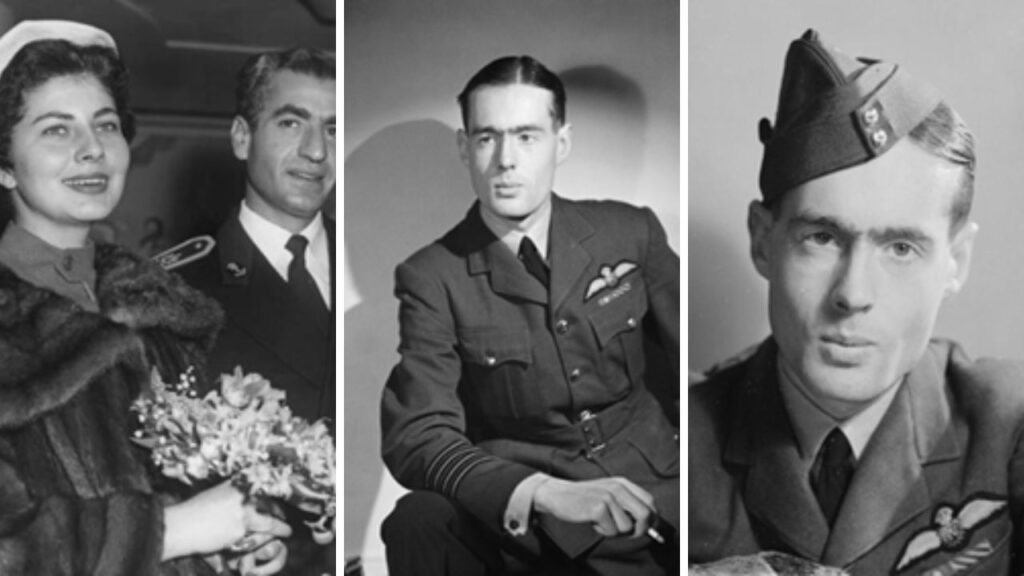
The Shah later nationalised Iran’s oil industry, which until then had been under British control, with most of the revenue flowing out of the country. At that time, the hardline cleric Ayatollah Khomeini was in exile and had been given refuge in France for 11 long years. Eventually, the Shah was forced to leave Iran, after which the Islamic hardliners under Khomeini took control. What followed was a period of regression, marked most visibly by the enforced veiling of women.
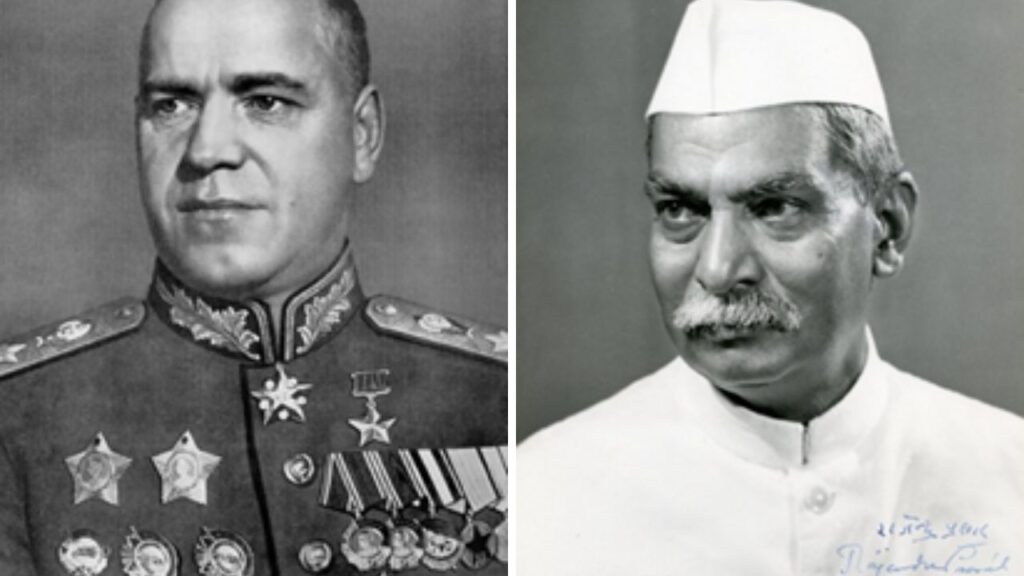
Other distinguished visitors included Emperor Haile Selassie of Ethiopia, a major figure in twentieth-century history who sought to modernise his country and resisted the Italian colonisation; Group Captain Commander Geoffrey Leonard Cheshire of the Royal Air Force, a decorated officer and a noted philanthropist; Marshal Georgy Konstantinovich Zhukov, the Soviet Union’s Minister of Defence and one of the most highly decorated officers of the Red Army; and Dr. Rajendra Prasad, the first President of India.
Group Captain Geoffrey Leonard Cheshire addressed us on his experiences during the Second World War, particularly his involvement as an observer during the atomic bombing of Hiroshima and Nagasaki. He was on an aircraft associated with the mission, and the crew was not fully briefed on the nature of the weapon they were carrying. When the bomb was dropped on Hiroshima, the scale of destruction deeply disturbed him. So affected was he by this experience that, at the end of the war, he resigned from the Royal Air Force and devoted his life to charitable work. He went on to establish a number of medical care homes across different parts of the world, dedicated to the poor and the disabled. The human cost of Hiroshima was immense, with large numbers of lives lost and many more affected by the long-term consequences of radiation.
The selection camp for the Indian hockey team for the Olympics was held at the IMA. For this purpose, two hockey grounds were specially prepared, one with a hard, grassless surface and the other with a softer surface covered in natural grass. Artificial turf had not yet made its way to India.
What made this occasion particularly memorable was the presence of Major Dhyan Chand, the legendary wizard of Indian hockey, who had come as a coach. No one had gone to the railway station to receive him, and we were treated to the unusual sight of seeing him arrive at the Academy in a tonga!
This reminded me of the famous stories from the 1936 Berlin Olympics. One tale tells of Hitler himself being so astonished by Dhyan Chand’s skill that he is said to have examined his hockey stick, supposedly checking for some hidden mechanism that allowed him to control the ball so effortlessly. Another well-known story from the same Olympics concerns Jesse Owens, the African-American athlete who won three gold medals. Normally, Hitler would shake hands with all gold medal winners. It is said that Hitler refused to shake his hand as he considered himself a superior race, although accounts vary on the details. Both stories, true in spirit if not always in precise fact, capture the extraordinary impact these athletes had on the world.
Famous among the players in the Indian hockey team at that time was the celebrated inner trio of Balbir Singh Sr., Udham Singh, and K. D. Singh ‘Babu’—all legendary figures in their own time. Balbir Singh Sr. was one of India’s greatest goal‑scorers and a key member of India’s Olympic successes in the post‑Independence era. Udham Singh was a versatile player who went on to win multiple Olympic medals across several Games. K. D. Singh ‘Babu’ was widely admired for his skill, creativity, and vision on the field, making him one of the most complete players of his time.
Other well‑known names included Randhir Singh Gentle, a strong fullback and penalty‑corner specialist who was part of India’s gold‑medal teams in the late 1940s and 1950s, and Vece Paes, a midfielder in India’s 1972 Olympic bronze‑winning team and the father of tennis great Leander Paes. Each of these players brought their own distinctive style and personality to the team, contributing to India’s dominance in hockey during that era.
We also had a coursemate, Jaswant Singh, who was a member of the Indian hockey team while training with us at the IMA and later went on to captain India at the 1964 Summer Olympics in Rome.
It has been sixty-seven years since we passed out of the Academy. In the twilight years of my life, memories of days gone by come flashing back to my mind. Walking in our Passing Out Parade on 15 December 1957, I reflected on how the two years at the IMA flew by; we never knew. It taught us the rudimentary principles of war and prepared us to take on leadership duties in the Army.
It was a very emotional moment for us as we walked past the saluting base of the premier institution of the Army that transformed us from rustic civilians into disciplined soldiers, ready to take on leadership duties in the Indian Army.
In a slow march we moved past the saluting base, heads held high and a swagger in our stride, to the lilting tune of Auld Lang Syne played by the band. We were reminded of the words written on the wall of the Chetwode, which are still fresh in our minds. They read something like this:
“The safety, honour and welfare of your country come first, always and every time.
The honour, welfare and comfort of the men you command come next.
Your own ease, comfort and safety come last, always and every time.”
These words have been firmly etched in our memory and have guided us through the thick and thin of our service.