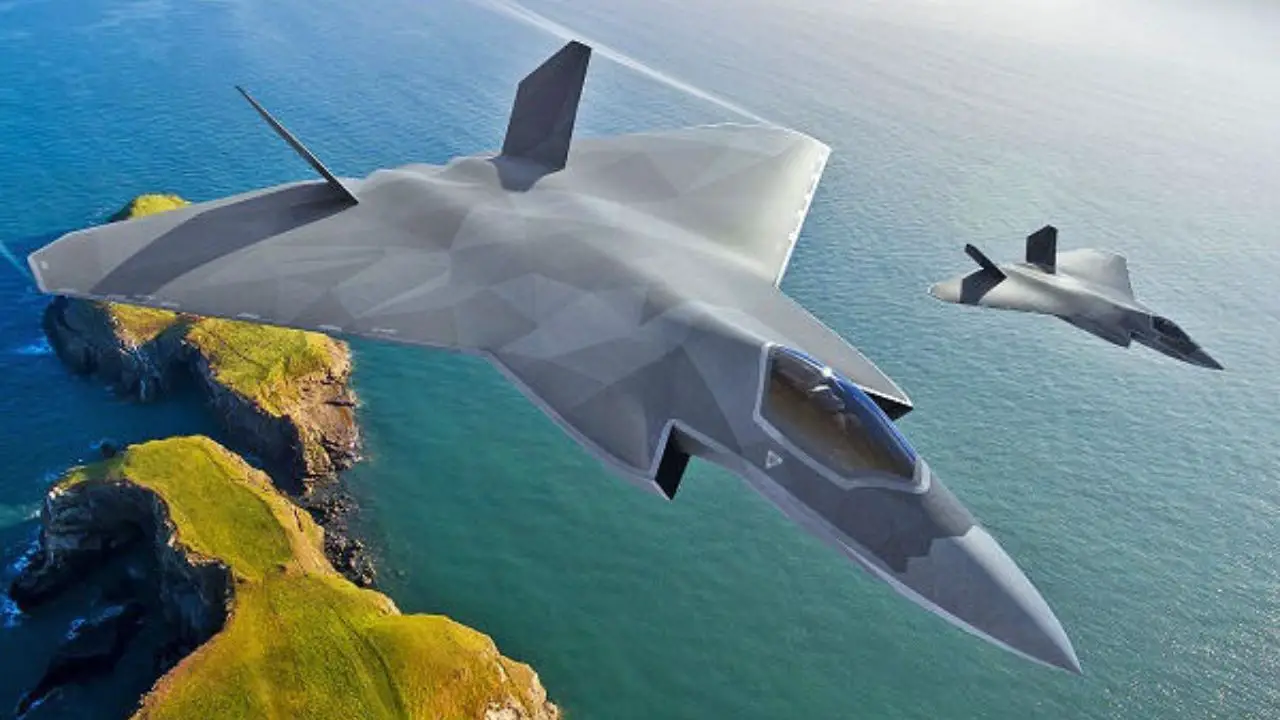
The Global Combat Air Programme (GCAP)—a comprehensive aerospace initiative uniting Italy, Japan, and the United Kingdom to develop a sixth-generation fighter aircraft—is experiencing a substantial escalation in development costs, rendering previously allocated budgets from just a few years ago inadequate. Although certain European nations face challenges in advancing initiatives like the Future Combat Air System (FCAS), the GCAP triumvirate has successfully developed a strategic roadmap and an institutional framework for collaboration. However, the cost incurred may significantly surpass preliminary projections.
According to an official budget document from the Italian Ministry of Defence, projected expenditures for the first two phases of the project—which include design and preliminary development—have increased over five years from €6 billion to nearly €18.6 billion, representing a threefold escalation relative to 2021 estimates.
International cooperation that still appears solid
Despite this significant increase in budget, GCAP continues in sticking to its predetermined course. In December 2024, Italy, Japan, and the United Kingdom officially reinforced their collaboration by signing the GIGO agreement (Global Combat Air Programme International Government Organization), the governing body responsible for overseeing the program. Subsequently, industrial partners BAE Systems (United Kingdom), Leonardo (Italy), and Japan Aircraft Industrial Enhancement Co. (JAIEC) finalized the industrial framework through the establishment of the Edgewing joint venture, aimed at coordinating design, development, and future manufacturing.
According to the official timetable, a demonstrator aircraft is anticipated to perform its first flight in 2027, with operational deployment expected around 2035. During a meeting in Tokyo on 16 January, the Italian and Japanese leaders reaffirmed their dedication to this objective, highlighting the strategic significance of the programme.
Nevertheless, beneath this facade of “normal” progress, financial and industrial pressures are intensifying. Revised cost estimates present significant fiscal and political challenges not only for Rome but also for London and Tokyo.
Reasons behind the surge in spending
Italian authorities clarify that this cost escalation is not attributable to inadequate organization or insufficient industrial coordination. On the contrary, it is primarily due to several structural factors.
Initially, the development of technology assumes a crucial function. The incorporation of advanced technologies—particularly in artificial intelligence, sensors, stealth, and connectivity—necessitates substantial investment.
Second, the testing, development, and comprehensive design efforts have proven to be more extensive than originally anticipated, resulting in additional costs.
Third, the increase in prices of essential minerals and sophisticated materials used for high-precision aerospace manufacturing has directly impacted production and research and development expenses.
Sources close to the program have also observed that the fast growth in artificial intelligence developments necessitates frequent revisions of the intended system architectures, thereby exerting additional pressure on budget planning.
Comparison with other aerospace programmes
To contextualize these figures, the MILEX observatory notes that GCAP will incur costs exceeding those of acquiring F-35A/B fighter-bombers, which are already regarded to be extremely costly. The procurement of 90 F-35A/B aircraft totaled approximately €18.3 billion. The present development cost of GCAP thus already exceeds this amount—excluding the purchase price of the aircraft themselves, which remains to be finalized.
According to estimates referenced by Defense News, Italy’s contribution to the first two phases alone totals approximately $21.8 billion. Final program costs may be substantially increased, especially when additional features such as escort drones, combat network integration, and other related systems are incorporated.
Financing: constraints and limitations
Another significant challenge relates to the restricted access to multinational funding for the programme. Unlike specific European initiatives that receive support from EU-level funding—such as the €14.9 billion SAFE programme that Italy aimed to leverage—GCAP is ineligible for such financing, as it is a trilateral corporation operating outside the European institutional framework. Consequently, Rome will be required to fund its entire involvement through domestic resources, thereby intensifying pressure on an already limited defense budget.
In the United Kingdom, expenditure levels are also notably high. London has already invested approximately €2 billion (or the equivalent in pounds sterling) and intends to allocate around €12 billion more over the next decade to facilitate development. The British Ministry of Defence has emphasized that ultimate costs will be contingent upon the chosen solutions, the effectiveness of the industrial model, and the programme’s capacity to transition swiftly into the development phase.
Urgent need to broaden the partnership
In this economically constrained environment, Italy and the United Kingdom are trying to attract new partners to distribute the significant expenses. Germany represents an evidently primary target. Italian Defence Minister Guido Crosetto has indicated that Berlin may potentially join GCAP in the future, thereby enhancing the collective investment and alleviating the financial burden on each participating nation. He underscored that increased participation by countries leads to enhanced economic advantages, technological advancements, and reduced costs for all partners.
Other parties have likewise demonstrated interest. Numerous international media organizations have reported on discussions between Tokyo and New Delhi concerning potential Indian involvement within the larger framework of cost sharing and enhanced defense collaborations in the Asia-Pacific region. This exemplifies a worldwide trend wherein nations aim to reduce the financial obligations associated with next-generation defense initiatives, particularly amid competition from countries such as China, which is concurrently advancing its capabilities in cutting-edge aerospace development.
Industrial and technological obstacles
GCAP represents more than just a financial challenge. From an industrial perspective, the incorporation of advanced technologies—including artificial intelligence, sophisticated network connectivity, multi-spectral detection systems, and collaborative drone operations—requires an exceptional degree of innovation. These technologies are not only costly but also intricate to evaluate and certify, which partially accounts for the prolongation of the design and testing stages.
The programme also distinguishes itself from previous initiatives through its “system-of-systems” methodology, whereby the future aircraft are required to function in close coordination with intelligent drones and decentralized command networks. This architecture necessitates the incorporation of numerous highly diverse technologies, all of which must be interoperable and dependable within an increasingly challenging combat environment.
Geopolitical perspectives
GCAP demonstrates the evolution of defense alliances and cooperation within a geopolitical landscape characterized by escalating rivalries—particularly amid the ascent of China and the increasingly intricate security dynamics in both the Asia-Pacific region and Europe. By presenting an alternative to the European FCAS initiative, which has frequently experienced delays due to internal disagreements among France, Germany, and Spain, GCAP establishes itself as a key strategic platform for partner nations, emphasizing technological sovereignty and independent defense capabilities.
Final Remarks
GCAP constitutes one of the most prominent military aerospace initiatives of the 21st century. Its achievement could provide partner nations with a significant advantage in air superiority, technological advancement, and strategic autonomy. Nevertheless, the development costs, which have already tripled, coupled with restricted national funding and industrial challenges—along with potential tensions among partners or with future entrants—underscore that this programme remains both highly prospective and significantly risky.
The forthcoming decade will be crucial. How will the partners address increasing costs, recruit new allies to share the financial responsibilities, and resolve technological challenges to ensure the achievement of objectives extending through 2035 and beyond? The responses to these inquiries will influence not only the future of GCAP but also the course of contemporary combat aviation.