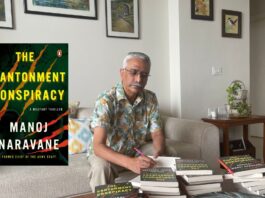
When history is written from press releases, it often reads as clean and decisive. When it is written by those who had to make life-and-death decisions in real time, it is usually messier, quieter, and far more unsettling. General Manoj Mukund Naravane’s unpublished memoir belongs firmly in the second category.
Covering the Indian Army’s most dangerous confrontation with China since 1962, Naravane’s account lifts the veil on how close the two nuclear-armed neighbours came to open conflict in 2020. It also raises uncomfortable questions about political leadership, military preparedness, and the cost of ambiguity at moments when clarity matters most.
At the heart of the memoir is not bravado or chest-thumping. It is hesitation, isolation, and the heavy burden placed on commanders who were asked to manage escalation without clear political direction.
A Night at Rechin La: Decision Under Fire
In August 2020, the air in eastern Ladakh was thin, the terrain unforgiving, and nerves stretched to the breaking point. Chinese armoured units had begun moving aggressively near Indian positions at Rechin La, a tactically sensitive feature overlooking key routes.
Lieutenant General Yogesh Joshi, commanding the Northern Army, reported a chilling development: four Chinese tanks were advancing towards Indian posts. This was not routine posturing. Tanks do not move casually in high-altitude terrain. Their presence signalled intent.
As Army Chief, Naravane sought political guidance. What were the red lines? Was the Army authorised to fire? How far could it go to prevent a breakthrough?
The answers, according to the memoir, were vague.
Rather than issuing clear directives, political leaders deferred. The message from Prime Minister Narendra Modi was stark in its simplicity: Do whatever you deem appropriate. On paper, this sounded like trust. In practice, it placed the full weight of escalation control on a single military commander, without a written mandate or a political framework to fall back on.
Chinese tanks continued their advance. Indian artillery units discussed firing options. A single shot could have transformed a standoff into a shooting war.
Naravane chose restraint. He decided not to fire first, calculating that escalation could spiral beyond anyone’s control. It was a tactical decision shaped as much by the absence of political clarity as by battlefield realities.
The tanks eventually stopped. The crisis passed. But the implications of how that decision was reached linger.
Galwan: How a Standoff Turned Fatal
Two months earlier, restraint had not been enough.
The June 2020 Galwan Valley clash remains a turning point in India-China relations. For the first time in nearly six decades, soldiers died in combat along the Line of Actual Control (LAC).
Naravane’s memoir describes a slow, dangerous buildup that official narratives later flattened into slogans. Chinese troop concentrations increased steadily through April and May. Patrol confrontations multiplied. Local commanders, accustomed to decades of controlled friction, underestimated the scale and intent of the Chinese moves.
By mid-June, both sides faced each other in the Galwan Valley, a narrow, steep ravine where past agreements restricted weapons. What followed was brutal and chaotic.
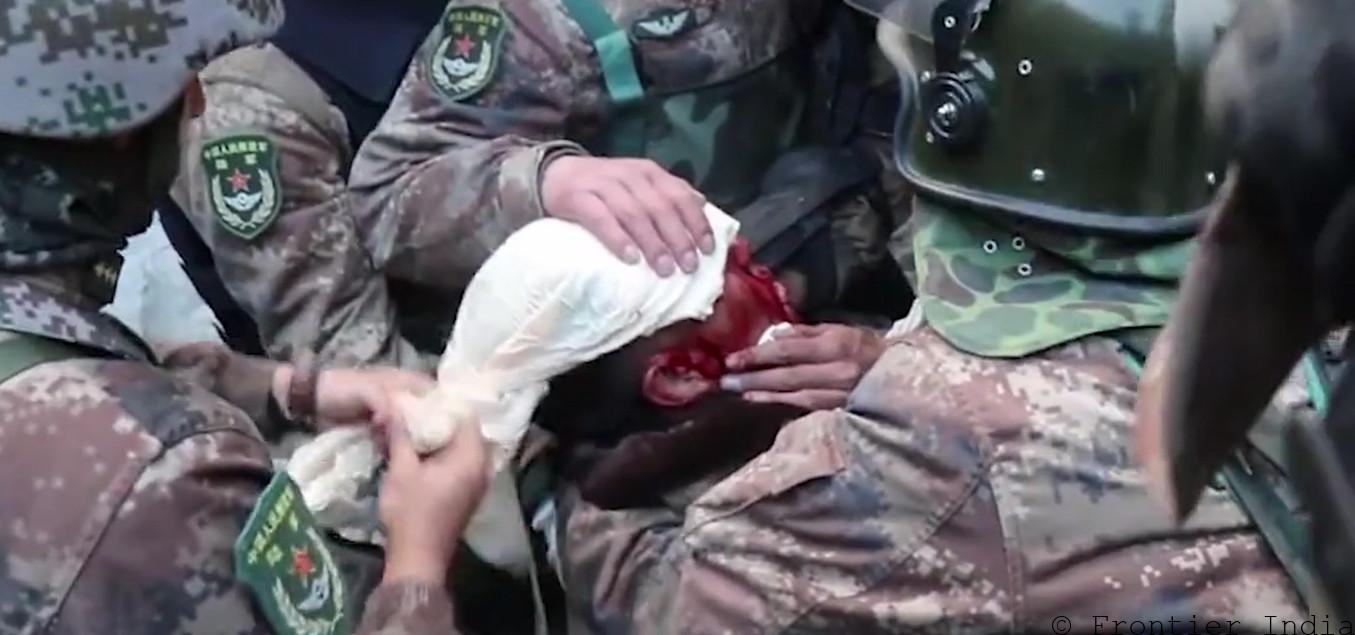
There was no gunfire. Instead, there was hand-to-hand combat, stone-throwing, use of iron rods, and sheer physical struggle in freezing darkness. Twenty Indian soldiers died. Some were beaten. Others fell into the icy river below. Several succumbed later to injuries and hypothermia.
The People’s Liberation Army (PLA) acknowledged four fatalities. India disputes that figure, believing Chinese losses were significantly higher. The truth remains buried under official silence on both sides.
What Naravane makes clear is this: the clash was not an accident. It was the result of sustained Chinese pressure and Indian unpreparedness at the tactical level.
Intelligence Failures and Tactical Blind Spots
One of the memoir’s most damning assessments concerns intelligence and surveillance.
At the strategic level, India recognised that China was becoming more assertive. At the tactical level, however, the army lacked adequate Intelligence, Surveillance, and Reconnaissance (ISR) capabilities. Chinese movements were often detected late. The infrastructure on the Chinese side enabled rapid mobilisation that Indian commanders struggled to match.
This gap produced tactical surprise, particularly in Galwan.
Contrary to later political messaging, soldiers were not given a “free hand.” Rules of engagement remained restrictive. Opening fire was authorised only as a last resort, even in self-defence. This limitation shaped decisions on the ground and constrained responses during critical moments.
After Galwan, Indian forces moved swiftly to occupy key heights in other sectors, catching the PLA off guard. These moves stabilised parts of the front, but they were reactive rather than pre-planned.
Naravane is explicit: India did not initiate a grand, premeditated operation. It responded to Chinese aggression, often under pressure and with incomplete information.
Political Leadership and the Cost of Ambiguity
Perhaps the memoir’s most sensitive theme is political accountability.
Naravane draws an implicit contrast with the 1999 Kargil conflict, when political leadership was deeply involved in military decision-making. In 2020, by contrast, the army operated with limited political guidance during moments of extreme risk.
The Modi government provided no clear framework for escalation or de-escalation. Decisions were pushed down, leaving military commanders to balance national strategy, international consequences, and battlefield realities on their own.
Publicly, the government projected confidence and control. Privately, according to Naravane, there was hesitation and distance.
This gap between narrative and reality raises troubling questions. Who owns decisions taken in crisis? Who is accountable when silence becomes policy?
Soldiers, Captivity, and Unacknowledged Suffering
Beyond strategy and politics lies the human cost.
In the aftermath of Galwan, several Indian soldiers were reported missing. Some had fallen and become disoriented. The PLA detained others and later returned them.
Naravane’s memoir alleges that Indian soldiers briefly held in Chinese custody were beaten and mistreated. The Modi government has publicly acknowledged these claims.
In total, twenty Indian soldiers died on a single day. Five succumbed to injuries sustained in combat. Fifteen more died from a combination of trauma and hypothermia. These were not abstract losses. They were young men serving in extreme conditions, constrained by rules and decisions far above their rank.
The memoir suggests that the silence surrounding their treatment reflects a broader unwillingness to confront uncomfortable truths.
Negotiations Without Records
Diplomacy followed bloodshed, but it was flawed from the start.
The first corps commander-level meeting took place on June 6, 2020, days before the Galwan clash. Crucially, there were no official written records of what was agreed. Each side walked away with a different interpretation.
India demanded a return to the April 2020 status quo. China pushed for partial disengagements that effectively legitimised its forward positions.
Instead, buffer zones emerged. These reduced immediate friction but at a cost: Indian patrols were barred from areas they had previously accessed. The territory was not formally ceded, but operational access was lost.
Naravane’s account suggests that negotiations exposed a power imbalance. China’s superior infrastructure and sustained deployments gave it leverage that India struggled to counter.
Strategic Retreat Behind a Confident Façade
The memoir challenges the idea that India emerged stronger from the crisis.
While public messaging emphasised firmness, Naravane frames the outcome as a strategic retreat disguised as stability. Concessions were made without public explanation. Media management took precedence over transparency.
The ongoing deployment along the LAC has tied down large numbers of Indian troops and resources. This has implications beyond China, constraining India’s ability to respond to other regional challenges.
The absence of parliamentary debate or detailed public disclosure, Naravane implies, amounts to a quiet erosion of accountability.
Leadership Under Centralisation
Naravane’s tenure as army chief coincided with increasing political centralisation and the politicisation of the military. One example he cites is the abrupt announcement of the Agnipath recruitment scheme, introduced despite the service chiefs’ expressed concerns.
These tensions are handled carefully in the memoir. Naravane remains respectful, even restrained. But the pattern is clear: major decisions were announced from the top, often without institutional consensus.
In moments like Rechin La, that centralisation paradoxically produced distance rather than direction.
Naravane often found himself making decisions alone, carrying responsibility without authority. It is a lonely position for any commander, let alone one overseeing a potential great-power conflict.
What Comes Next: A Fractured Relationship
The long-term consequences of 2020 are still unfolding.
India-China relations remain frozen. Talks continue, but trust has eroded. The military asymmetry persists. China retains advantages in infrastructure, logistics, and escalation dominance along much of the border.
Naravane floats the idea of a non-aggression pact as a confidence-building measure, though he acknowledges its political difficulty. Public sentiment in India increasingly views China as a direct threat, despite official reassurances.
Perhaps the most lasting impact is psychological. The belief that peace along the LAC could be managed through informal understandings is gone. What replaces it remains uncertain.
An Uncomfortable Record
General Naravane’s memoir does not accuse. It documents. In doing so, it unsettles.
It shows an army grappling with surprise, constraint, and silence. It shows political leadership reluctant to make decisions in moments of danger. It shows soldiers paying the price for ambiguity.
History will judge 2020 not only by what happened in Galwan or at Rechin La, but also by what was said and left unsaid afterwards. Naravane’s account ensures that the record is no longer entirely silent.
Whether the country chooses to listen is another matter entirely.