


The emergence of hypersonic weapons is at the core of the major shift that modern warfare is undergoing. These systems are capable of traveling at speeds that exceed Mach 5, which is redefining the very nature of deterrence. They are challenging the most sophisticated air defense networks and compressing response times. The transition to hypersonic capability represents an important step in the next generation of strategic warfare for India, a nation that already possesses a robust missile ecosystem.
India’s hypersonic arsenal is being increasingly referred to as a “hypersonic trident,” which is composed of three primary systems: the Extended Trajectory–Long Duration Hypersonic Cruise Missile (ET-LDHCM), the Long-Range Anti-Ship Hypersonic Missile (LR-ASHM), and Dhvani. Collectively, these weapons comprise a comprehensive, multi-domain strike capability that encompasses air, sea, and land operations. More importantly, they indicate India’s intention to preserve credible deterrence in a geopolitical landscape that is becoming increasingly competitive.

A Game-Changer in Modern Warfare: Hypersonic Weapons
Hypersonic weapons are not just improved variants of conventional missiles; they are a new category of strategic instruments. In contrast to conventional cruise missiles, which travel at subsonic or supersonic speeds, and ballistic missiles, which follow predictable trajectories, hypersonic systems combine extreme speed with maneuverability.
This combination renders them exceedingly challenging to identify and intercept. Scramjet-powered cruise missiles maintain hypersonic speeds throughout the journey, while hypersonic glide vehicles have the ability to modify their flight path mid-course. The outcome is a weapon that is capable of evading radar, outmaneuvering defense systems, and striking targets with minimal forewarning.
The development of such systems in India is motivated by both necessity and ambition. India’s strategic planners have acknowledged that sustaining parity in this domain is crucial for national security as global powers compete to deploy hypersonic capabilities. Therefore, the hypersonic trident is not just a technological milestone; it is a critical element of India’s future defense doctrine.

The Core of India’s Hypersonic Strike Power: ET-LDHCM
At the core of India’s hypersonic aspirations is the Extended Trajectory–Long Duration Hypersonic Cruise Missile, or ET-LDHCM. This missile is widely regarded as the foundation of India’s hypersonic strike capability and is one of the most advanced systems currently under development.
ET-LDHCM improves efficiency by removing the necessity to carry oxidizers and using atmospheric oxygen for combustion, which is powered by a scramjet engine. By doing so, the missile can maintain long-range efficacy while maintaining speeds that exceed Mach 8. The system is intended for deep-strike missions against high-value targets, with an estimated range of over 1,500 kilometers.
ET-LDHCM is distinguished by its capacity to execute intricate maneuvers at relatively low altitudes. This flight profile improves survivability against modern air defense systems and minimizes its radar signature. This, when combined with its high velocity, renders interception exceedingly difficult.
The missile is also engineered to accommodate both conventional and nuclear payloads, thereby providing it with the ability to serve in both strategic and tactical capacities. It is capable of withstanding the intense heat generated during hypersonic flight due to the use of advanced materials and thermal protection systems, which guarantees structural integrity in the face of extreme conditions.
Its multi-platform launch capability is an additional critical advantage. It is expected that the ET-LDHCM will be capable of being deployed from combat aircraft, naval platforms, and ground-based launchers. This adaptability enables it to seamlessly integrate into India’s tri-service operational framework, thereby improving both responsiveness and reach.
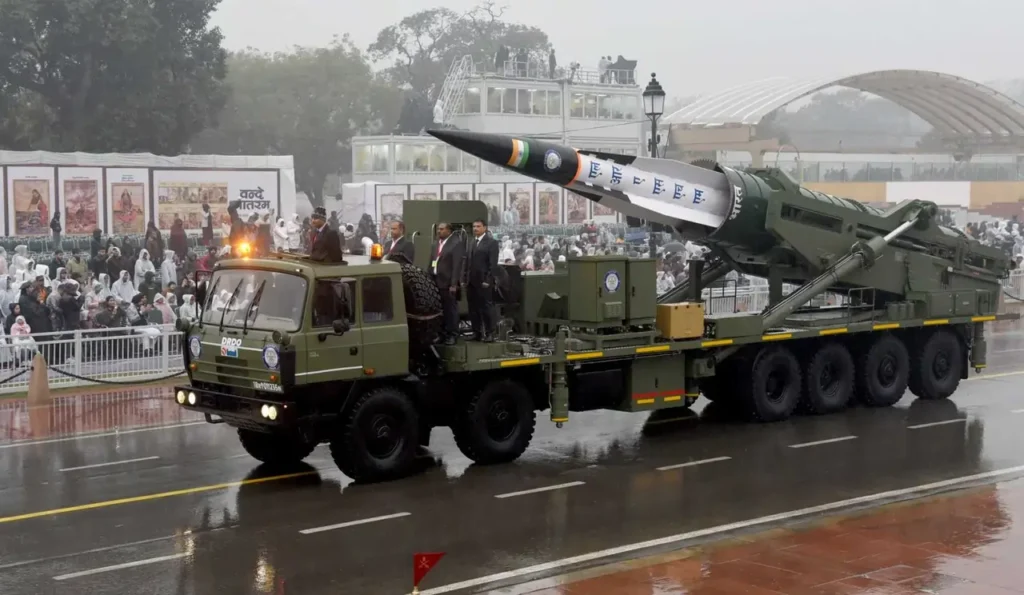
LR-ASHM: Revolutionizing Naval Warfare
The Long-Range Anti-Ship Hypersonic Missile is clearly designed to achieve maritime dominance, whereas ET-LDHCM concentrates on long-range strike capabilities. The LR-ASHM is a significant advancement in anti-ship warfare, as it introduces hypersonic speed and maneuverability to naval engagements.
The LR-ASHM stands out from conventional anti-ship missiles in that it uses a hypersonic glide vehicle capable of reaching high speeds before descending toward its target. The missile’s ability to execute evasive maneuvers during this phase renders it exceedingly challenging for ship-based defense systems to intercept.
This capability is especially relevant in the context of contemporary naval warfare, where aircraft carriers and large surface vessels are safeguarded by multilayered defense systems. LR-ASHM is engineered to breach these defenses and execute a decisive strike within minutes of launch.
The missile’s sophisticated seeker technology allows it to accurately monitor moving targets at hypersonic speeds, thereby ensuring its effectiveness against dynamic naval formations. LR-ASHM considerably enhances India’s capacity to project power throughout the Indian Ocean region, with a range exceeding 1,500 kilometers.
This system reinforces India’s anti-access and area denial capabilities, establishing a formidable barrier against adversarial naval forces in strategic terms. It also improves deterrence by increasing the risks associated with the deployment of high-value assets in contested waters.
Dhvani: The Hypersonic Component That Is Flexible
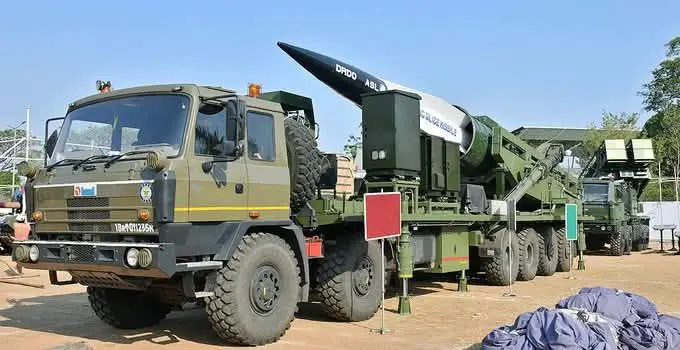
Dhvani is the least publically understood of the three components of the hypersonic trident, despite its profound significance. It is posited to be a next-generation hypersonic platform or enabling technology that enhances the capabilities of LR-ASHM and ET-LDHCM.
Dhvani is likely to concentrate on air-launched and rapid-response missions, which could serve as a bridge between tactical and strategic applications. Its development is indicative of India’s overarching objective to expand its hypersonic capabilities and establish a versatile, multifaceted arsenal.
Dhvani’s inclusion in the hypersonic trident implies that it will be a critical component of future operations, despite the fact that the specifics are still classified. It is anticipated that India’s capacity to promptly address emergent threats will be improved by the implementation of this weapon system, whether as a standalone unit or as part of a larger network.
Technological Developments and Indigenous Innovation
The development of India’s hypersonic trident is a component of a more extensive initiative to foster indigenous innovation. These systems are being developed as part of advanced research programs that are designed to achieve self-reliance in critical defense technologies.
Key innovations include the successful creation of scramjet propulsion systems, which facilitate sustained hypersonic flight, and advanced materials that can endure extreme temperatures. Additionally, engineers have made major advances in the development of guidance and navigation systems, which guarantee precision even at extremely high velocities.
Thermal management is an additional critical area of innovation. Structural integrity is a significant challenge in hypersonic flight, as it generates an immense amount of heat. The development of long-duration hypersonic systems has been significantly facilitated by India’s developments in this field.
These technological developments have broader implications for aerospace research, including potential implementations in high-speed aircraft and space launch systems, in addition to supporting missile development.
Strategic Consequences: A Change in the Deterrence Doctrine
The dynamics of deterrence are fundamentally changed by the introduction of hypersonic weapons. These systems enhance the credibility of a nation’s offensive capability by substantially decreasing the time available for an adversary to respond.
The hypersonic trident improves India’s capacity to deter potential adversaries by enabling the rapid and effective engagement of high-value targets. This is especially crucial in a region where strategic competition is on the rise.
India’s position is further fortified by the multi-domain nature of these systems. India is establishing a strike architecture that is both resilient and adaptable by integrating hypersonic capabilities across land, sea, and air platforms. This decreases vulnerability and expands operational options during periods of conflict.
Simultaneously, the development of hypersonic weaponry contributes to a more extensive alteration in the global military equilibrium. The speed, complexity, and unpredictable nature of warfare are expected to evolve as additional nations acquire these capabilities.
Challenges and the Future
The development of hypersonic systems continues to be a resource-intensive and intricate endeavor, despite the significant progress that has been made. The challenges include the maintenance of material durability under extreme conditions, the achievement of precise targeting at very high velocities, and the assurance of consistent scramjet performance.
Hypersonic systems must operate reliably in a diverse array of scenarios, which is why testing and validation are also essential. This necessitates ongoing refinement and extensive experimentation.
Nevertheless, India’s ongoing developments indicate that these obstacles are being effectively resolved. The key to maintaining momentum will be the continued investment in research and development, as well as the collaboration between government agencies, academia, and industry.
India may also prioritize the development of defensive systems that are capable of mitigating hypersonic threats in the future. These capabilities would enhance the current arsenal and offer a more comprehensive approach to national security.
Conclusion: A New Strategic Context
Dhvani, LR-ASHM, and ET-LDHCM—India’s hypersonic trident—represent a revolutionary development in military capabilities. These systems are not simply faster weapons; they represent a new approach to warfare that is distinguished by survivability, precision, and speed.
India’s strategic posture will be significantly influenced by the maturation of these technologies. India is fortifying its status as a significant technological and military power by investing in hypersonic capabilities, which in turn ensures that it is prepared to confront the modern warfare challenges.
India is firmly establishing itself at the vanguard of this new frontier with its trident of advanced systems, as the hypersonic era has arrived.