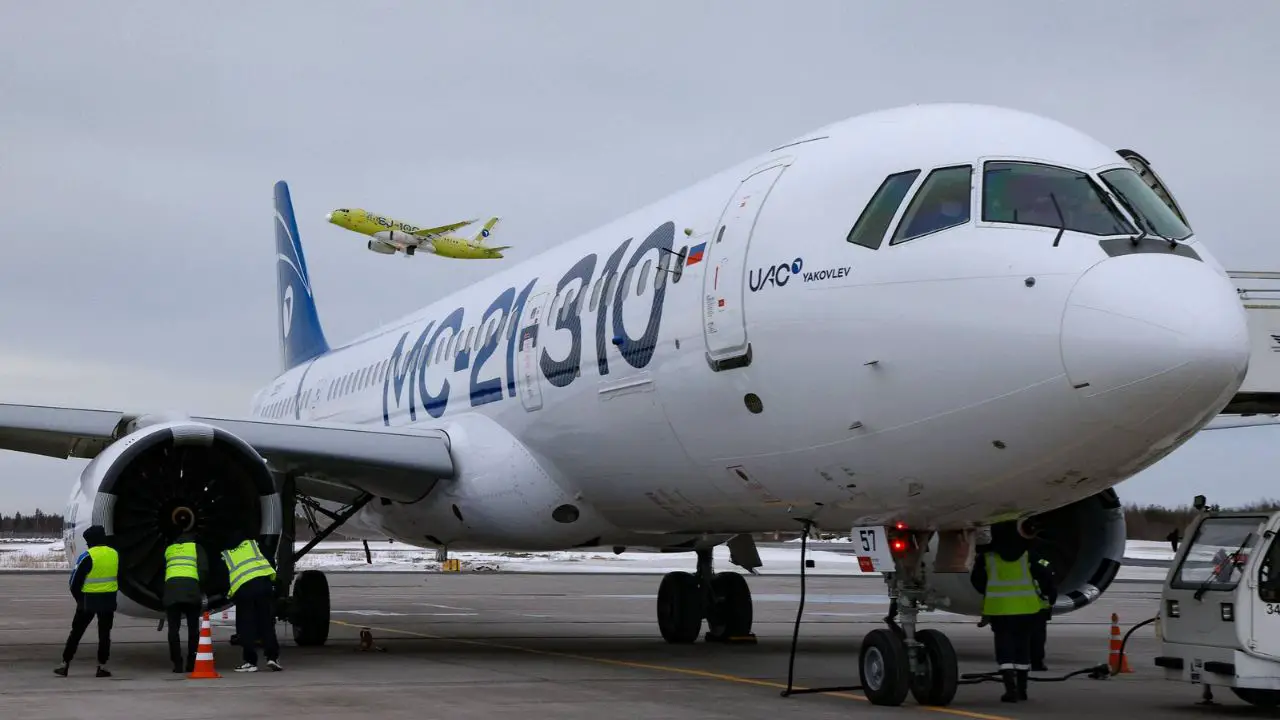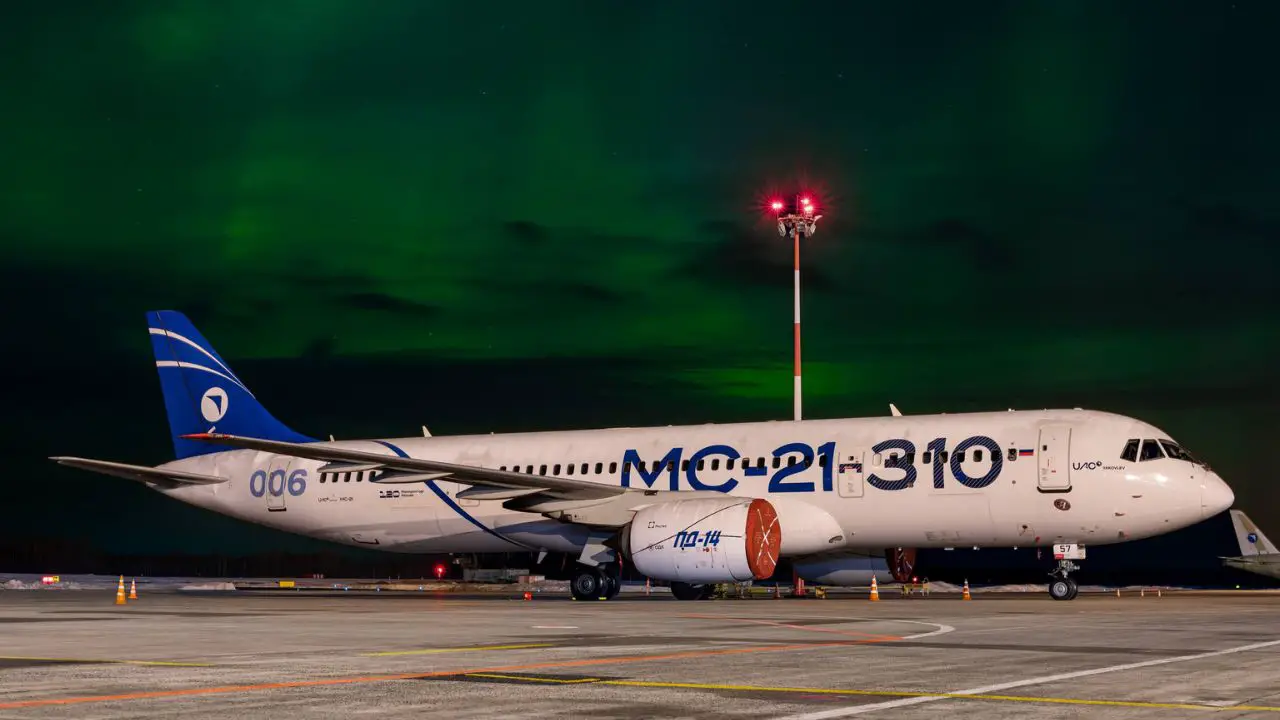
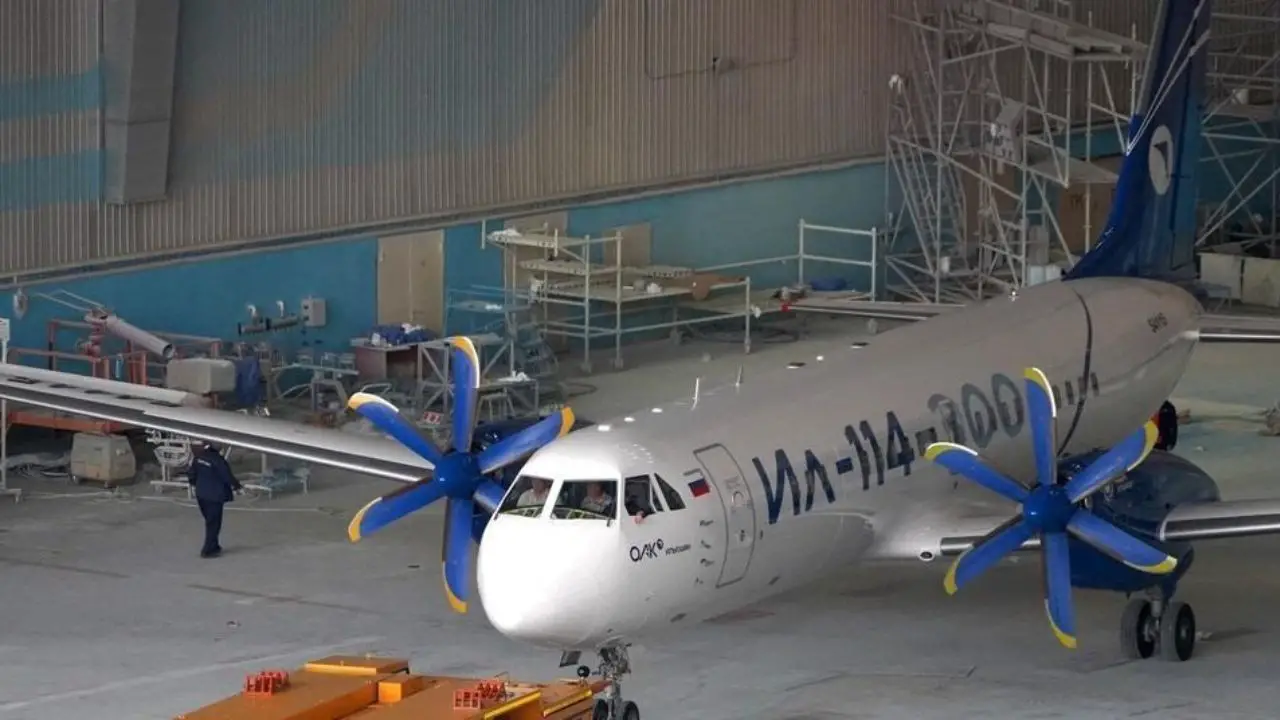
The Il-114-300, a Russian turboprop regional airliner, was developed to revitalize the domestic aviation industry in Russia and to replace obsolete Soviet-era aircraft on regional routes. The aircraft is designed for short-haul regional operations and airports with limited infrastructure, such as short or unpaved runways, and was developed as a modernized version of the earlier Il-114 platform.
In principle, this aircraft should have been an ideal solution for countries with underdeveloped airport infrastructure and extensive regional networks. This type of sturdy turboprop aircraft is precisely what is needed to connect remote regions in countries such as Russia, India, and numerous Asian nations. Nevertheless, the Il-114-300 has already sparked controversy, primarily due to its escalating cost and the intricate economics that underlie its production, even before its transition to full serial production.
It is ironic that the first three aircraft manufactured under the program were not acquired by Russian airlines. Rather, they were financed through government channels and delivered to India, underscoring the financial challenges that domestic airlines face and the strategic character of the program.
India Becomes the First Buyer
One of the most significant developments in the Il-114-300 program is that the first three aircraft were procured for India through state financial assistance. Rather than being acquired through regular commercial airline purchases, the first aircraft were financed through government programs and industrial development mechanisms.
This arrangement is commonplace in the aerospace sector. Governments often offer funding for the initial units of a new aircraft that is still in the early stages of production. These aircraft are technically classified as part of the development phase, which involves the validation of production lines and the collection of operational feedback.
The Russian government financed the three Il-114-300 aircraft through its industrial development mechanisms, thereby ensuring that the program continued to advance despite the high production costs. The aircraft were later allocated to India as the first customer, thereby establishing India as the earliest operator of the type.
This agreement was significant for Russia for a number of reasons. Initially, it illustrated that the aircraft could entice international customers prior to the commencement of full-scale production. Secondly, it helped manufacturers to promptly recoup development costs due to the fact that the initial aircraft were entirely funded by government budgets, rather than market-driven airline purchases.
This effectively allowed the manufacturer to consider the sale of these aircraft as pure revenue, rather than a risky commercial transaction.
Why Russian Airlines Cannot Afford It
Although India was able to acquire the first aircraft through state-supported financing, Russian regional airlines are confronted with a very different reality. Domestic carriers will be required to acquire the aircraft under commercial terms once it is introduced into serial production.
This is where the problem becomes evident.
As per previous news reports, the first three Il-114-300 aircraft were priced at approximately 4 billion rubles each, which is equivalent to approximately 40–45 million US dollars, dependent upon exchange rates.
The main explanation for the exorbitant price is that the first aircraft are regarded as part of the research and development phase. The government estimates that the price of each aircraft will decrease to approximately 2.6 billion rubles once serial production levels off and production lines become more efficient.
Nevertheless, this price remains high for numerous Russian regional airlines.
A large percentage of domestic carriers are reliant on government subsidies and operate with minimal profit margins. In order to acquire aircraft that cost billions of rubles, it is necessary to have access to leasing programs, long-term financing, and predictable passenger demand. These conditions are not always guaranteed in remote regions.
Therefore, officials are currently engaged in discussions regarding the possibility of subsidizing or restructuring aircraft financing to enable domestic airlines to acquire the Il-114-300.
The Productivity Problem in Russian Manufacturing
Dmitry Dyakonov, the principal designer of the KB-602 and a professor at an engineering university, provides one of the most critical explanations for the aircraft’s high cost.
The issue, according to Dyakonov, is not that Russian engineers or laborers are paid more than their Western counterparts. In reality, wages in Russia tend to be comparatively lower. Productivity is the genuine issue.
Modern automated production systems in Western aerospace factories enable workers to produce considerably more components per shift. Automated machinery and highly optimized manufacturing processes may enable an employee to generate hundreds of identical components.
On the other hand, many Russian factories continue to use slower production processes. The labor cost of each aircraft component is dramatically increased if a Russian laborer produces only ten parts per shift, whereas a Western factory produces one hundred or more.
This means that the cost per aircraft may still be higher due to reduced productivity, despite the fact that individual salaries may be lower.
This structural challenge has deep historical roots.
The Legacy of Globalization
In the 1990s and early 2000s, Russia extensively integrated into the global economic system. Rather than investing heavily in the productivity of domestic manufacturing, the nation depended on the sourcing of components and technology from Western suppliers.
This approach was effective for a long period of time. Foreign suppliers who specialize in the efficient production of high-quality components could be purchased by aircraft manufacturers.
Nevertheless, sanctions and geopolitical tensions necessitated that Russia abandon this approach. The nation’s current objective is to build aircraft entirely from domestic components.
One of the first aircraft to completely embody this approach is the Il-114-300. It is entirely dependent on Russian-made systems, engines, and avionics, thereby eradicating the need for imported components.
This, however, results in an increase in costs, despite the increasing strategic independence.
Many parts are manufactured in relatively small quantities, and domestic supply chains are still in the process of being rebuilt. Unit costs invariably increase when production volumes are minimal.
The Economics of Aircraft Production
Aircraft manufacturing is a classic example of an industry in which economies of scale are essential.
The first aircraft produced in a new program are very costly due to the fact that they consist of research and development expenses, certification expenses, tooling investments, and production line setup.
The price of each aircraft is reduced as these costs are distributed across a larger number of units as production increases.
Dyakonov contends that the cost of the Il-114-300 could decrease significantly once it is produced in far greater quantities.
There will be an increase in production efficiency if factories begin producing hundreds of aircraft instead of a small number of prototypes. Component costs will decrease, supply chains will mature, and automation will increase.
In other words, the aircraft’s current cost is not due to inherent design flaws but rather to the fact that the production ecosystem is still in its early phases.
The Aircraft’s Continued Significance
The Il-114-300 continues to be strategically important for Russia and, potentially, for countries such as India, despite the economic challenges.
The aircraft is expressly engineered for regions in which jet aircraft are unable to operate efficiently. It is capable of operating in harsh climates, flying from limited runways, and serving remote communities with relatively low passenger demand.
Turboprop aircraft, such as the Il-114-300, are useful for regional connectivity due to these capabilities.
India’s potential market is particularly intriguing due to its vast geography and many smaller airports. Aircraft that can operate economically on brief routes with limited infrastructure are necessary for programs that are designed to increase regional air connectivity.
The Il-114-300 could become an appealing alternative for regional airlines in Russia, Asia, and other emerging aviation markets if production costs decrease over time.
The Program’s Future and Government Support
The Il-114-300 program’s long-term viability, according to experts, will be greatly impacted by government policy.
There are many reasons why state investment is likely to continue to be essential.
The main explanation for why governments typically favor aircraft manufacturing is that it generates high-skilled employment opportunities and safeguards technological capabilities.
Secondly, domestic aircraft programs are regarded as strategically significant in an era where supply chains may be disrupted by geopolitical tensions.
Lastly, leasing programs that are subsidized by the government can assist airlines in the acquisition of aircraft that would otherwise be prohibitively expensive.
Nevertheless, Dmitry Dyakonov underscores that government investment alone is inadequate. The efficiency with which those funds are utilized is what is important.
He believes that the aviation sector’s budget expenditure is at times affected by weak economic analysis. Funds may be allocated to contractors who are well-known without a comprehensive assessment of their efficiency, or projects may be executed in a manner that formally satisfies regulatory requirements while failing to optimize technological developments.
Investment must be directed toward the improvement of industrial technology, personnel training, and manufacturing productivity in addition to the production of aircraft in order for the Il-114-300 program to be successful.
A Program at a Crossroads
The Il-114-300 program is presently at a critical juncture.
One the one hand, it is an important step toward the restoration of Russia’s autonomous civil aviation sector. The aircraft is proof of the nation’s ability to design and produce a regional airliner that is entirely domestic, despite the presence of external constraints.
In contrast, the program underscores the economic realities of modern-day aircraft production.
The initial three aircraft, which were purchased by India and financed by the government, are merely the commencement. The genuine evaluation will occur when domestic airlines commence purchasing the aircraft under standard commercial conditions.
The Il-114-300 has the potential to become a competitive regional aircraft with international potential if production scales up and costs decrease as anticipated.
However, airlines may find it difficult to justify purchasing it if prices remain high, necessitating that governments continue to provide financial support for the program.
At present, the Il-114-300 is a symbol of the delicate equilibrium between the realities of global aviation economics and the national industrial ambitions, serving as both a technological accomplishment and an economic challenge.