
A new agreement between the Moscow Institute of Electronic Technology and a prominent research institution under the Russian Academy of Sciences has marked another real progress in Russia’s pursuit of technological sovereignty in microelectronics. The collaboration is focused on the development and research of highly specialized materials and structures for power electronics, which are among the most critical areas of modern electronics.
The Scientific and Technological Center for Microelectronics and Submicron Heterostructures is the center of attention of this initiative. It has formally contracted MIET to conduct a critical component of the Scientific Research Center of Microelectronics’ development work. This project is not just academic; it is a component of a more extensive national initiative to enhance domestic capabilities in semiconductor technologies, particularly those necessary for high-power and high-frequency electronic applications.
Understanding the Scope of the Project
The agreement concentrates on what is officially referred to as SCH R&D, which is a crucial element of a broader development initiative. MIET is responsible for the “development of test elements and measurement of electrophysical parameters” of semiconductor structures that are based on gallium nitride (GaN) and aluminum gallium nitride ((Ga,Al)N).
In order to facilitate comprehension, the project mainly involves evaluation as well as improvement of sophisticated semiconductor layers that are essential to current power electronics. In a variety of applications, including electric vehicles, renewable energy systems, radar, and telecommunications infrastructure, these materials are widely used in devices such as high-efficiency transistors.
The research will investigate the growth of (Ga,Al)N layers on two distinct substrates: silicon carbide (SiC) and silicon (Si). Each substrate provides specific benefits. Silicon carbide is acknowledged for its exceptional thermal conductivity and high breakdown voltage, rendering it a suitable choice for high-power applications. However, silicon is more cost-effective and is extensively used in the semiconductor industry, providing scalability and compatibility with existing manufacturing infrastructure.
The Role of Epitaxy and Transistor Design
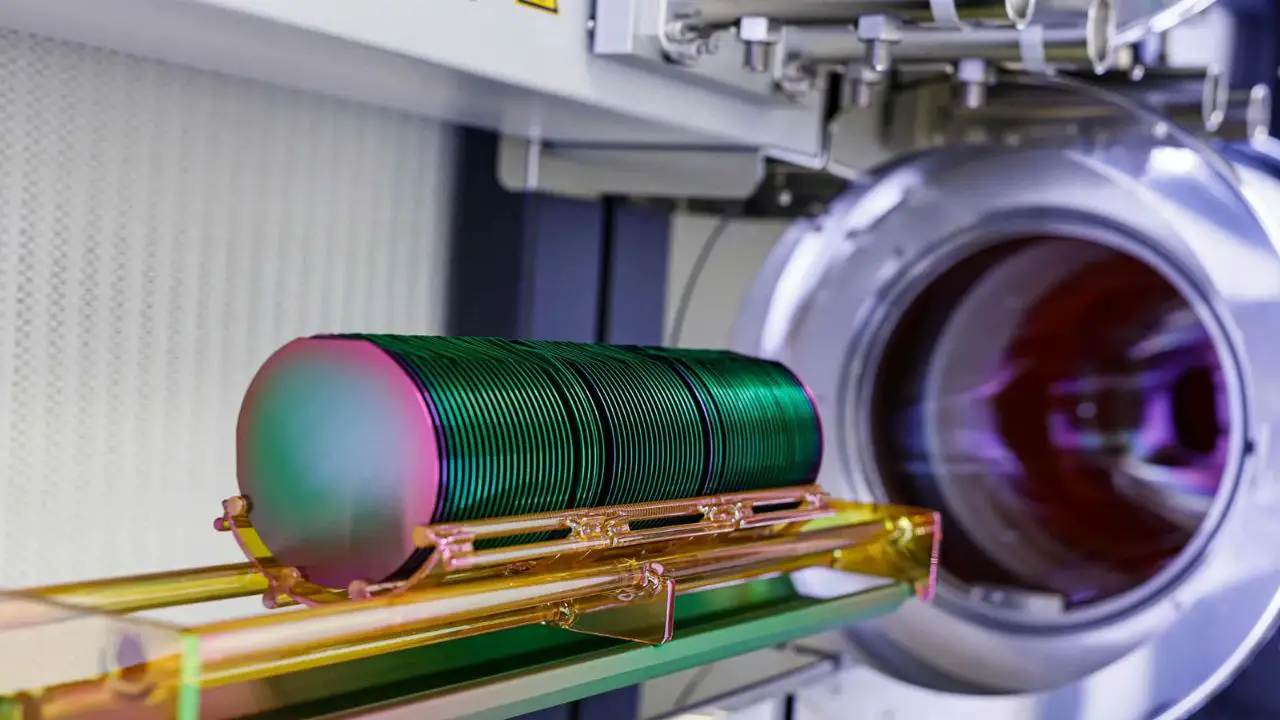
Epitaxial growth, specifically through a technique known as organometallic gas-phase epitaxy, is a critical technical process in this project. This process requires the deposition of thin layers of semiconductor materials with strict control over their composition and structure. These layers are the foundation of heterostructures, which are engineered arrays of materials with varying electronic properties.
The goal is to develop and evaluate structures that can accommodate both normally-open and normally-closed transistors. In their default state, these two classes of transistors exhibit distinct behaviors. Normally-open transistors conduct electricity until a control signal disables them, whereas normally-closed transistors do the opposite. Depending on the safety and control requirements of particular applications, both varieties are indispensable in power electronics.
MIET will assist in evaluating the performance of these materials under real-world conditions by creating test elements and measuring electrophysical parameters, including conductivity, carrier mobility, and breakdown voltage. This information is crucial for the further development of device reliability and the refinement of manufacturing processes.
The Significance of (Ga,Al)N Materials
In the semiconductor industry, gallium nitride and its related compounds have emerged as transformative materials. GaN-based components are capable of operating at higher temperatures, frequencies, and voltages than traditional silicon-based devices. This makes them especially valuable in radio-frequency systems and power electronics of the future.
The inclusion of aluminum into the material, which results in the formation of (Ga,Al)N, enables engineers to optimize the semiconductor’s bandgap and other electronic properties. This adaptability facilitates the development of devices that are both highly efficient and specialized.
The study of structures with and without a p-GaN layer is one of the more sophisticated components of the project. The presence of this p-type layer is essential for specific transistor architectures, particularly those that are intended to operate in normally-off mode, which is frequently chosen for safety reasons in power systems.
Funding and Timeline
The undertaking is structured with a relatively short timeline. It is expected that MIET will finish its designated tasks between February 16 and May 29, 2026. This means a well-defined and focused scope, which is likely to be based on existing research and infrastructure rather than starting from scratch.
The budget allotted for this section of the project is three million rubles. Although this funding is modest in comparison to the global standards of semiconductor research, it is specifically intended for a specific set of experimental and analytical duties. It is indicative of a more comprehensive approach that involves the implementation of incremental investments across numerous institutions in a coordinated manner.
MIET’s Strategic Significance and Expertise
The selection of MIET for this role is not incidental. The university is widely accepted as one of the most distinguished institutions in the field of semiconductor physics and microelectronics in Russia. According to the technical documentation associated with the project, MIET has become a national leader in the development of power transistors that are based on A3N heterostructures, a category that encompasses GaN and related materials.
MIET carried out considerable amounts of research in the field of physical modeling for power electronics over the years. This involves the creation of transistor crystals that are capable of withstanding high voltages and the development of specialized heterostructures that are specifically designed for high-performance transistors.
It is worth noting that MIET was one of the first scientific organizations in Russia to both model and manufacture normally open and normally closed transistors using these advanced materials. This institution is positioned as a critical player in the process of bridging the divide between research and industrial application due to its dual capability, which combines theoretical modeling with practical fabrication.
Broader Context: Russia’s Semiconductor Ambitions
This initiative must be viewed in the broader context of Russia’s attempts to establish a self-sufficient semiconductor ecosystem. The strategic significance of domestic capabilities in microelectronics has been emphasized by global supply chain disruptions and geopolitical tensions in recent years.
Institutions affiliated with the Russian Academy of Sciences, as well as universities such as MIET, are being increasingly mobilized to support this objective. The emphasis is not just on basic research; it also extends to applied development that can be directly integrated into industrial production.
The emphasis on GaN and related materials is particularly noteworthy. Although Russia has historically been behind the leading semiconductor nations in the mass production of advanced processors, it has demonstrated strong competencies in specific niche areas, such as power electronics and high-frequency devices. These are the precise areas in which GaN-based technologies demonstrate their superiority.
Implications for Industry and Technology
The results of this activity could have a variety of key impacts. First, the capacity of Russian researchers and engineers to analyze newer semiconductor structures will be improved through the development of dependable test elements and measurement methodologies. This is an initial phase in the development of any technology.
Subsequently, the epitaxial growth processes will be optimized based on the data produced by this investigation. This could result in enhanced efficacy and yield in the fabrication of GaN-based devices, rendering them more viable for commercial applications.
Third, the effective demonstration of both normally open and normally closed transistor structures has the potential to broaden the scope of applications for these technologies in Russia’s industrial and defense sectors.
In conclusion,
A focused but strategically significant initiative in Russia’s broader microelectronics agenda is the agreement between MIET and the Scientific and Technological Center for Microelectronics and Submicron Heterostructures. The initiative addresses a critical bottleneck in the transition from research to practical device implementation by focusing on the development and characterization of advanced (Ga,Al)N semiconductor structures.
The Moscow Institute of Electronic Technology is well-positioned to produce important results within the project’s constrained timeline, given its established expertise and proven track record in power electronics. Simultaneously, the Russian Academy of Sciences’ participation emphasizes the strategic significance and institutional support of this endeavor.
The future of national technological capabilities will be significantly influenced by targeted collaborations as global competition in semiconductor technologies continues to escalate.