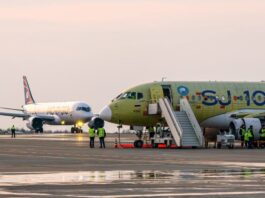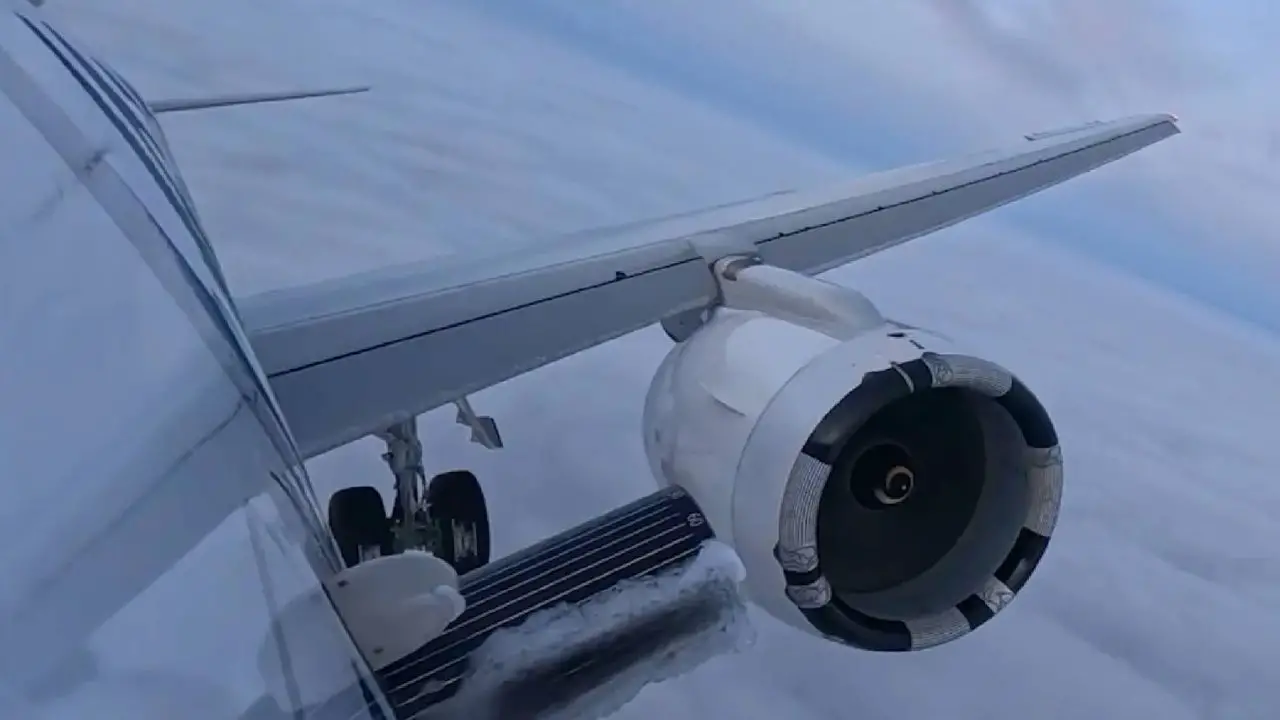
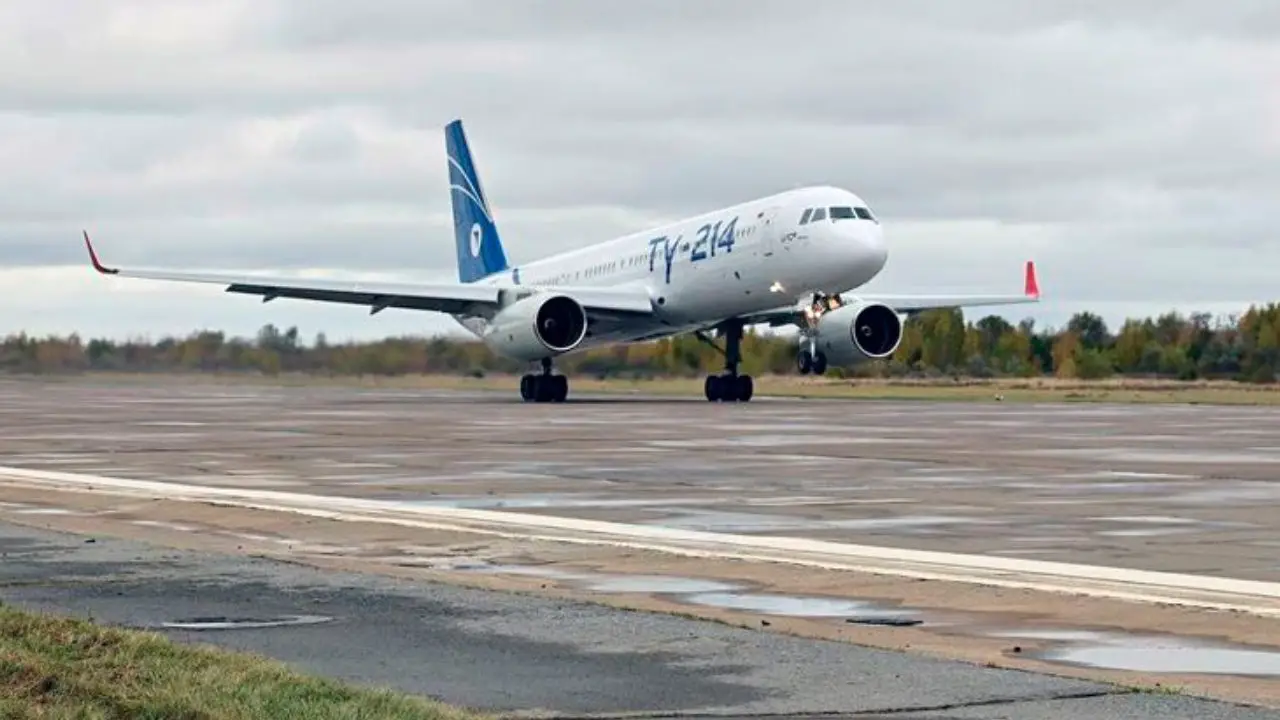
The Kazan Aviation Plant, which is named after S. P. Gorbunov, quietly reached an important milestone in the civil aviation industry of Russia on December 27, 2024. The first Tu-214 constructed under the large-scale production program for 2022–2030 was launched into the sky on that winter day. The aircraft, registered RA-64535, successfully completed its maiden flight over the factory airfield, signifying what many observers consider the symbolic restart of serial Tu-214 production after years of stagnation.
This mission was not just another test flight. It was the tangible result of a strategic decision made in 2022, when Russia placed an important fixed order for the aircraft as part of a broader initiative to improve domestic aviation capabilities in response to sanctions. In many respects, RA-64535 functions as the first point of reference for the number of “new generation” Tu-214s that were manufactured under the renewed program.
The Kazan facility is reportedly in the process of building sixteen additional aircraft, each of which is at a different stage of completion. This underscores the complexity of the task ahead and the scope of the ambition.
A Program That Is Still in the Early Stages
Industry insiders advise against premature claims of success, despite the celebratory atmosphere that envelops the first flight. Sustained effort and coordination across Russia’s aerospace sector will be necessary to achieve the objectives outlined in the revised civil aviation development program.
A minimum of four Tu-214 aircraft were expected to be delivered by the Kazan facility in 2025, in addition to the one aircraft that was originally scheduled for delivery in 2023, as indicated by planning documents. The schedule then accelerates significantly, with seven aircraft scheduled for 2026 and a significant increase to seventeen in 2027. The plant is anticipated to achieve a production rate of twenty-eight aircraft annually from 2028 to 2030.
Manufacturing capacity, workforce readiness, and supply channels are subjected to major strain as a result of such ambitious objectives. The plant’s capacity to modernize facilities and establish industrial momentum is crucial.
Import Substitution: From Theory to Practice
The Tu-214 was commonly referred to as a largely domestic aircraft prior to 2022, which led to the assumption that increasing production would be a simple process. However, sanctions necessitated the replacement of many foreign components, including those found in the Tu-214.
The aircraft with domestically manufactured systems has received approvals to enable serial production, and recent reports suggest that key import substitution efforts have been largely completed. This covers safety systems and avionics that were previously dependent on foreign suppliers.
However, resolving the import substitution challenge was only one aspect of the conundrum. The Kazan facility necessitated substantial upgrades to its production infrastructure. Large-scale technical re-equipment is currently underway, and new machining centers, logistical facilities, and production lines have been implemented.
It is expected that the years 2025–2027 will provide an answer to the open question of whether these measures will result in sustained high output.
Bottlenecks and Production Realities
The evidence from 2025 indicates that it is proving to be challenging to increase production. According to reports, the first flight of a single newly built Tu-214 occurred that year, primarily as a result of the limited readiness of cooperating suppliers and the delays in component delivery.
Officials have acknowledged that the broader industrial ecosystem must mature before it is practicable to increase production rates. The systemic nature of the challenge is underscored by the necessity of simultaneously maintaining dozens of aircraft sets in production, ensuring a consistent supply of materials, and expanding tooling capacity.
The plans to eventually achieve an output level of approximately twenty aircraft annually by the late 2020s are still in existence; however, they are contingent upon the resolution of workforce shortages, supply chain constraints, and technological integration issues.
Historical Context: A Long Journey for the Tu-214
It is important to recollect the aircraft’s history in order to comprehend the current revival’s significance. In the late Soviet era, the Tu-214 was developed as a modern narrow-body airliner to supersede older models such as the Tu-154. It is a member of the Tu-204 family.
In comparison to the main Tu-204, the Tu-214 variant, which is manufactured in Kazan, boasts a longer range and a higher maximum weight. The aircraft has been used as a platform for specialized government and mission aircraft, in addition to in passenger service, over the years.
Nevertheless, Russian airlines turned to Boeing and Airbus aircraft, which were readily available on the secondary market, in increasing numbers following the dissolution of the Soviet Union. Subsequently, the Tu-204/214 family’s production declined, with only a few examples being built.
The Kazan plant primarily concentrated on limited government orders by the 2010s, and new passenger versions were rarely produced. Therefore, the program’s reactivation in the 2020s is a significant industrial revival.
The Significance of RA-64535
The airplane that took flight at the conclusion of 2024 possesses a unique symbolic significance. It was the first aircraft to be constructed from the ground up after a period of over two years without new production, during which the plant primarily focused on the refurbishment of previously built airframes.
The most recent delivery prior to this revival was a special-mission Tu-214PU that was delivered to Russia’s presidential flight detachment in mid-2022. However, the production of conventional passenger aircraft had been effectively inactive for nearly fifteen years.
The thirty-fifth Tu-214 built in Kazan during the program’s entire history, RA-64535, is also recognized in the production record, underscoring the historically restricted output.
Competition and Complementarity with the MC-21
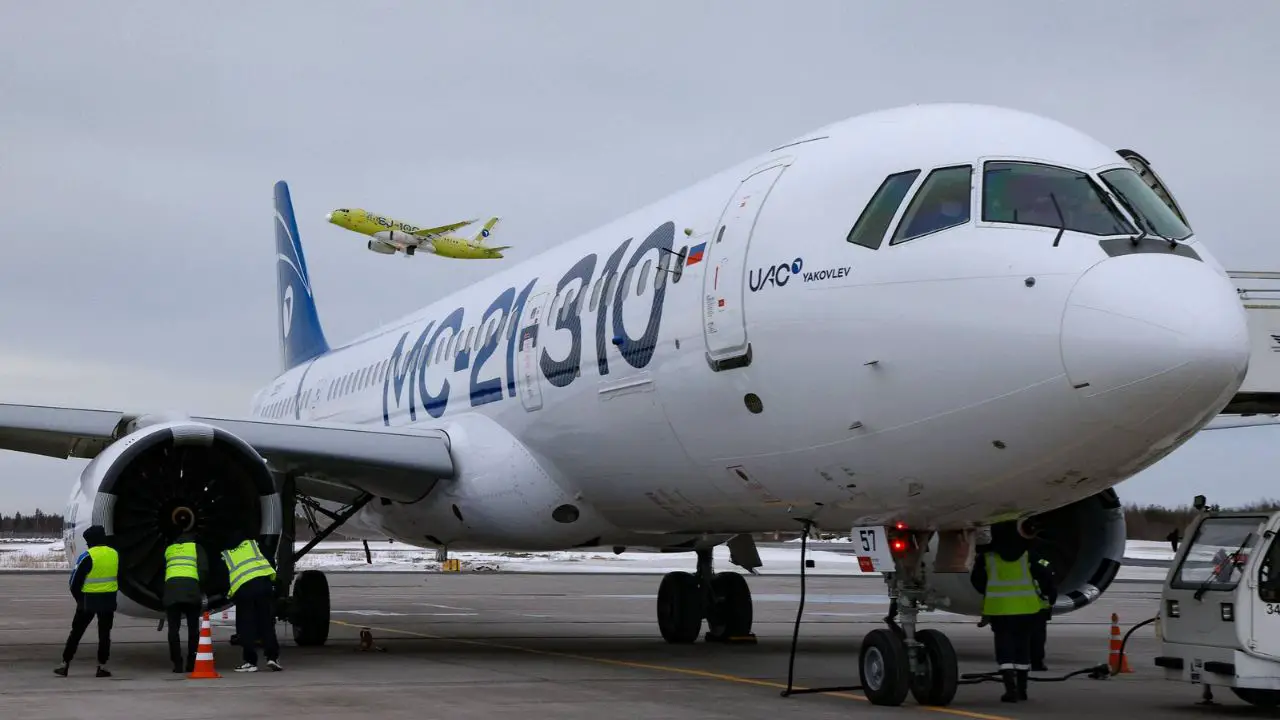
The Tu-214’s destiny is significantly influenced by its relationship with the MC-21, another significant Russian airliner project. Both aircraft occupy market segments that are broadly comparable to those of narrow-body passenger jets.
The MC-21 has garnered major interest from customers due to its composite wings and modern design elements. However, it is still undergoing a lengthy certification process in its fully import-substituted configuration, which includes PD-14 engines and Russian avionics.
The Irkutsk Aviation Plant is currently in the process of expanding its production facilities to accommodate the assembly of up to thirty-six MC-21 aircraft annually. In the interim, the construction of new fuselages is underway in conjunction with the advancement of certification.
The Tu-214 is a near-term solution that capitalizes on an existing design, while the MC-21 is a longer-term technological advancement. The parallel development of these two programs is indicative of a dual strategy.
Governmental Assistance and Strategic Significance
State policy is inextricably linked to the resurgence of the Tu-214. A strategic priority for Russia was the identification of domestic aircraft production in response to the loss of access to Western aircraft markets and spare parts.
To facilitate the activity, substantial government orders, financing mechanisms, and industrial programs have been implemented. The broader plan anticipates the entry of hundreds of domestically produced aircraft into service by 2030; however, due to delays, the objectives have been revised downward.
As part of fleet renewal strategies that are consistent with national policy, airlines like Aeroflot have entered into agreements to obtain domestically manufactured aircraft, such as the Tu-214.
Industrial Modernization and the Workforce
Workforce development is an additional critical component of the initiative. In order to reestablish the necessary skills for the production of high-volume aircraft, the Kazan facility has implemented extensive hiring campaigns and training initiatives.
The objective is to guarantee that production processes adhere to modern standards through engineering collaborations, educational programs, and modernization initiatives. These measures are essential, as the scarcity of qualified workers and engineers has been identified as a significant contributing factor to schedule delays.
Future Prospects: Opportunity and Uncertainty
The future of the Tu-214 program will be determined by the upcoming years. The aircraft could be instrumental in the maintenance of Russia’s domestic air transport network, particularly on medium-haul routes, if production is effectively ramped up.
Nevertheless, there are still substantial dangers. It is necessary to have stable financing, reliable suppliers, and consistent demand from airlines in order to achieve high production rates, in addition to technical readiness. The process’s fragility is exemplified by the 2025 experience, in which output failed to meet expectations.
Simultaneously, the successful inaugural flight of RA-64535 serves as an illustration that advancement is feasible. The industrial base’s substantial capability is indicated by the plant’s ability to manufacture a new aircraft following an extended period of inactivity.
Conclusion: A Test of Industrial Resilience
Ultimately, the narrative of the Tu-214 revival is a tale of industrial resilience in the face of adversity. It is a reflection of the obstacles associated with the resumption of complex manufacturing in a dynamic economic and geopolitical landscape, as well as the steadfast commitment to maintain technological autonomy.
The aircraft that departed Kazan in December 2024 is not merely another airliner. It is a symbol of a more extensive endeavor to reconstruct an entire sector, thereby bridging the distance between the aspirations of a modern aviation industry and the legacy Soviet-era designs.
The feasibility of the production schedules is uncertain. The efficacy of the lessons learned in recent years will be a significant factor. However, for the time being, each new Tu-214 that ascends to the skies will serve as a tangible indicator of advancement and a reminder that the road to large-scale aircraft manufacturing remains as challenging as ever.