

The recent visit of our Prime Minister to Uzbekistan brought back memories of our own visit to the country last year. This happened at the initiative of my daughter, Shireen, and my son-in-law, Sumant.
We all travelled from Delhi and found the airfare quite reasonable compared to other international destinations. We insisted that my wife travel business class for health reasons, while the rest of us travelled economy. A surprise awaited us on landing in Tashkent when we discovered that passengers from the two classes exited through entirely different terminals, each with its own immigration and other formalities. This was something we had not anticipated. As a result, it took us some time to reunite before proceeding to our hotel.
On exchanging a 100-dollar bill, we received a surprisingly large wad of local currency in various denominations. It was quite something to see so many notes in exchange for a single bill!
I found the April weather quite pleasant. The sun was strong during the day, but the cool evening breeze brought welcome relief. Our hotel was just off Shota Rustaveli Street, one of the main streets of Tashkent, named after the Georgian poet. After unpacking, we walked to a restaurant around the corner for our first dinner. It was here that we encountered one of the main difficulties of our visit: the language barrier. The menu was entirely in Uzbek, and the staff also spoke only that language. Although Russian is fairly widely spoken and understood in the country, we neither spoke nor understood either language. English was not common, and during our stay, we found that communication in English was largely limited to the staff at our hotel.
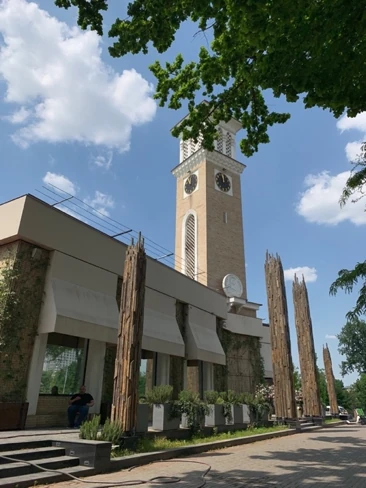
Traditional Uzbek bread, non as it is called, perhaps a variation of what we call naan, arrives at the table with almost every meal, often on the house and in seemingly endless supply. Round and thick, it has a soft outer rim and a thin, crisp centre stamped with intricate patterns. We asked for butter to go with it, and after several failed attempts to make ourselves understood, our waiter’s eyes finally lit up. He disappeared and returned triumphantly with a bowl of thick yogurt.
Ordering food thus became one of the main challenges of our visit. We regretted not having learned a tourist’s basic vocabulary or memorised the names of a few dishes before our visit or even familiarised ourselves with the value of the Uzbek som. We were a little taken aback when the bill came to 150,000 soms. A quick calculation showed that dinner for six had cost only about US$12, and we realised that the zeros were far more alarming than the actual bill.
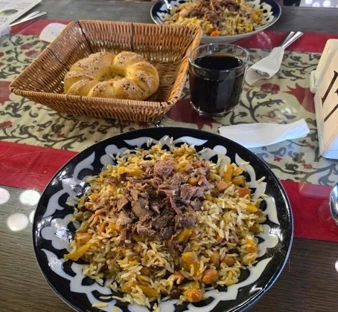
Unlike the more heavily spiced Indian cuisine, Uzbek food is aromatic and mildly spiced, with vegetables accompanying most meat dishes. We tried their famous national dish, plov or pilaf, a slow-cooked combination of rice, meat, carrots, chickpeas, onions, and raisins, at Besh Qozon, a long-established traditional kitchen. Coming from India, where biryani sets a high standard, we found their plov a bit disappointing. We later heard that other, less touristy restaurants prepared it much better.
Their fruit, however, was exceptional, especially the strawberries and dried apricots, which were among the best I have ever tasted. Uzbekistan’s fertile Fergana Valley is particularly known for its abundant produce.
The next day, our driver, Wahid, took us to the Tashkent House of Photography, where uniquely shaped and painted antique terracotta vessels were on display alongside a special exhibition of contemporary paintings and installations. The beautifully carved, twelve-foot-high entrance door particularly delighted my artist daughter, Anjum. The majestic building was itself a work of art. Nearby was Amir Temur Square, a large roundabout with a landscaped garden and benches, and an imposing equestrian statue of Amir Temur at its centre.
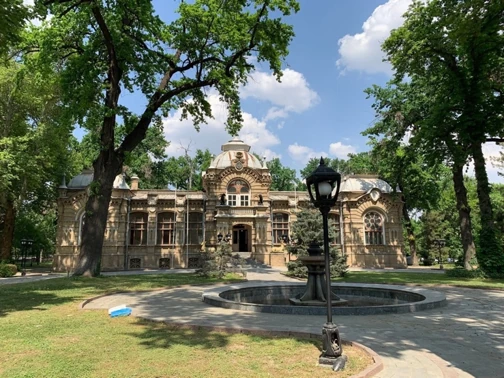
Later, we visited the Romanov Palace, the former residence of Nikolay Konstantinovich Romanov, grandson of Emperor Nicholas I, who was exiled to Tashkent in 1877 and lived there until his death in 1918. The entrance was guarded by bronze statues of two deer and two hunting dogs, perhaps reflecting the Duke’s passion for hunting. There was also a fascinating Chinor tree, with a plaque indicating that it dated back to 1883.
Across the street lay Independence Square, or Mustaqillik Maydoni, a venue for national celebrations and parades. Tashkent reminded me of New Delhi, particularly its broad, tree-lined avenues. Chinar and pine trees in Tashkent and neem, jamun, and amaltas in Delhi offer welcome shade from the summer heat.
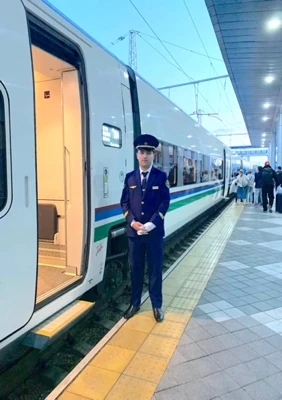
Situated along the historic Silk Route linking China with Europe and the Mediterranean, Uzbekistan impressed us with its modern infrastructure. Its high-speed trains, still awaited in India, offered fast, comfortable travel and significantly reduced journey times. We took the Afrosiyob, Uzbekistan’s premier high-speed train, to Samarkand and later to Bukhara. At each coach, an attendant in a crisp uniform and white gloves courteously guided passengers aboard. The passengers, too, were impeccably dressed, many in heels, silk tops, and jackets, with full make-up. Snacks were distributed, and headphones were provided for watching the overhead televisions.
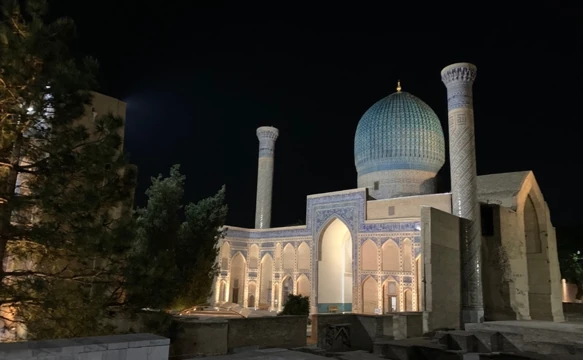
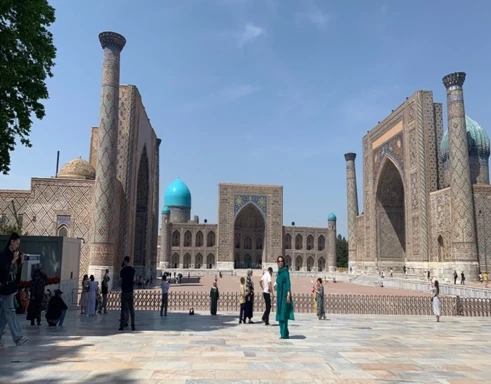
The Amir Temur Mausoleum (Gur-i Amir) in Samarkand, with its fluted azure dome and intricately gilded interiors, was breathtaking, as was the sheer scale of Registan Square. What impressed us about these old structures was their grand façades, intricate geometric brickwork, and colourful mosaics. The attention to detail extended even to the ground-level storm drains, which were decorated with stone carvings that cleverly concealed the drainage holes.
We found similar craftsmanship in Bukhara’s old town, where we stayed near Lyabi-Hauz Square, right at the heart of all the activity. There stood a bronze statue of Mullah Nasruddin riding his donkey, one hand on his heart and a mischievous expression on his face. Touching the statue is believed to bring good luck, and it was difficult to take a photograph without someone in the background reaching out to touch it. Mullah Nasruddin was a philosopher, legendary wit, and folk hero, much like our own Tenali Rama or Birbal, whose tales have entertained generations.
In Bukhara, we also visited the Bolo Hauz Mosque, built in 1712 opposite the Ark Fortress. We found both white and black varieties of mulberry trees in abundance, some said to predate the mosque itself. The white variety was deliciously sweet. Little did we know then that tasting fresh mulberries around Lyabi-Hauz is considered a typical Bukhara experience
Unable to explore all of old Bukhara on foot, my wife and I stayed around the square, browsing the shops. Later that evening, after a short nap, we attended a cultural performance in the illuminated courtyard of the 17th-century Nadir Divan-begi Madrasah, next door to our hotel. Over hot tea, we enjoyed traditional music, regional dances in colourful silk costumes, and a fashion show featuring contemporary garments made from Uzbek ikat. It was a delightful evening, blending Bukhara’s traditions with its present-day vibrancy.
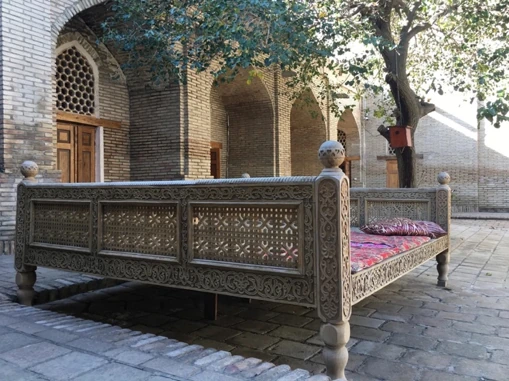
Uzbek ikat is similar to Indian ikat, with both traditions having long histories. It is difficult to say which influenced the other. Uzbeks are generally friendly and trusting people, and their warmth touched us. Respect for the elderly was equally evident. On several occasions, strangers stepped forward to help my wife or me negotiate stairs. Such thoughtfulness left a lasting impression on us.
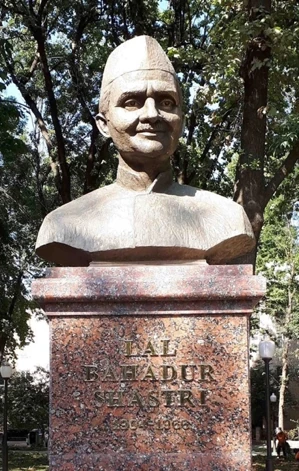
In the heart of Tashkent stands a bronze bust of Lal Bahadur Shastri, India’s second Prime Minister, sculpted by renowned Uzbek artist Yakov Shapiro. Erected in 1976, the Lal Bahadur Shastri monument is set in a beautifully maintained park and stands as a testament to the enduring relationship between India and Uzbekistan. We made a special trip to see the monument but, tired from all the walking earlier that day, decided to remain in the car and admire it from the street. The avenue itself is named Shastri Street (Shastri Kochasi).
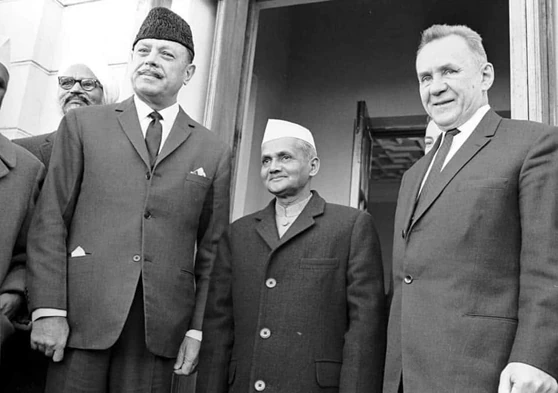
Seeing the statue brought back memories of the 1965 war with Pakistan, along with the events that led to the Tashkent Declaration. The agreement was reached on 10 January 1966, following the initiative of the Soviet Union and the persistence of its Prime Minister, Alexei Kosygin, who played a key role in bringing the two sides together. The leaders involved were India’s Prime Minister, Lal Bahadur Shastri, and Pakistan’s President, Ayub Khan. The United States had also supported efforts to bring the war to an end.
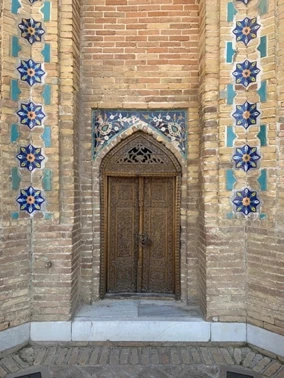
Under the agreement, both countries were to return to their pre-war positions. India had occupied about 1,920 square kilometres of Pakistani territory, while Pakistan had occupied around 540 square kilometres of Indian territory. Thus, in terms of area, India stood to return considerably more land than Pakistan.
There was a mixed reaction at home to the decision taken at Tashkent, particularly with regard to the Haji Pir Bulge, which had been captured from Pakistan after a bitter fight. The operation was led by Major Ranjit Singh Dyal, who was awarded the Maha Vir Chakra (MVC) for his unmatched bravery and exceptional command in this operation. He rose to become the General Officer Commanding-in-Chief, Southern Command, and later became the Lieutenant Governor of Puducherry and subsequently of the Andaman and Nicobar Islands before finally retiring from service.
Haji Pir is a dominant feature overlooking the road connecting Poonch to Uri. The area had come under Pakistani control following the ceasefire in January 1949, arranged under the auspices of the United Nations. It was recaptured by the Indian Army during the 1965 war, only to be returned to Pakistan under the Tashkent Declaration.
General K. L. Cariappa, who was the first Indian to become the Army Chief after Partition, and Ayub Khan were both good friends and often chatted whenever they had an opportunity. They both lamented the lack of wisdom in India’s Partition into two separate countries and were of the view that the two countries should come together and become one country once again. When Ayub Khan became the President of Pakistan in 1958, Cariappa went and stayed with him as his guest for a couple of days. He then reminded Ayub Khan of their earlier wish to become a single country again. This was Ayub Khan’s reply: “Times have changed now, and things are not the same anymore. I am not a soldier but have now become a politician, and for my political survival, a strong anti-India stance is a must. “What a hypocrite of a person indeed!
In this connection, I am reminded of another Pakistani officer, one by the name of Lt Col Idris, who commanded a mixed unit in which one of the companies was made up of Indian soldiers. After Partition, the Indian company was to be repatriated to India, and the Muslim League had issued instructions that Indian soldiers, while leaving Pakistan, must be disarmed and not carry any weapons with them.
Col. Idris, however, after an emotional farewell speech to the Indians, declared that a soldier is incomplete without a weapon. Hence, all Indian soldiers departing for India would carry their personal weapons and full ammunition. While travelling by road, they were ambushed by a local terrorist organisation, which knew that the Indian soldiers were supposed to be unarmed and perhaps would have slaughtered them had they not been armed. One volley of bullets fired by the Indians sent the attackers scurrying for their lives.
Had Col. Idris obeyed the orders of his own government, we could imagine what the fate of the Indian soldiers would have been. What a difference in the mindset of the two Pakistani officers! He must have been of the same seniority as Ayub Khan.
Later, during the 1965 war, when Cariappa’s son, a Flight Lieutenant in the Air Force, was shot down and taken prisoner, Ayub Khan conveyed to Cariappa that his son was safe and would be looked after well. Cariappa responded by saying, “Look after all the Indians. They are all my sons.”
That evening in Tashkent, as I sat in the car gazing at Lal Bahadur Shastri’s bust, memories of the 1965 war came flooding back. When the war broke out, Lal Bahadur Shastri gave a free hand to the Army without any interference. At his instance, the Indian offensive towards Lahore and Sialkot forced the Pakistanis to divert their troops from other fronts to engage the Indian Army. Our own intelligence was not sharp enough at that time, as the innocuous-looking Ichhogil Canal, which appeared to be mainly for irrigation purposes, was suddenly found to be a major anti-tank obstacle. The clever strategy of our own armoured division, which used the horseshoe formation of its tanks, helped counter the Pakistanis, who were equipped with their highly rated Patton tanks acquired from the US. Indian soldiers cleverly flooded the agricultural fields with water during the night, causing the Pakistani tanks to bog down and become easy prey for the Indian armour. Our own 106 mm recoilless guns also played havoc with the Pakistani tanks. One of our soldiers earned the Param Vir Chakra, the highest gallantry award, posthumously, for having knocked out three tanks.
The Indian Air Force was conscious of the highly rated F-86 Sabre jets acquired by Pakistan, which were far superior to our own aircraft. To tackle them, India sent its Hunters, prompting Pakistan to let loose its F-86 Sabre jets. At low altitudes, the highly modern Sabres could not match the manoeuvrability and agility of our tiny Gnats and suffered heavily. The famous Keelor brothers, Trevor and Denzil, excelled in dogfights with the Sabres, and both won gallantry awards during the war. Later, one of the brothers, Trevor, became the Vice Chief of the Indian Air Force.
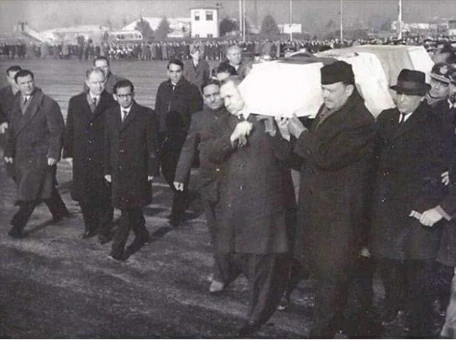
The war had ended, and the Tashkent Declaration had been signed. But before the news of the agreement had fully sunk in, came the shocking news of Lal Bahadur Shastri’s death. I clearly remember the sight of Ayub Khan, the President of Pakistan, carrying the coffin on his shoulders as Mr. Shastri’s body was being taken to the aircraft. The surprising part was that no post-mortem was conducted, either at Tashkent or after the body arrived in India, to establish the cause of death. According to members of the family, Shastri’s body had turned blue and was bloated, which gave rise to suspicions of poisoning. However, this was never established, and the official cause of death was reported as a heart attack.
Much later, when the Janata government came to power, a parliamentary court of inquiry into the matter was instituted under the chairmanship of Raj Narain in 1977. Two important witnesses were expected to give evidence: his personal physician, Dr R. N. Chugh, and a member of his personal staff, Ram Nath. Dr Chugh died in a road accident while travelling to Delhi, while Ram Nath was injured in a separate road accident and reportedly lost his memory. Neither was able to give evidence. The inquiry produced no conclusive findings, and the cause of Mr Shastri’s death will thus remain a mystery forever.
In this connection, I am reminded of the death of Air Marshal Subroto Mukerjee, who was Chief of the Air Staff when he visited Japan on an official trip in November 1960. He died while having dinner in Tokyo. A post-mortem was conducted, which concluded that a piece of meat had lodged in his windpipe, causing him to choke. It is interesting to note that, in his case, the cause of death was established through a post-mortem, whereas in the case of Mr Shastri, no such examination was carried out.
Looking back at Mr Shastri’s brief tenure as Prime Minister, he made many important decisions, including bringing Mrs Indira Gandhi into his Cabinet. Mrs Indira Gandhi had been a constant companion of Nehru ji but had never held a ministerial position in his government. It was Mr Shastri who inducted her into the Cabinet as the Information and Broadcasting Minister, a post which was, at that time, largely ornamental, unlike its importance in the current scenario, where the I&B Minister has a strong hold over the media.
Later, the strong man in the Congress Party, Mr. K. Kamaraj from Tamil Nadu, who was the President of the Congress Party, got Mrs. Indira Gandhi elected as Prime Minister following Mr Shastri’s death. I still remember what he had said while nominating her as Prime Minister: “She will get us the votes in the election due the following year”
At that time, party matters were dealt with entirely by the office-bearers of the party itself and not by the newly emerging power centre known as the “High Command,” whose nod was necessary before a decision was taken on any matter with important national ramifications.
Coming back to Mr Lal Bahadur Shastri, during the war, he frequently visited the forward areas to boost the morale of our troops, which greatly enhanced their performance, instead of remaining confined to the Prime Minister’s office. He also took particular care to ensure that the needs of the armed forces were well looked after. It was he who gave the famous slogan ‘Jai Jawan, Jai Kisan’ (Hail the Soldier, Hail the Farmer) in 1965. At a time when the country was facing war on one front and an acute shortage of food grains on the other, he recognised the importance of both our soldiers and our farmers. While encouraging the armed forces to defend the country, he also called upon the farmers to increase food production and reduce our dependence on imports. His efforts helped pave the way for the Green Revolution, which, in the years that followed, greatly increased agricultural production and eventually made India self-sufficient in food grains.
On our drive back to the hotel after visiting the Lal Bahadur Shastri monument, I narrated a few interesting incidents from his life. Everyone listened with fascination.
One such incident occurred when he was the Railway Minister. Following a major train accident in 1956, he immediately tendered his resignation, accepting moral responsibility. What a contrast with the recently concluded NEET paper leak matter, where the country’s youth held demonstrations for days to compel the Education Minister to tender his resignation.
On another occasion, he visited a factory where one of his sons was employed. He inquired from the management about the salary being paid to employees in his son’s category. The management quoted a certain figure, which was the normal salary for that category, but then hastened to add that his son had been placed in a different grade that carried a higher salary. Mr Shastri took exception to this remark and told the management to ensure that his son, too, was paid the same salary as other employees, depending on his merit and qualifications. Pariwar Waad (dynastic politics), as we know it today, was virtually unheard of in politics at the time. We have umpteen examples of fathers and sons holding important portfolios and ministerial berths in present-day politics.
Mr. Lal Bahadur Shastri was a frugal person of modest means, and at the time of his death, his bank balance reportedly showed a figure of less than Rs. 1,000. A man who held the highest office in the country, yet remained so modest in his personal life. Perhaps that is what made him such an extraordinary leader.