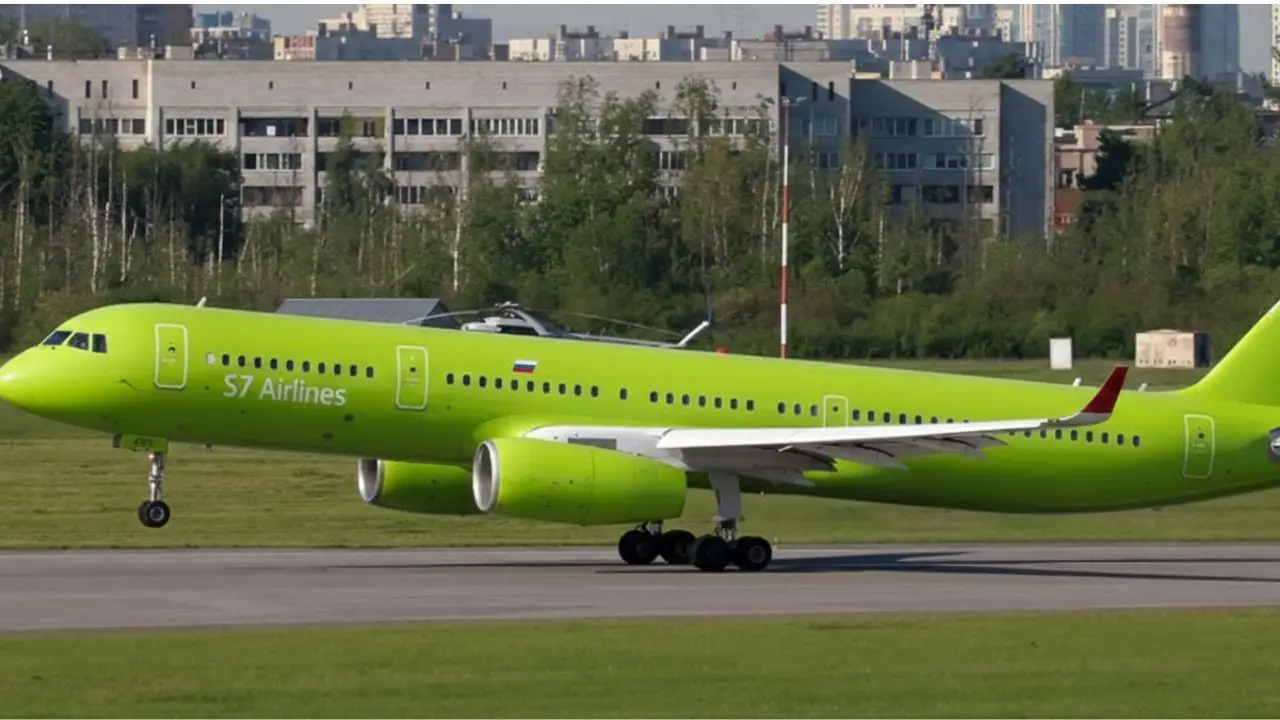
Key actors in Russia’s aviation industry—the United Aircraft Corporation (UAC), S7 Group, and the State Transport Leasing Company (GTLK)—announced the signing of a significant trilateral memorandum of cooperation at the NAIS 2026 National Exhibition for Civil Aviation Infrastructure in Moscow. The document formally documents the parties’ intention to collaborate on the delivery of 100 Tu-214 medium-haul passenger aircraft.
This agreement constitutes one of the most ambitious projects in Russia’s civil aviation sector in recent years and builds on previously reached understandings. Despite the fact that the document is currently a memorandum rather than a binding contract, it lays the groundwork for extensive commercial and industrial collaboration with the objective of bolstering the domestic passenger aircraft fleet.
Historical Context—The Development of the Tu-214 Project
The Tu-214 is not a new aircraft; it is derived from the Tu-204 family, which was developed in the late 20th century. The aircraft is designed with a narrow fuselage and is intended for medium-range routes.
In recent years, Russia has stepped up its efforts to modernize and revitalize its domestic aviation platforms in response to sanctions and limited access to foreign aircraft suppliers. The Tu-214 has become a critical element of this import-substitution strategy. In late 2023 and early 2024, the production and certification of the updated variant were on the rise. By 2025, the aircraft had received an updated sanction for significant modifications to its type design.
Interest in the Tu-214 predates the 2026 memorandum. S7 Airlines and UAC executed an agreement in September 2024 that indicated their desire to collaborate on the procurement of 100 aircraft. Consequently, the most recent memorandum is not a standalone development; rather, it is the subsequent phase of a protracted process of negotiation and collaboration that has involved many parties and involved intricate discussions regarding the future of Russia’s civil aviation industry.
The Memorandum’s Most Significant Provisions
Several central provisions that will influence future legally binding contracts are laid out in the document signed at NAIS 2026.
First, it serves as an official confirmation of the parties’ intention to implement a project for the delivery of 100 Tu-214 aircraft, which will include upgraded versions with improved operational characteristics that are expressly designed to support the operational model of S7 Airlines.
Second, the parties reached an agreement to finalize and sign comprehensive agreements by the conclusion of 2026. It is expected that these agreements will establish precise timelines, delivery volumes, commercial terms, financing structures, and contractual models.
Third, the memorandum emphasizes the advancements that have been made as a result of the collaboration of working groups. S7 Group and UAC have determined the technical profile of the aircraft, identified the need for operational documentation revisions, and approved a compartment configuration that can accommodate up to 213 passengers.
Key Participants’ Roles
United Aircraft Corporation (UAC)
The project’s industrial backbone is UAC. The corporation will oversee the production of the Tu-214, coordinate engineering efforts, and manage collaboration with state technology partners. The technical configuration that the parties have confirmed, which includes operational parameters and intended modifications, will serve as the foundation for future serial production.
S7 Group and S7 Airlines
The initiative is a strategic step toward fleet renewal and expansion for S7 Group, the parent organization that oversees airline and service assets. The initiative promotes the development of domestic aviation infrastructure and enhances operational independence, rather than extensively relying on foreign aircraft manufacturers.
The aircraft that has been delivered will also be operated by S7 Group. The new aircraft type is anticipated to be maintained by its engineering branch, S7 Technics, which is expected to become an authorized partner. S7 Training will be responsible for the complete training cycle for ground personnel and flight crews.
This method necessitates the establishment of a specialized training and service infrastructure that can guarantee the Tu-214’s long-term operation in a safe and efficient manner, in addition to operational readiness.
GTLK—The Financial Partner
GTLK, the state transport leasing company of Russia, will serve as both the financial partner and the customer for the initiative. The organization will supervise the financing arrangements for the aircraft deliveries, which encompass leasing structures, payment schedules, cost optimization, and delivery logistics.
GTLK has historically been an important consumer of domestically produced aircraft, and it has also been involved in programs that involve other Russian airliners. Its participation in the Tu-214 project indicates a solid institutional underpinning and increases the probability of structured financing support.
Launch Timeline and Production Outlook
Serial deliveries are anticipated to commence in 2029, as indicated by the parties’ statements.
The years before that date will be devoted to the completion of production preparations, the finalization of certification, the expansion of manufacturing capacity, and the negotiation of contractual and financial details. Deliveries will be guaranteed to proceed without significant delays only if these milestones are achieved.
The modernization progress made in 2025, which includes the sanction of modifications to the aircraft’s design, is a significant development. It is expected that this development will expedite the certification process and mitigate the technical risks that are frequently associated with large aerospace pprograms.
The Aviation Industry in Russia: A Strategic Perspective
The actualization of a large-scale agreement is a strategic initiative for the future of Russia’s civil aviation sector, rather than merely a fleet purchase.
Initially, it enhances the capacity of domestic manufacturing, which encompasses the production of onboard systems and components. The localization of the Tu-214 supply chain has the potential to drive growth in related industries, including engine manufacturing, avionics, and communications systems.
Secondly, the project is committed to reducing the dependence on foreign aircraft suppliers, a particularly important objective in light of the ongoing geopolitical and economic constraints.
Third, the preservation of highly skilled employment throughout the industrial ecosystem and the security of production workloads for aerospace facilities are both facilitated by a long-term order of this magnitude.
Lastly, the program has the potential to attract interest from countries seeking alternatives to traditional suppliers by demonstrating the viability of domestically produced aircraft for medium-range routes, thereby enhancing Russia’s position in the global aviation market.
Advantages and Technical Specifications of the Tu-214
The Tu-214 is a medium-range aircraft that has been modernized to meet the needs of modern aviation, based on the well-established Tu-204 platform. It is well-suited for high-density domestic routes and regional international flights, with a capacity of up to 213 passengers.
It is expected that the updated variants will include operational performance enhancements, sophisticated navigation equipment, and modern control systems. The objective of these improvements is to reduce per-kilometer operational costs and enhance efficiency, which is a critical determinant of airline profitability.
The updated design’s certification indicates that the project is transitioning from development to a phase closer to serial production, indicating tangible progress rather than solely conceptual planning.
Prospects and Obstacles for the Future
Although the goal is ambitious, there are still numerous obstacles. Detailed coordination is still necessary for critical issues, including the establishment of a comprehensive service network, logistics, certification pathways, and financing structures.
Joint working parties will continue to refine a variety of aspects, including the economic model of aircraft operation and the configurations of onboard systems. Their discoveries could have a substantial impact on the program’s overall success and the timeline.
Large aerospace projects are inherently complex and frequently necessitate ongoing collaboration among manufacturers, leasing firms, airlines, and regulators. In the years ahead, it will be imperative to preserve alignment among these stakeholders.
In conclusion,
The signature of the trilateral memorandum for the delivery of 100 Tu-214 aircraft is a significant milestone for the civil aviation industry of Russia. It is indicative of a more comprehensive dedication to the modernization of the national passenger fleet, the enhancement of technological independence, and the development of domestic aerospace capabilities.
Despite the fact that the initiative still necessitates years of technical, financial, and organizational work, the progress that has been made thus far, in conjunction with the clearly defined implementation objectives, establishes a robust foundation for potential success. The program has the potential to be the beginning of a new era in Russian aviation, as it would be characterized by the design, production, and operation of modern aircraft within the country if deliveries commence as scheduled in 2029.
Ultimately, the Tu-214 project is not just a procurement plan; it is an effort to significantly alter the trajectory of Russia’s aviation sector for the foreseeable future.