

Before Be’eri, Nir Oz, Kfar Aza, and Nahal Oz became names the world associated with massacre, they were places where people had chosen to build their lives. Children cycled between homes, families tended gardens, and neighbours met along the paths of the kibbutzim, Israel’s communal settlements. As the third anniversary of October 7 approaches, those ordinary scenes deserve to be remembered. To understand the depth of the tragedy, we must also know something of the lives that existed before the terrorists arrived.
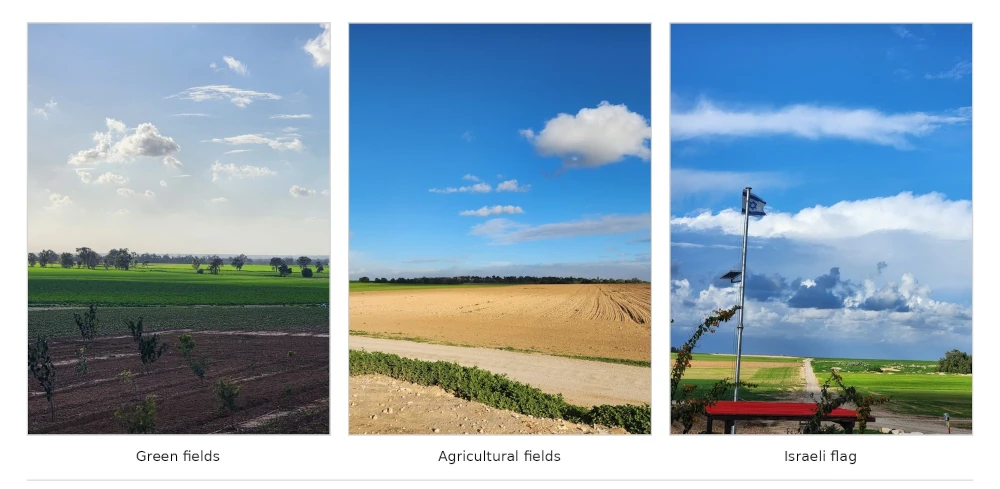
The area is a belt of agricultural communities on the Israeli side of the border with the Gaza Strip. Anemones bloom there in winter and spring. Among the fields and groves are settlements that spent decades investing in education, agriculture, and communal life. Their residents knew the sound of warning sirens and the reality of the security threat. Yet they insisted on raising their children there and maintaining their daily routines. The pastoral photographs accompanying this article show a place whose character extended far beyond headlines about rockets and borders.
On the night leading into October 7, 2023, thousands of young people gathered at the Nova music festival near Kibbutz Re’im. They had come to listen to music and dance with friends. They carried the easy confidence of youth, believing they could enjoy the night and return home in the morning. When the attack began, the celebration ended. People tried to escape by car and on foot. Terrorists fired at those fleeing, pursued them across fields, and attacked people crowded into roadside bomb shelters.
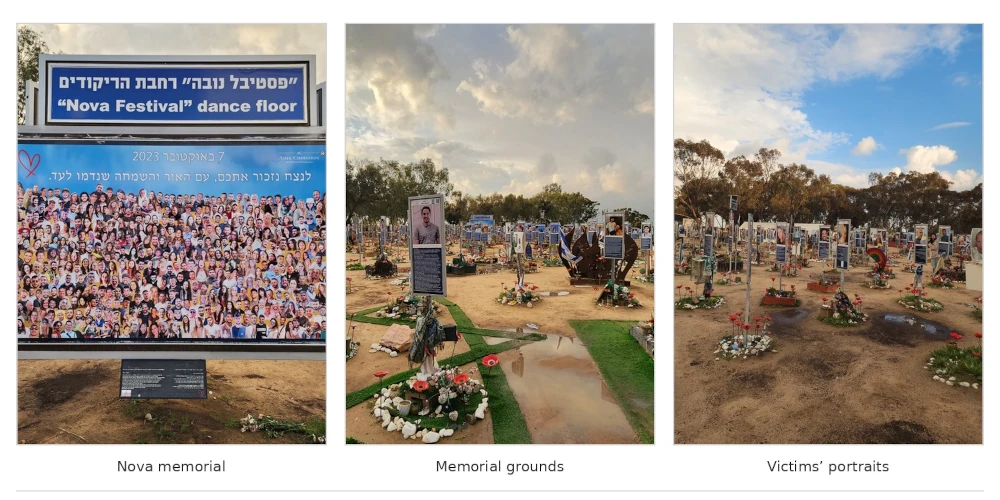
Hundreds were murdered at the festival and along the escape routes. Others were abducted and taken into Gaza. The place where they had been dancing only hours earlier became the scene of mass murder. Behind every photograph at the memorial stands a person who had a life, a family, and plans for the future. On the anniversary, we must remember what numbers cannot contain: the stolen years, the parents left behind, and the survivors who must live with what they witnessed.
At the same time, terrorists from Hamas and other organisations attacked the communities near Gaza. Families hid in protected rooms while the attackers broke into homes and set them on fire. Children, parents, and elderly people were murdered. Civilians were dragged from their homes and taken into Gaza. About 1,200 people were killed in the attack, most of them civilians, and more than 250 were taken into Gaza. The victims included Arab citizens of Israel and foreign nationals. At the heart of what happened that day was the deliberate decision to target civilians and murder them.
The residents of these communities did not share a single political outlook. Many, however, believed that a different future with their Palestinian neighbours was possible. Some communities employed workers from Gaza who entered Israel with permits. Personal relationships developed. Working together gave some residents grounds for hope: a person who earned a decent living could support his children and knew the people who employed him might also have a stake in preserving a peaceful life. They hoped that such ties would gradually contribute to coexistence and peace.
For others, that belief found expression in volunteering to drive Palestinian patients, including children from Gaza, from border crossings to hospitals in Israel. Through the organisation Road to Recovery, volunteers gave their time to help families for whom reaching medical treatment was a serious obstacle. Those journeys brought together people who would otherwise have known each other largely through the conflict. For the volunteers, this was a practical way to help someone in need and build a measure of trust.
Vivian Silver of Be’eri was one of the women who gave that belief substance. A longstanding peace activist and one of the founders of Women Wage Peace, she spent years driving Palestinian patients and their families from Gaza to hospitals in Israel. On October 7, she was murdered in her home. A woman who had devoted time and effort to bringing people closer fell victim to terrorists who crossed the border. Her story asks us to remember the person behind the word peace, and the actions that gave it meaning.
In retrospect, it is easy to call that faith naive. There is cruelty, however, in mocking people who chose to see their neighbours as human beings and hoped that familiarity might reduce hostility. Many had lived under threat for years and understood its cost. Their optimism was a decision to keep trying despite what they knew. They dreamed that their children and their neighbours’ children would grow up in a better world than the one their parents had inherited.
The white dove they had dreamed of was consumed in the flames of the massacre and reduced to charcoal. Burnt with it was the belief that human contact, economic opportunity, or an act of compassion could, by themselves, overcome a murderous ideology. An open home and a journey to the hospital expressed a willingness to build a relationship. Across the border, an organisation was preparing to attack the lives that had been built here. The gulf between those intentions remains one of the hardest things to comprehend, even three years later.
The lesson must be precise. A livelihood can improve a life, and personal relationships can build trust. They do not, by themselves, alter a terrorist organisation’s objectives or remove its capacity to act. Any policy that seeks peace must also examine the intentions and conduct of those who hold the weapons. Compassion is a value worth preserving. It must be accompanied by real protection for the citizens who practise it, and the state must account for its failure to protect them that day.
Responsibility for the massacre rests with its perpetrators and planners. It must not be transferred to people who believed in peace, nor turned into a charge of collective guilt against every resident of Gaza. Moral clarity requires us to distinguish a terrorist organisation, its supporters, and those who committed its crimes from an entire population. Recognition of the suffering of Palestinian civilians can coexist with full recognition of the massacre of Israeli civilians. Neither cancels the other.
I write as an Israeli citizen who served as a soldier and commander in the Israel Defense Forces and lost friends on October 7. The distance between international debates about Israel and the lives of those who were harmed can be painfully large. Indian readers who remember the terrorist attacks in Mumbai in November 2008 will recognise how familiar places of everyday life can become scenes of terror. India’s experience offers an important perspective on a state’s duty to protect its citizens and on the need to remember the victims even as the debate moves to the consequences of the attack.
I am publishing this article to support Israel’s public diplomacy and its efforts to challenge hostility in parts of the international media. Some media organisations receive funding from states such as Qatar. Al Jazeera, which is funded by Qatar and says it is editorially independent, deserves, in my view, close scrutiny of the relationship between its funding, editorial agenda, and portrayal of the conflict. Hostility can also be expressed through what a newsroom chooses to highlight and what it leaves out. Coverage that focuses on Israel’s actions while pushing the massacre that precipitated them to the margins deprives readers of an essential part of the story.
Criticism of Israel’s government and its decisions is legitimate. It must rest on facts, as must the case made in Israel’s defense. Supporting my country requires me to be accurate, to distinguish established information from allegations, and to avoid stories that have no foundation. The same standards should apply to every media organisation covering the conflict. The victims deserve to have their stories told in full, without disappearing when they do not fit a convenient political narrative.
Three years after the massacre, remembrance must also make room for the beauty of the communities near Gaza and the good people who lived there. We should know about their lives, their work, and the hopes that sustained them. The young people at Nova deserved to return home. Families in the border communities deserved to continue living in their homes. Those who drove a child from Gaza to medical treatment deserved security in their own homes. These are the lives for which October 7 must be remembered, and this is the protection every state owes its citizens.
Any future peace will have to be built on an acknowledgement of what happened and the ability to prevent it from happening again. Anyone who asks Israel to believe once more in a white dove must first have the courage to face the flames that consumed the last one and the people who were murdered that day.