


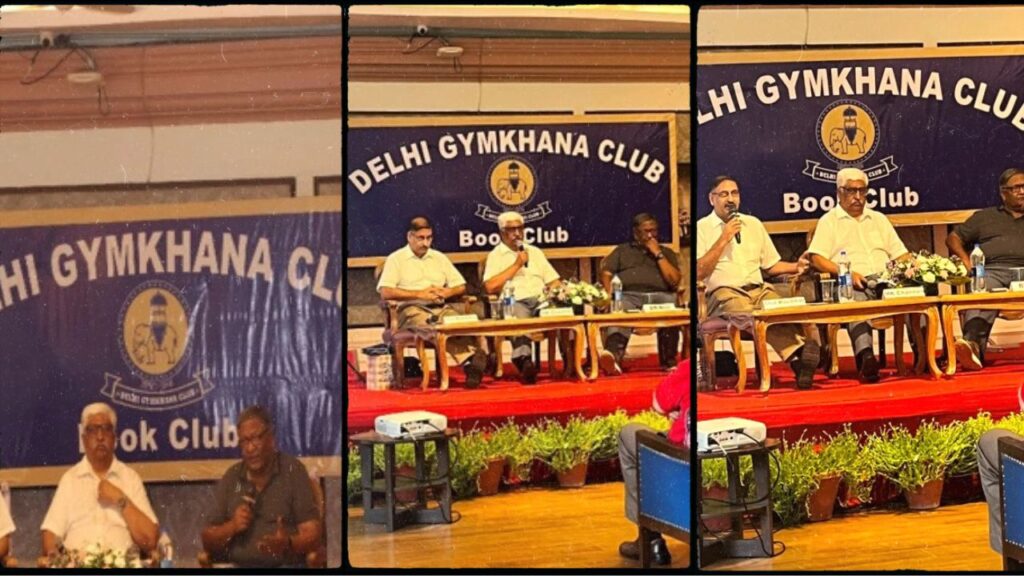
On 17 July 2026, the Delhi Gymkhana Club, as part of its Book Club activities, hosted a discussion on Valiant Deeds and Undying Memories, an anthology authored by Colonel B. R. “Ravi” Nair and Colonel Atul Kocchar, both veterans of Operation PAWAN. The discussion was moderated by Lieutenant Colonel Manoj K. Channan, Veteran, who served in Sri Lanka with the 65 Armoured Regiment from October 1987 to September 1989.
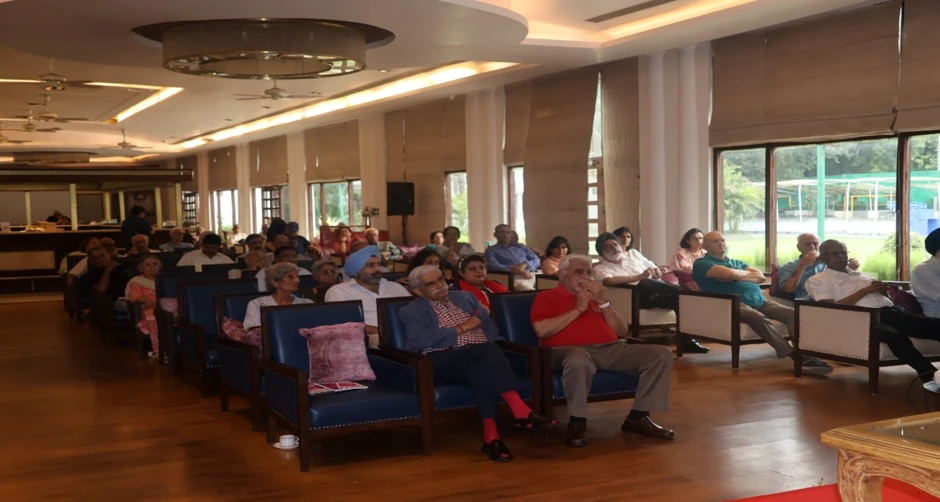
The gathering brought together veterans, members of the defence fraternity, military history enthusiasts and distinguished guests, including Major General Ashok Mehta, then GOC 57 Mountain Division, and Brigadier Nicco Bahri, Brigadier Logistics at Overall Forces Headquarters, which was located at Madras. More than a conventional book discussion, the event became an occasion to revisit one of the most complex, demanding and insufficiently understood chapters in the history of the Indian Armed Forces.
Every generation of the Indian military has its defining operations. For those who served in Sri Lanka, Operation PAWAN exemplifies a pivotal, challenging chapter that tested their courage and resilience, highlighting its lasting significance.
Despite the scale of India’s military commitment and the sacrifices made by the Indian Peacekeeping Force, Operation PAWAN remains largely absent from the country’s popular consciousness. Clarifying why this limited recognition matters can deepen appreciation and Motivate Efforts to preserve its legacy, making the story more relevant and impactful for the audience.
A Mission Transformed
Operation PAWAN was unlike most conventional military campaigns undertaken by India. The Indian Armed Forces entered Sri Lanka in 1987 under the framework of the Indo-Sri Lanka Accord. The original purpose was to assist in implementing the military provisions of the agreement, oversee the cessation of hostilities and facilitate the surrender of weapons by Tamil militant groups, most importantly the Liberation Tigers of Tamil Eelam.
The mission, however, changed almost immediately. What began under the expectations of a peacekeeping deployment rapidly became a peace-enforcement operation when the LTTE refused to disarm and chose armed confrontation. Within weeks, Indian troops found themselves engaged in intense combat against an organisation that understood the terrain, possessed an extensive local network and employed a combination of conventional, guerrilla and terrorist tactics.
The transformation placed enormous demands upon commanders and troops. Units inducted for one purpose had to prepare for another without the benefit of extended planning, intelligence preparation or acclimatisation. Rules of engagement, operational objectives and tactical methods had to evolve while troops were already deployed. The Indian soldier was expected to distinguish between militants and civilians, operate under political constraints, protect the population and simultaneously confront a determined and elusive adversary.
Few military operations have required such rapid adaptation across levels. Operation PAWAN offers lessons that can inspire confidence and strategic growth for future challenges.
The Indian Army bore the principal burden of the fighting, but the operation was an integrated national military effort. The Indian Navy maintained the maritime dimension of the deployment, transported troops and equipment, supported coastal operations and helped restrict the movement of militants and supplies by sea. The Indian Air Force provided strategic and tactical airlift, casualty evacuation, reconnaissance and logistical support. Together, the soldier, sailor and airman sustained a difficult campaign across the Palk Strait.
The Human Face of Military History
The central strength of Valiant Deeds and Undying Memories lies in its emphasis on people. Military history is often reduced to maps, formations, dates, orders of battle and assessments of victory or failure. While these are essential, they cannot adequately convey the lived experience of combat.
Operations are ultimately fought by individuals young officers leading from the front, junior commissioned officers providing steadiness and continuity, non-commissioned officers holding small teams together, and soldiers performing extraordinary tasks in unfamiliar and dangerous surroundings.
Many veterans answered the nation’s call, often without recognition. Sharing their stories fosters respect and appreciation, deepening emotional connection.
The anthology’ Valiant Deeds and Undying Memories’ emphasizes personal stories, which are crucial for understanding individual sacrifices and ensuring these memories are preserved beyond institutional history. Highlighting this helps the audience see the importance of personal narratives in military remembrance.
The title underscores how these valiant deeds and undying memories foster pride and a lasting sense of duty within the military community and the nation, encouraging ongoing remembrance.
Different Arms, One Purpose
The authors’ and moderator’s backgrounds gave the discussion a valuable combined-arms character.
Colonel Ravi Nair began his military career in the Regiment of Artillery before transferring to the Intelligence Corps. His professional journey enabled him to examine the operation through two complementary lenses: the gunner’s understanding of firepower, coordination, and battlefield support, and the intelligence professional’s appreciation of information, assessment, human networks, and an adversary’s intentions.
Colonel Atul Kocchar belongs to the 1st Battalion, The Jammu and Kashmir Light Infantry 1 JAK LI, one of the Indian Army’s distinguished infantry battalions with an outstanding operational record. His perspective reflected the experience of the infantry, which confronted the physical and psychological demands of close combat, urban operations, jungle warfare, area domination and sustained contact with an elusive adversary.
Lieutenant Colonel Manoj K. Channan brought the perspective of the Armoured Corps, having served during Operation PAWAN with the 65 Armoured Regiment. The employment of armour in Sri Lanka demonstrated how military platforms and units often have to operate far beyond their conventional doctrinal roles.
In the restricted terrain of northern and eastern Sri Lanka, armour was not employed for sweeping manoeuvres of the kind normally associated with open-country warfare. Instead, tanks and armoured vehicles provided protected mobility, direct fire support, convoy security, route domination and psychological reassurance to infantry formations operating in an environment threatened by ambushes, mines and improvised explosive devices.
The presence of armour frequently enabled infantry columns to move with greater confidence and helped troops overcome fortified resistance. At the same time, armoured crews had to adapt to narrow roads, built-up areas, dense vegetation, difficult communications and threats at close quarters. Their experience underlined an enduring military truth: combined-arms cooperation is not simply a doctrinal concept but a battlefield necessity.
The artillery, intelligence, infantry and armour perspectives represented on the stage demonstrated the interconnected nature of the operation. No arm or service could function in isolation. Success depended upon cooperation between those gathering intelligence, those planning and coordinating fire support, those closing with the adversary, and those providing mobility, protection and sustained logistical support.
A Ringside View of Operation PAWAN
The event was enriched by the presence of Brigadier Nicco Bahri, a Guardsman who had a ringside view of Operation PAWAN while serving at the Overall Force Headquarters in Chennai.
His experience represented the higher direction and coordination of a campaign conducted across the sea and involving multiple formations, services and government agencies. Headquarters had to oversee the induction, deployment and sustainment of a large force while responding to a rapidly changing operational environment.
The view from the headquarters offered an important complement to the experiences of those serving in combat units on the ground. It helped connect the actions of formations and units in Sri Lanka with the broader operational, logistical and institutional framework that supported the campaign from India.
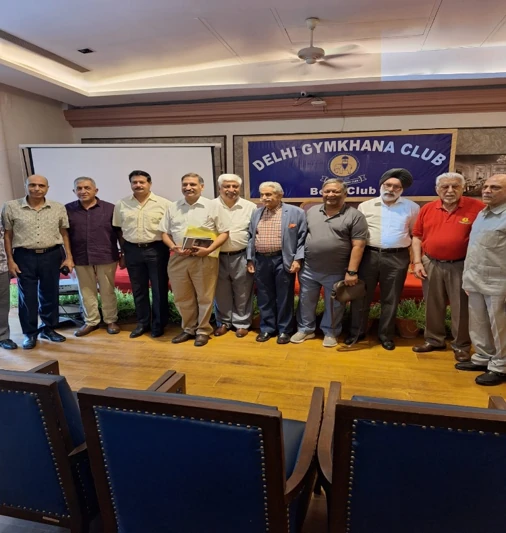
Brigadier Bahri shared his reflections towards the conclusion of the programme. The authors felicitated him in appreciation of his contribution to the discussion and for helping to preserve the institutional memory of Operation PAWAN.
Lessons That Remain Relevant
The discussion was not confined to remembrance. Operation PAWAN contains enduring lessons for contemporary military planners and political decision-makers.
The first is the necessity of complete clarity in political objectives and military mandates. Armed forces must understand the expected outcome, the resources that will be made available, and how military action is intended to support the desired political end state. When a mission changes, its mandate, force structure, intelligence requirements and rules of engagement must be reassessed accordingly.
The second lesson concerns intelligence. Linguistic knowledge, cultural understanding, reliable human intelligence and an accurate appreciation of local political dynamics are indispensable in counter-insurgency and peace-enforcement operations. Technical intelligence cannot replace the ability to understand communities, relationships, motivations and networks.
The third is the importance of jointness. Expeditionary operations require dependable maritime and air support, integrated logistics, rapid casualty evacuation and common situational awareness. The IPKF experience demonstrated that sustaining a force across the sea can be as decisive as its battlefield performance.
The fourth lesson is the value of combined-arms integration. Infantry, armour, artillery, engineers, signals, intelligence, aviation, and logistics must be woven together to meet the demands of the terrain and the adversary. Formations must be prepared to adapt platforms and tactics beyond their traditional roles.
A fifth lesson is the importance of institutional memory. Armed forces learn through experience, but those lessons can be lost if veterans’ accounts are not recorded and studied. Oral histories, unit records, operational papers, and personal recollections should be systematically preserved and incorporated into professional military education.
Finally, Operation PAWAN demonstrates that tactical courage cannot indefinitely compensate for strategic ambiguity. Soldiers will adapt and accomplish the tasks entrusted to them, but the political and military leadership must ensure that the mission, means and desired end state remain aligned.
A Debt of Remembrance
The discussion at the Delhi Gymkhana Club reaffirmed that Operation PAWAN must be examined with honesty, balance and professional detachment. Recognising political, strategic or operational shortcomings does not diminish the courage of those who served. On the contrary, an honest appraisal provides the context necessary to understand the scale of their achievement.
The men of the IPKF operated in an extraordinarily complicated environment. They were required to shift from peacekeeping to combat, confront a resourceful adversary, safeguard civilians and maintain professional restraint. They performed these tasks far from home and under the scrutiny of competing political narratives.
Valiant Deeds and Undying Memories is, therefore, more than an anthology. It is an act of remembrance and a valuable contribution to India’s military record. It honours the officers, JCOs, NCOs and men whose service deserves a permanent place in the nation’s history.
The Delhi Gymkhana Club Book Club discussion succeeded in bringing together veterans, readers, and military-history enthusiasts around a shared responsibility: to ensure that Operation PAWAN is neither forgotten nor remembered only through the lens of controversy.
Military history is not merely about campaigns and battles. It is about people who answered the nation’s call, performed extraordinary tasks and quietly returned to their units without seeking recognition. Many did not return. Others came home carrying memories that remained with them throughout their lives.
The nation owes the veterans of Operation PAWAN more than gratitude. It owes them recognition, an honest historical account and the assurance that the sacrifices of their fallen comrades will be remembered. By restoring the human experience to the centre of the narrative, the authors have helped repay a part of that debt.
The deeds were valiant. The memories must remain undying.